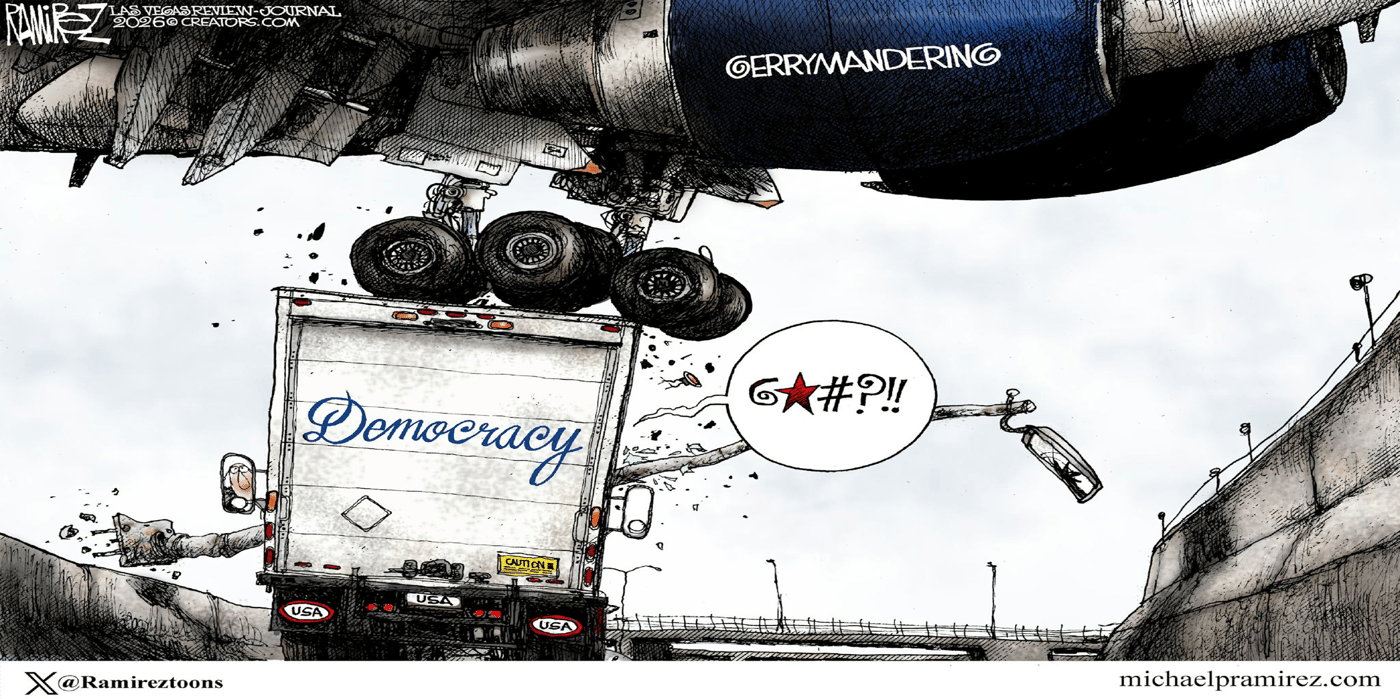

In the debate over redistricting, one truth is too often buried beneath legal jargon and partisan maneuvering: Gerrymandering is, at its core, about voter dilution. It is the quiet engineering of political outcomes, line by line, until communities that should speak with strength are instead reduced to whispers.
For decades, one of the most consequential tactics has been “cracking,” splitting cohesive communities, often made up of Black voters, across multiple districts so they become a minority everywhere and a majority nowhere. The impact is profound. A population large enough to influence elections can be deliberately dispersed just enough to ensure it never fully does.
That is marginalization by design.
The principle at stake is fundamental. In a representative democracy, voters are supposed to choose their leaders, not the other way around. When district lines are drawn to dilute the power of specific communities, that principle is not just strained, it is inverted.
But today’s redistricting debate is not as simple as past versus present. It is more complicated, more layered and more revealing of the nation’s ongoing struggle with race, power and representation.
In seeking to correct historic injustices, lawmakers have often turned to race as a central factor in drawing district lines. The intention is understandable. The legacy of exclusion from literacy tests to poll taxes to outright intimidation left deep scars. Protecting minority voting strength is not only justified, it is necessary. It is embedded in the very spirit of the Voting Rights Act of 1965.
Yet here lies the paradox that too few are willing to confront.
In attempting to protect communities, we have at times begun to define them too narrowly. We have allowed a system to emerge that assumes voters within a racial group will think alike, vote alike and prioritize the same issues. That is not protection, it is a form of stereotyping, even when it is well intentioned.
It reduces individuals to categories.
It flattens the complexity of human experience into a predictable political formula.
And it risks replacing one form of distortion with another.
American political history offers a powerful counterpoint to this assumption. The elections of Barack Obama did not occur in a vacuum. Twice, the American electorate across regions, races and backgrounds chose a leader not because he fit neatly into a demographic box but because he built a coalition that transcended those boxes.
His victories were not simply historic, they were instructive.
They revealed that voters are often less bound by racial stereotypes than the systems designed to organize them.
They demonstrated that while race remains a factor in American life, it is not the sole determinant of political behavior.
And they challenged a central premise embedded in modern redistricting: that identity can reliably predict allegiance.
To be clear, this is not an argument for ignoring race. That would be both naive and unjust. Race continues to shape opportunity, access and lived experience in ways that cannot be dismissed. The protection of minority voting rights remains essential.
But overreliance on race in drawing political maps risks reinforcing the very divisions the country seeks to overcome.
The goal should not be to engineer outcomes based on assumptions. It should be to create districts that reflect real communities’ shared interests, economic connections and geographic continuity, not just demographic data points on a spreadsheet.
Gerrymandering, whether through cracking or overconcentration, distorts representation. It marginalizes some voices while artificially amplifying others. And when it is justified through rigid assumptions about identity, it compounds the problem.
What is required now is a more honest and disciplined approach.
Transparency in how maps are drawn.
Accountability for those who draw them.
And a recognition that voters are not monolithic blocs to be sorted but citizens capable of independent thought, crosscutting alliances and decisions that defy expectation.
The deeper issue is not simply where the lines are drawn. It is why they are drawn the way they are and what assumptions guide those decisions.
If we continue to view voters primarily through the lens of race, we risk entrenching a system that limits the very voices it claims to protect.
If instead we trust voters to define themselves to build coalitions that reflect the full complexity of American life, we move closer to a democracy that is both fairer and more durable.
The question before us is not whether representation matters. It does.
The question is whether we will pursue it with clarity or continue to distort it through design.
COPYRIGHT 2026 CREATORS.COM