
An early period of World War II was known as “the phony war.”
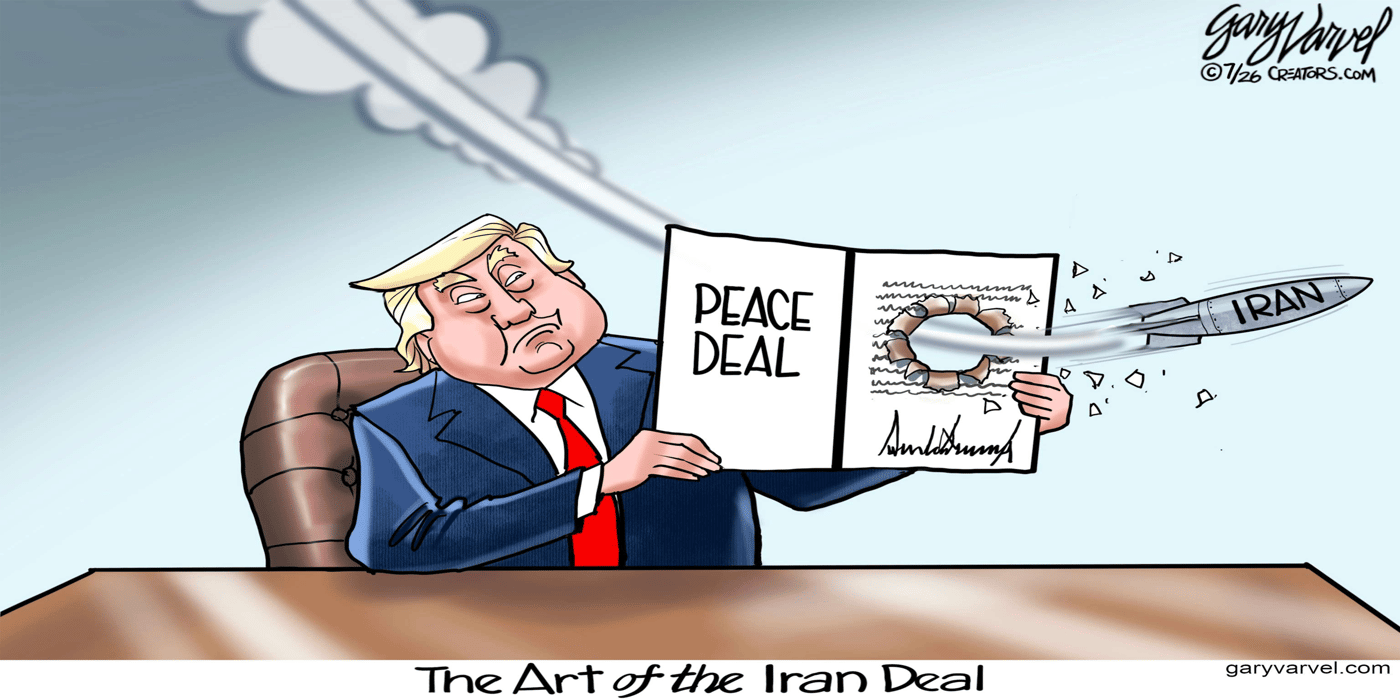
What we may be witnessing now in the U.S.–Iran war is the end of a “phony peace.”
The nearly five-month-long conflict has featured a couple of sham cease-fires, each marked by supposed Iranian pledges to reopen the Strait of Hormuz that came to nothing.
With the Iranians firing on shipping on the Strait again, Trump has declared the so-called memorandum of understanding signed about a month ago a dead letter. After lifting sanctions on Iranian oil and ending the U.S. blockade of Iranian ports, Trump has reinstituted both. He maintains that the U.S. will control the Strait and at some point charge a 20 percent fee on all shipping for our trouble (one assumes that this idea, at variance with our contention that tolling the Strait is illegal, will be a non-starter).
It was clear a couple of days into the war that the Strait of Hormuz had become the key strategic variable, and that President Trump wouldn’t easily be able to walk away from the conflict without reopening the Strait again.
The MOU was an illusory means of achieving this goal via diplomacy. The problem is that we thought — or wanted to believe — that the agreement said the Iranians would allow unobstructed passage again, while the Iranians thought — or wanted to believe — that it said that they would control the Strait.
That the MOU was subject to these starkly divergent understandings made it a memorandum of obfuscation.
The Iranians, of course, aren’t operating in good faith, but it’s a point in their favor that the MOU didn’t simply say, “There shall be freedom of navigation in the Strait.”
Instead, it talked of how the Iranians would “make arrangements” for ensuring “the safe passage of commercial vessels, with no charge for 60 days only.” In other words, the Iranians had the whip hand in the Strait and could charge a fee for transit after a two-month interval. Furthermore, Iran would conduct dialogue with Oman “to define the future administration and maritime services in the Strait of Hormuz.”
Amazingly enough, then, a war that had started with optimistic talk of toppling the Iranian regime was ending with an agreement allowing the Iranians to figure out how to run a waterway vital to the international economy that they hadn’t controlled at the outset of the conflict.
Is it any wonder that the Iranians, who must have been stunned at the success of their gambit in the Strait, have been pressing their luck? It must have emboldened them even more to hear Trump say that he was so eager for the MOU because the economic costs of Iranian disruption of the Strait threatened to make him a new Herbert Hoover.
Effectively turning over the control of the Strait to the Iranians — coupled with the inconclusive U.S. war against the Houthis to try to eliminate their threat to shipping in the Red Sea — would have been a black mark on the Trump administration record regarding a long-standing tenet of American grand strategy.
Freedom of navigation has always been considered essential to U.S. national security and a lynchpin of global commerce.
Trump is right to want to take back the Strait. The question, though, is whether he will be willing to apply enough force and have the staying power to bring a battle for the Strait to a successful conclusion. The domestic politics are difficult, given that the American public does not support the war and has now been repeatedly told that it is about to end with a brilliant diplomatic deal.
While we have an enormous firepower advantage, the Iranians have proven that they can disrupt the Strait with threats and a few projectiles. They aren’t going to give up their strategic windfall easily, as two bogus but highly touted peace deals now demonstrate.
© 2026 by King Features Syndicate