
In our endless quest to find things to make a big fuss about, there’s last week’s meeting of Secretary of War Pete Hegseth and the U.S. military’s top brass. With all that’s going on in the world, one might think that a two-hour orderly and respectful assembly of senior executives, even uniformed ones, would never find its way into the week’s list of top controversies — but no such luck. This is the age of Trump, and we can find controversy anywhere.
Here’s what came down: A few weeks ago, Secretary Hegseth summoned about 800 of our Armed Forces’ senior leaders — the generals and admirals — for a meeting at Quantico, Virginia, at which he would personally convey to them his priorities, plans, and expectations for the newly renamed Department of War. He invited President Donald Trump to attend and to address the attendees as well.
As frequently is the case in this transparent administration, media were present and the meeting was televised. And right on cue, heads exploded. Who does this young upstart, a former TV host, think he is, upbraiding these be-ribboned, battle-hardened senior officers? Scathing critiques hit the airwaves immediately, alleging not only that Hegseth’s pitch was an insult to our nation’s real warriors but that he and the president’s remarks also served as a sneak preview of their own ominous and unconstitutional designs to deploy American troops against our own citizens. OMG!
Okay, let’s take a deep breath and go through it, piece by piece:
1.) From my own professional experience, I can assert unequivocally that when it comes to leading teams large and small, nothing beats eyeball-to-eyeball communication. We can be sure that any critic who claims that an inter-office memo would have done the job (and saved time and money) has never actually faced a leadership challenge in the same ballpark as Pete Hegseth’s. The Hegseth meeting was worth every penny.
2.) The idea that Hegseth’s “warrior ethos” messaging was somehow beneath the dignity of those generals and admirals is nonsense, wholly inconsistent with the way the military actually operates. There is nothing remotely democratic about the military chain of command. In that world, the proper response to direction is not applause or cheers or groans. It’s “Aye aye, Sir” — exactly what we saw. Hegseth is the boss of everyone who was in that room last Monday, and the president is their commander-in-chief. My guess is that the attendees, whether they liked the message or not, respected the fact that he and the president came there personally to convey it.
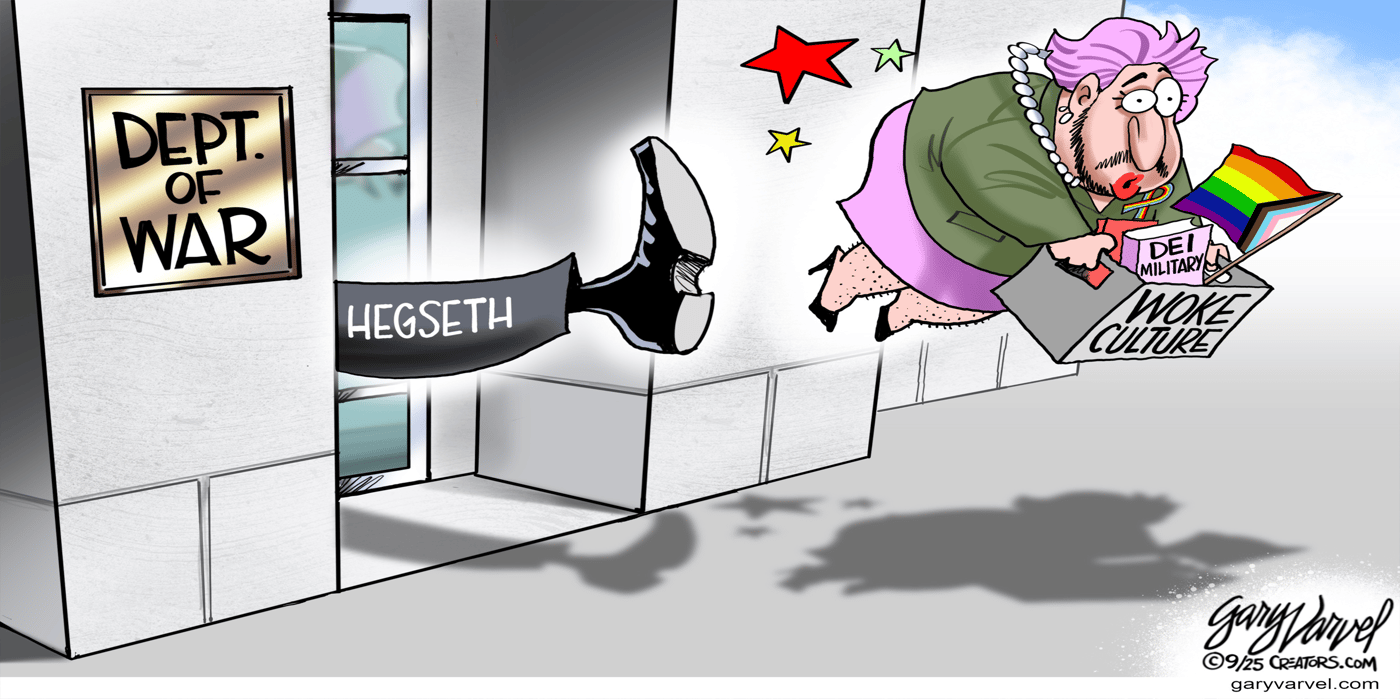
3.) That warrior ethos message is a major departure from the Biden administration DOD and needed to be addressed forcefully. Under Secretary Lloyd Austin, thousands of service members were involuntarily discharged for refusing COVID vaccinations, regardless of medical justification. Austin directed a military-wide search for and discharge of “extremists” (a euphemism for conservatives) in the ranks. Military recruitment during those years hit an all-time low. The degree to which such actions, along with DEI promotions and LGBTQ accommodations, adversely affected military readiness is unknowable; however, it is clear that the Department’s emphasis, like the administration’s, was on social engineering more than on warfighting.
4.) Ditto on physical fitness. Anyone who joins the military learns from Day One (I certainly did) that physical fitness isn’t optional — it is a way of life. One of the ways Hegseth’s leadership has inspired those in the ranks (and boosted recruiting) is his regular routine of working out with them. Many senior officers do the same, running, sweating, and straining with troops 20 years their junior. Hegseth’s use of the term “male standards” may have ruffled a few feathers, but his underlying point is sound: physical fitness standards must meet the needs of the service, not the individual. And his “fat generals” barb was not an insult, just a reminder of their shared military ethic.
5.) One of the hair-on-fire concerns raised by several critics of the meeting is the bizarre notion that Trump’s deployment of the National Guard in LA, DC, and other places is part of a sinister grooming process, getting both the military and the American public used to the menacing presence of armed troops in their midst wherever they go — into 2026 polling places, for example. Nonsense. Yes, his actions in that regard are attracting their share of political and judicial review, as they should. But they are light-years away from martial law, and nothing in his or Hegseth’s remarks last Monday suggests otherwise.
Beyond the topics discussed, other matters of national defense deserve attention. Among them:
Americans pay $800 billion per year to maintain our military might. Despite the Department’s new name and renewed focus on warfighting, it is clear that in the 21st century, the concept of “war” has shifted significantly. Although the potential of a major war between the U.S. and our geopolitical foes remains real, there are simultaneously other threats to the nation that take very different forms, such as the drug trafficking that kills tens of thousands of Americans each year and out-of-control urban crime that claims American lives daily.
The president seems more than willing to use our military as an instrument for attacking such problems, such as lethally interdicting drug transports on the high seas. Most Americans appear to be supportive of such aggressive actions, taken for the right reasons. However, good intentions aside, rigorous constitutional assessment and possibly legislation may be required to establish proper guardrails.
Meanwhile, leftists’ use of last week’s meeting as one more excuse to push their tired Hitler/fascist narrative was both unwarranted and dangerous — and far more worthy of criticism than anything Hegseth said at that meeting.
The president’s choice of Pete Hegseth to lead our nation in conventional and non-conventional warfighting was understandably controversial. Hegseth has his hands full and is still finding his way. But in my view, his direct personal engagement with his far-flung leadership team was a positive step. And I’m guessing that his generals and admirals agree. He deserves our support.