
Since 1973, the military wings of our commander-in-chief have been clipped by a congressional measure called the War Powers Act (WPA). Despite President Richard Nixon’s veto, Congress adopted the law after the revelation of secret missions in Cambodia, as part of the lengthening grind of the Vietnam War, which turned the tide more fully against our warfighting presence in Southeast Asia.
However, that hasn’t mattered to several presidents who have served since the Act’s adoption. As the Washington Examiner’s Conn Carroll reminds us, Ronald Reagan invaded Grenada in 1983, George H.W. Bush had a Panamanian incursion in 1989, Bill Clinton sent troops into Haiti in 1994, and Barack Obama performed a Libyan regime change in 2012. But Carroll defends the WPA overall, noting, “In the end, the War Powers Act did what the courts were never going to do: It translated an old constitutional ambiguity into workable rules. The Supreme Court was never going to draw a bright line between ‘war’ and lesser uses of force, and Congress could not anticipate every crisis in advance.”
“By requiring prompt reporting and imposing a 60-day clock,” he continues, “the act created durable expectations that presidents must explain themselves, justify objectives, and either conclude operations or seek legislative buy-in. That framework has held across administrations precisely because it is practical.” While presidents have occasionally grumbled about the WPA, none have made significant moves to repeal it. Following the letter of the law is another story, though. In the most recent cases involving our long War on Terror, the justification was the Authorization for Use of Military Force passed by Congress shortly after 9/11, and the AUMF is still on the books despite occasional calls for repeal.
In this case, though, President Donald Trump has come under criticism from some surprising quarters of mainstream media. Comparing the Iranian situation to that surrounding President Harry Truman in the early days of the Korean War, William Galston of The Wall Street Journal concludes:
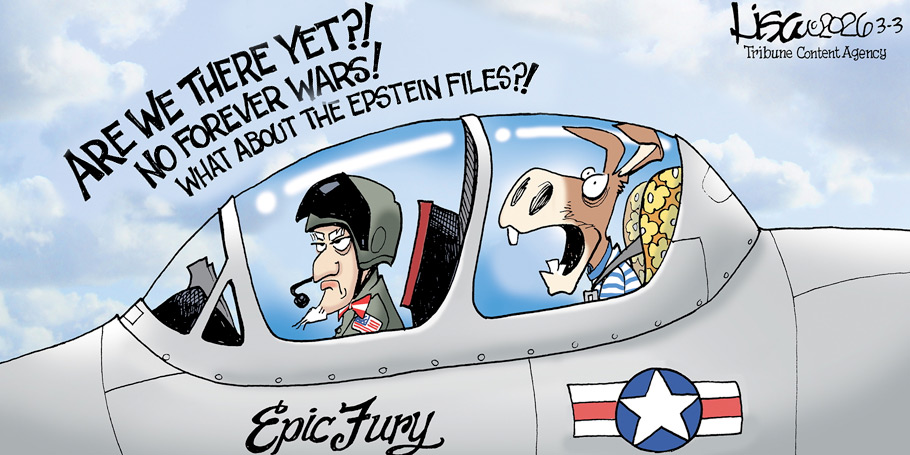
It’s easy to dismiss my concerns as an obsession with constitutional niceties that modern conditions have rendered obsolete. But congressional consideration of the case for war is a precondition for a sustainable foreign policy. With public debate, the people have a chance to understand the pros and cons of putting American interests and lives at risk. Even if the public loses the argument, at least Americans can see that elected officials have represented their views. The alternative — ignoring public sentiment — widens the gulf between the people and their government.
When presidents make mistakes in the use of military force, the absence of congressional buy-in leaves them with nowhere to turn. When wars go badly, the president’s party pays a price, even when its elected representatives don’t participate in the decision to go to war. Because congressional Republicans’ fate is so intertwined with Mr. Trump’s, they may eventually rue their decision to block a public debate on Iran.
But there is a question to ask: How do you hold a debate and maintain the element of surprise, such as disabling the defenses of both Iran and Venezuela with lightning-fast air strikes? Thus far, the Trump administration has maintained good discipline, keeping a tight lid on mission security — no leaks to warn the other side. The president seems to think debate should occur around Day 60, with the hope that the mission will be accomplished long before then.
However, if you ask Noah Rothman of National Review, Trump is walking into the same trap as his predecessor by failing to come clean with the American people. “Here, Trump is repeating Joe Biden’s mistake. ‘Defending freedom will have costs,’ Biden informed the American public at the outset of Moscow’s full-scale invasion of Ukraine in early 2022. ‘We need to be honest about that.’ But Biden did not elaborate on what the American public would be asked to endure for that cause. Rather, he emphasized the ‘robust action’ he would take to ‘limit the pain the American people are feeling at the gas pump.’”
On the other hand, The Washington Post’s Marc Thiessen believes Trump can achieve success in Iran, given the strong backing he still has from his base. “President Donald Trump’s critics claim he has taken the United States to war in Iran with no coherent endgame in mind,” opines Thiessen, “while some of his own skittish advisers are urging him to end the war prematurely. Both are wrong.”
He adds, “Operation Epic Fury is on its way to a massive success. A patient Trump can achieve what no modern president before him came anywhere close to: the irreversible elimination of the Iranian threat. By contrast, if victory is not decisive, Iran’s surviving leaders could conclude that America lost its nerve and was too weak to defeat them.”
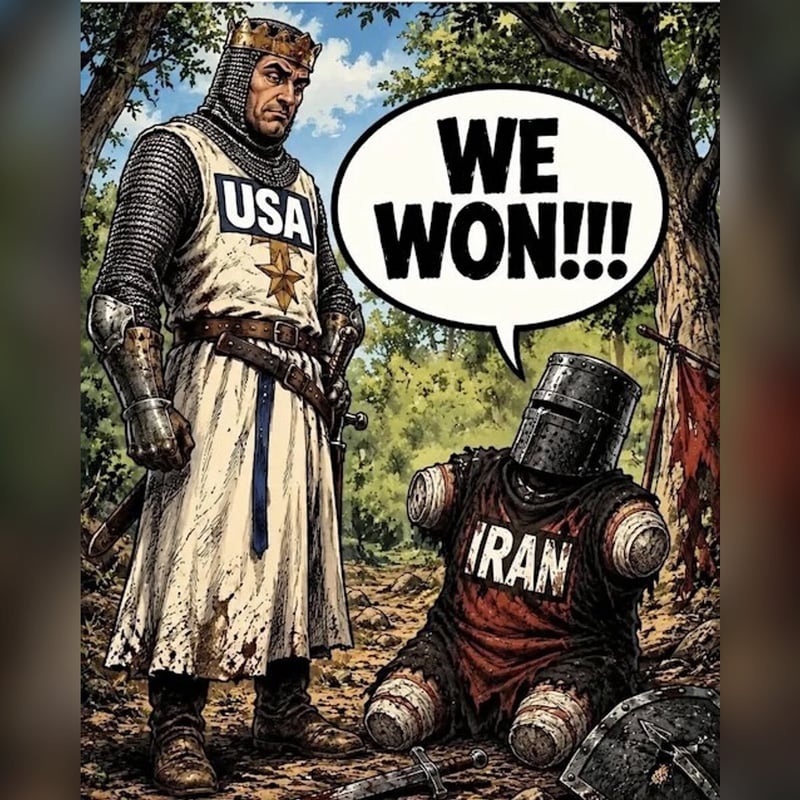
This is where the debate can come in down the road, leveraging the built-in advantage of 60 days under the War Powers Act. In just a couple of weeks, our military has overwhelmed Iranian air and naval defenses to a point where there’s very little left of either. Our war power now is moving toward two simple goals: the abandonment of Iran’s nuclear weapons program and a change in regime to one more congruent with American interests. This may or may not occur in 60 days, but the situation may dictate other methods of persuasion.
While our military has fought all over the globe, Congress hasn’t declared war on anyone since the day after Pearl Harbor. It’s an area of tension between powers delegated to the executive branch (as commander-in-chief) and the legislative branch, which has the power to declare war. The War Powers Act was one legislative attempt to rectify the situation in favor of Congress, but we have a commander-in-chief with ambitious goals who wishes to go on his merry way to enact them, so a debate on the WPA may be forthcoming.
Given the successes President Trump has had so far, it may be prudent to trust his instincts as the commander-in-chief.