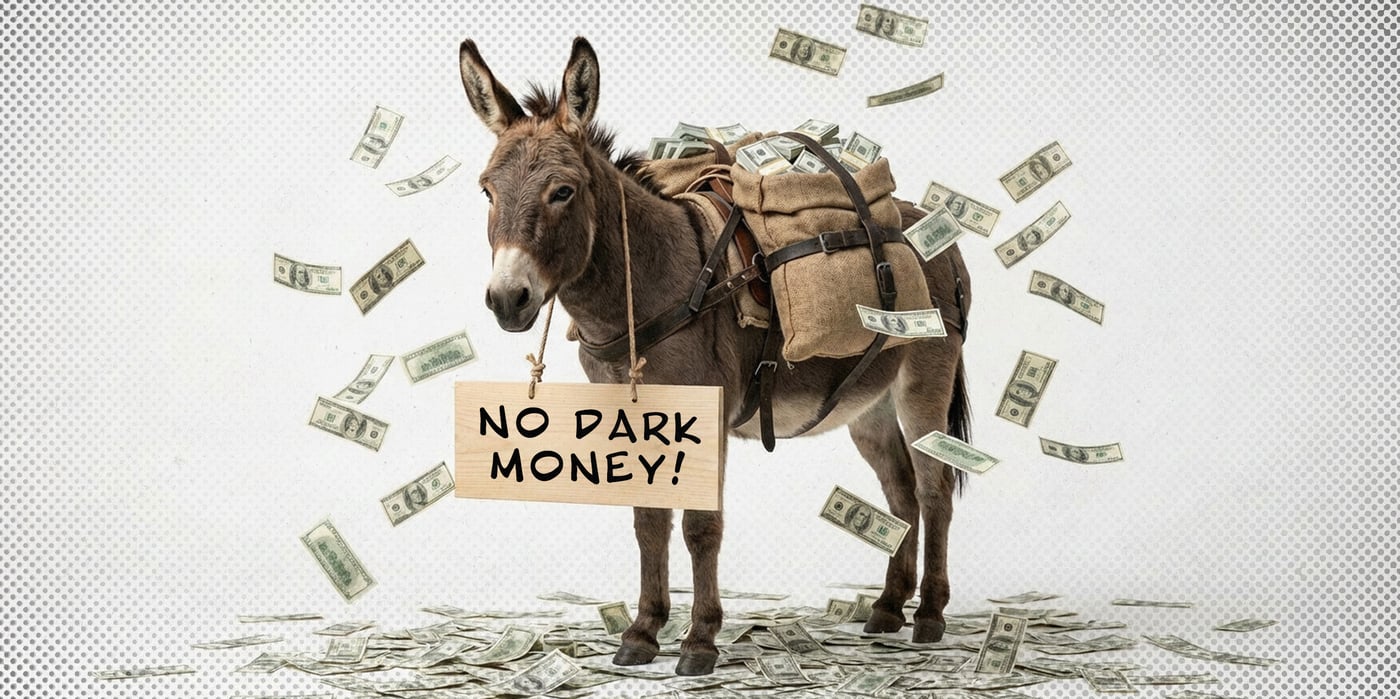

Democrats love to scream about the scourge of money in politics. Indeed, this problem was the supposed impetus for their campaign finance reform push, culminating in the bipartisan McCain-Feingold Act in 2002. Yet far from ending money in politics, McCain-Feingold created what amounts to a shell game, while the flow of money has only increased.
Case in point: the massive amounts of cash being dumped into the Democrats’ Senate campaign efforts, especially in red states. As The New York Times reports, “James Talarico, the Democratic nominee for Senate in Texas, raised $27 million in the first months of 2026 — a remarkable haul that far outpaced that of any other Senate candidate.”
The Times also reports, “In nearly all of the key Senate races, Democratic candidates raised more than Republicans through their main campaign committees.” However, the Times adds, “But in a sign of major Republican donors’ desire to defend control of Congress, the party’s allied outside groups raised more than Democratic ones did.”
Of course, this report raises an obvious question: Who is contributing to the Democrats’ main campaign committees? It is here where the sleight of hand takes place. Hundreds of millions of dollars flow to campaign committees, which then distribute those funds across the country.
What the Times report makes clear is that the Democrat campaign committees are spending big time on Senate races in red states. The Times then throws shade at super PAC spending, as if it were somehow worse than the spending of campaign committees.
A classic example of this game comes via Talarico’s effort to win the Senate race in Texas. His campaign boasted that it raised over $27 million during the first quarter of 2026. “Grassroots contributors from almost every county in Texas are sending Washington, D.C. a clear message: they’re tired of this broken, corrupt political system and they’re ready to take back Texas for working people,” Talarico said in framing this fundraising haul. He then disingenuously added, “We’re bringing Democrats, Republicans, and Independents together to end billionaire control over our politics and bring down costs for families across our state.”
Talarico’s campaign noted that 97% of its contributions are $100 or less. That’s an easy way to obscure the source of the lion’s share of his funding, while also giving the impression that hundreds of thousands of Texans have contributed. It’s a way of feigning popularity.
In the third quarter of 2018, Beto O’Rourke’s campaign raised $38 million, only for O’Rourke to lose to incumbent Senator Ted Cruz. It’s likely, albeit not guaranteed, that Talarico will enjoy the same fate.
The point is that Democrats are willing to throw gobs of money into efforts to elect their preferred candidates, yet they decry the “problem” of money in politics when wealthy individuals donate significant sums to Republican campaigns. It’s long been a double standard — although if Democrats didn’t have double standards, they wouldn’t have any standards at all.
The Democrats’ true objection is not really about money in politics. Their objection is that their political opponents, namely Republicans, are allowed to receive and spend money as well.