
By Yoe Suarez
The phrase “America First” has been a recognizable rallying cry of the citizen and political movement that brought President Donald Trump to the White House twice. The America First Policy Institute believes that a foreign policy approach that prioritizes the United States is based on the idea that when the United States puts the security, prosperity, and general well-being of its people first, it is better positioned to lead the world and preserve peace and stability.
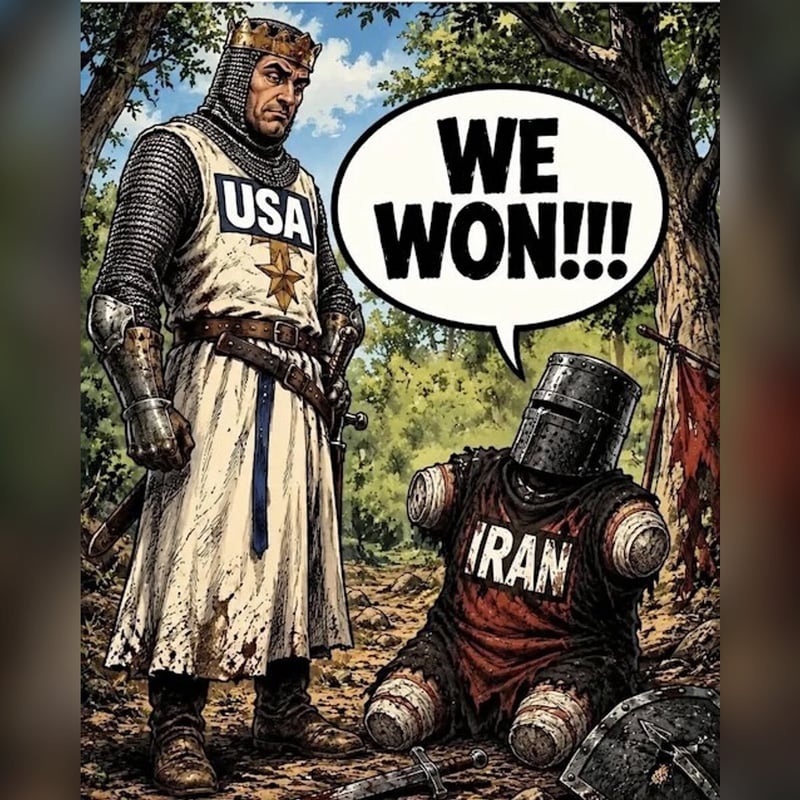
This last element dispels the widespread notion that an “America First” foreign policy would mean isolationism. The operation to remove dictator Nicolás Maduro and the beginning of a transition to democracy in Venezuela, or the weakening of the Iranian nuclear program, are key to achieving a robust peace under U.S. hegemony.
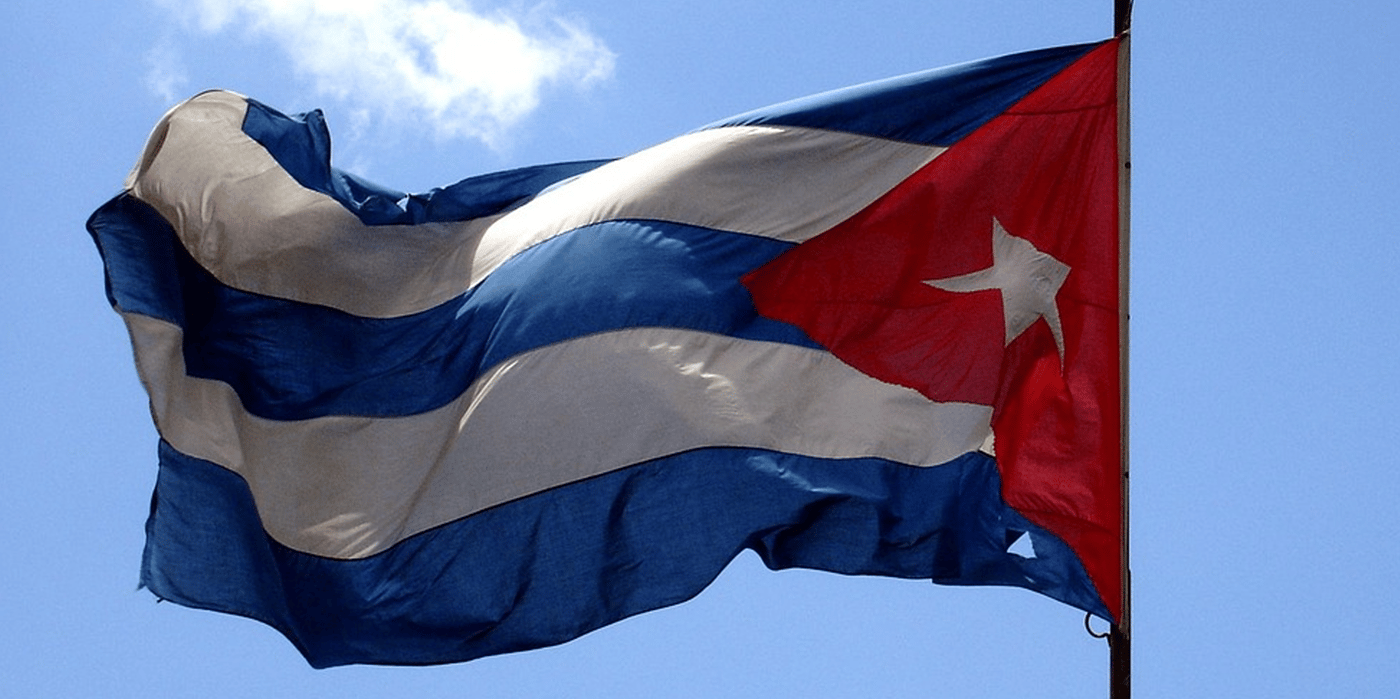
Now, after these two international successes, the focus seems to be on Cuba, the oldest totalitarian regime in the West. Just 90 miles from the Florida Keys, Havana transformed the island from one of the closest allies in Hispanic America into a hub of anti-American propaganda in the heart of the continent since 1959.
Furthermore, the Castro regime made Cuba available to terrorist groups from Europe, Central and South America, and even some operating within the United States. On the other hand, it provided diplomatic and military support to anti-American regimes in Africa and Asia. It’s no wonder that it earned a place on the list of state sponsors of terrorism in 1982, with brief interruptions during the Democratic administrations of Barack Obama and Joe Biden.
A free Cuba, once again aligned with the West and an ally of Washington, would leave a much safer neighborhood for the United States. One without Chinese radar bases pointed at its territory, like those denounced in the international press a few years ago.
To imagine this possible future, it is helpful to understand what past relations between Cuba and the United States were like. Yuleisy Mena, an adjunct professor at Florida International University, recalls that the relationship, not only commercial but also guided by geopolitical pragmatism, dates back to the 19th century. An example was the Spanish-American War of 1898, which marked a period in which islanders and Americans took up arms together.
“Many Americans wanted to help Cuba, knowing the horrors committed by the Spanish military officer Valeriano Weyler against the rural population; but also because many Cubans and Americans wanted to rid themselves of the domination of European empires in the hemisphere — something key to the Monroe Doctrine — and they also had an interest in Cuba becoming a republic for pragmatic and ideological reasons,” Mena explained to me.
During the republican period, Cuba was a strategic ally in Latin America. That is, until 1959, when Cuba fully entered the Cold War, but on the Soviet side. That tension has not yet subsided, and Professor Mena believes that Castroism still poses a danger to the United States, especially regarding espionage. “These individuals are present in various industries and sectors of society,” she states, “and they can be of Cuban or American origin; they simply have to sympathize with Marxism in its political or cultural forms.”
In economic terms, to summarize, the U.S. was Cuba’s main trading partner between 1902 and 1958; sugar dominated bilateral trade; and U.S. investments had a structural weight in key sectors of the island’s economy.
On the other hand, there are always risks for a post-Castro Cuba, based on understanding and evaluating the available data. Professor Emeritus Octavio de la Suarée of William Paterson University believes that “one of the ills that has always been attributed to Cubans is the Hispanic legacy of caudillismo, that is, the figure of an all-powerful leader.” That tradition, he recalls, stretches from the monarchy to the dictatorships of Latin American strongmen after the successive independence movements of the early 19th century, and on to the political processes of the 21st century.
Suarée, who is also president of the Cuban Academy of History in Exile, asserts that the communist indoctrination received by the Cuban population from 1959 to the present “requires a good dose of freedom and democracy, which cannot be learned overnight.” He fears that a people “accustomed to the government thinking for them may not be prepared to think for themselves.”
First, Suarée argues, it will be necessary to educate the Cuban people about the meaning of freedom, human rights, and democracy, and their importance, so they can vote consciously in free elections and exercise the right that has been denied them for so long.
And that is also fundamental, he asserts, to enjoying a good relationship with the United States. “We had a history as an independent nation during the Republic (between 1902 and 1958), and we could enjoy it again,” according to the Cuban-American historian. But to achieve this, he believes it is essential to first build citizens who can create and sustain it. “We have a lot to learn.”
“Let us remember that the United States is great because it enjoys basic institutions established from its beginnings; we never had them. Can we build them now?” he asks. “To be free, we need to create a civic-minded and responsible Cuban citizen, one who knows how to respect others, without mockery or boasting, a hard worker, dedicated, and respectful. Is that possible?”
Optimistic, Suarée reflects that Cubans have always risen to the challenge of adversity, fought hard, and triumphed. “And they will do so again.” And in this New Cuba, “relations with the United States will once again be cordial,” for the benefit of both nations and for the security and peace of the Western Hemisphere.
Yoe Suárez is a writer, producer, and journalist, exiled from Cuba due to his investigative reporting about themes like torture, political prisoners, government black lists, cybersurveillance, and freedom of expression and conscience. He is the author of the books “Leviathan: Political Police and Socialist Terror” and “El Soplo del Demonio: Violence and Gangsterism in Havana.”
This piece was originally published here.