
The often-touted role of the so-called Fourth Estate is to hold government to account by exposing the actions of elected officials to the public. The legacy media likes to play up this claim, especially when it’s Republicans who are in positions of power. Yet when it’s Democrats who are in positions of power, the legacy media has a long history of essentially ignoring or even excusing legitimate scandals.
In fact, the legacy media’s leftist bias has become so pronounced that it often serves as little more than a propaganda wing of the Democrat Party, seemingly defending and going to bat for Democrats as a rule of thumb. This is why we refer to it as the Leftmedia.
The reality of this situation has been well documented over the years, especially by media watchdog groups such as the Media Research Center.
However, increasingly, the advance of new media, thanks to the development of social media, has allowed citizen journalists to play the role not only of watchdog but of investigative journalist. The Fourth Estate, long siloed within the self-designated “trusted” elite legacy media companies, has been broken up.
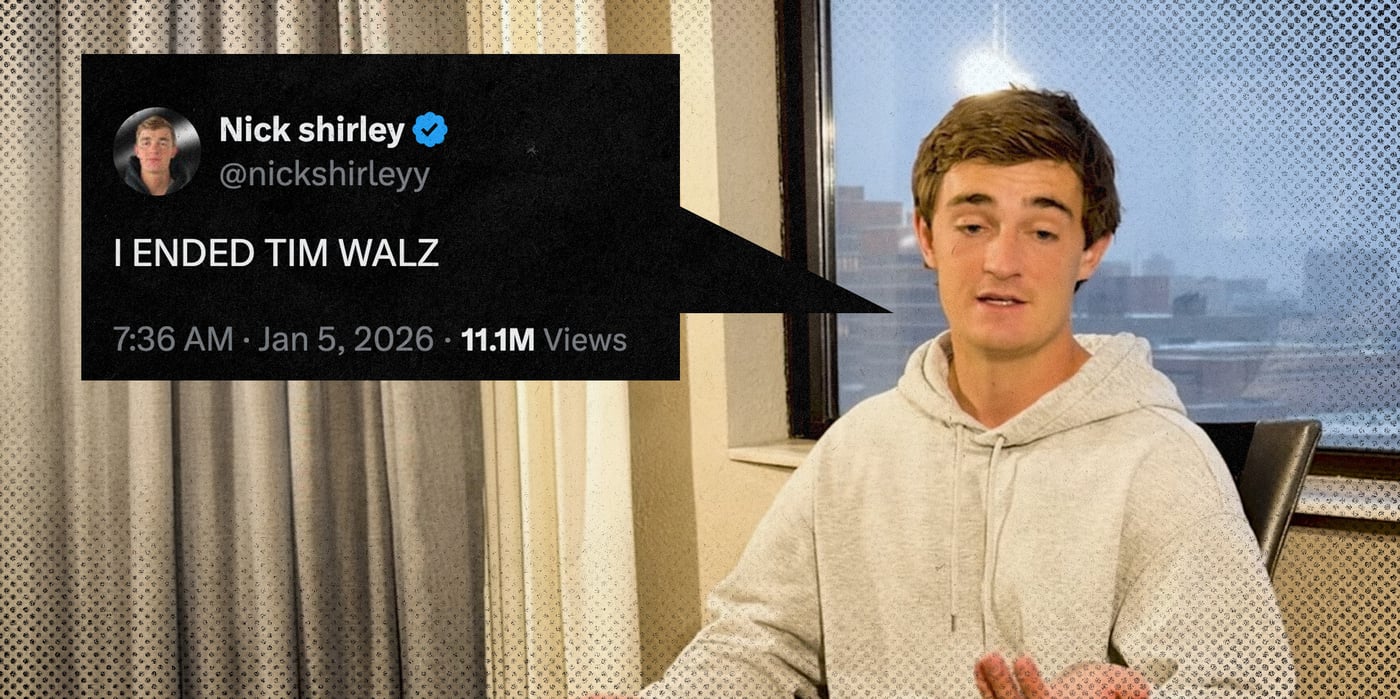
Nothing demonstrates this reality more than the recent exposure of Minnesota’s Somali welfare fraud scandal. Thanks to a young YouTuber citizen journalist, Nick Shirley, former vice presidential candidate and current Minnesota Democrat Governor Tim Walz has suspended his reelection campaign.
While it wasn’t Shirley who broke the Somali daycare fraud scandal, it was his willingness to personally investigate and post videos on social media that helped expose the scandal’s reality and scope across the country. (He just released a second video.)
It wasn’t that Shirley had exposed something new that shamed the legacy media; in fact, Minnesota’s local media outlets had run multiple stories reporting on welfare fraud. It was the legacy media’s response to Shirley’s viral videos that exposed them.
Of the big three news networks — ABC, CBS, and NBC — only one (CBS) had covered the Somali fraud scandal prior to December 29. Recall that the scandal broke back in late November. Beginning on December 2, CBS consistently covered the story, airing three full reports and several shorter ones, for a total of eight minutes and 16 seconds of airtime.
ABC’s minimal coverage of the scandal has focused on the Somali community, framing them as the victims rather than the primary perpetrators of this crime. NBC remained largely mum until Shirley broke the story, and then the network relied on other journalists’ reporting, apparently not deeming the scandal worthy of sending in its own journalists.
Other Leftmedia outlets like CNN and NPR focused their reporting not on investigating Shirley’s claims but on smearing and discrediting him, rather than taking his claims seriously and investigating them. In doing so, they exposed their bias as primarily Democrat propagandists rather than investigative journalists.
The Leftmedia’s instinct to ignore, dismiss, downplay, and smear the messenger on stories that are negative and damaging to Democrat political leaders and social policy interests is why they have lost so much credibility with the American people.
This episode also reveals the growing power of new media. Despite all of legacy media’s moaning and handwringing over how and where Americans will get informed of the news, new media is answering that concern quite easily, and then some.
The average American wants a news media outlet to tell them the truth about what happened, not to manipulate their opinion of the event being reported. Thankfully, America remains a free market system that allows for healthy competition and freedom of choice. That free market has allowed new media to increasingly influence, and even dominate, the news media landscape. More Americans are turning to alternative sources, as they have tired of the obvious leftist bias of the majority of legacy media outlets.