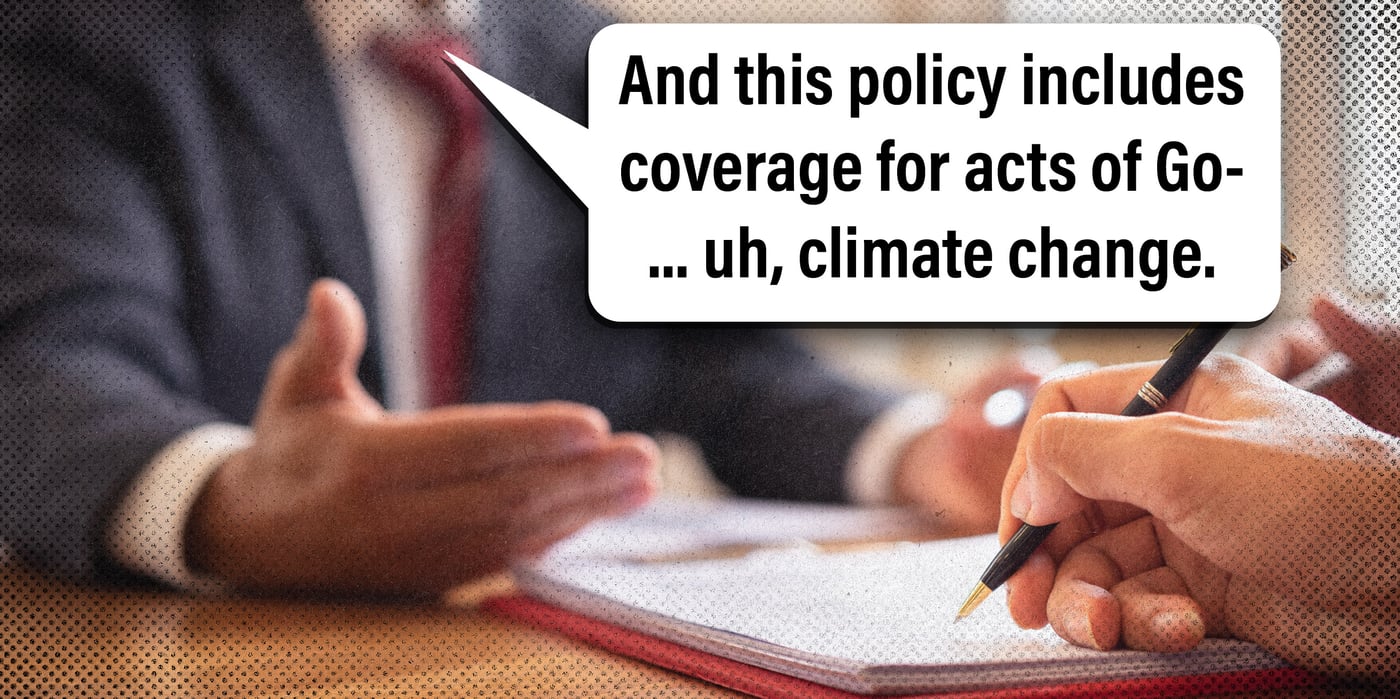

The radical environmental left blames every problem on climate change.
Starvation, disease, migration, poverty, economic variability, and war are all being tied to climate. They even claim that climate change is racist.
Fearmongering about a climate that has been changing long before humans walked the Earth is more about power and money than about climate. What it boils down to is that if they can attach every problem we face to climate, then they’ll be able to control every aspect of our lives.
As I wrote back in 2014, “Climate change is just an excuse to empower government politicians and bureaucrats to force Americans to give up their cars and refrigerators and to leave others hoping for a sunny day to power their taxpayer-funded solar panels. We can’t change the weather. Eventually, a powerful hurricane will hit the southern or eastern coast, so it’s probably best not to build a flimsy vacation home in a high-risk spot.”
Unfortunately, many people continue to build on the sand. The views are beautiful, until a hurricane rips homes from their foundations. Take a stroll along the beach in Rodanthe, North Carolina, and watch dream homes crumble into the churning waves.
It’s not surprising that outlets like The New York Times don’t blame people for building on a beach; instead, they blame climate change for rising insurance and housing costs. The real target, though, is the insurance industry itself.
Insurance rates are higher, but it’s not because of climate change itself. Instead, companies have been pushed into a state of fear over a climate that’s not producing any more fires, floods, or hurricanes than it has in the past. “Changes in an under-the-radar part of the insurance market, known as reinsurance, have helped to drive this trend,” according to the Times. “Insurance companies purchase reinsurance to help limit their exposure when a catastrophe hits. Over the past several years, global reinsurance companies have had what the researchers call a ‘climate epiphany’ and have roughly doubled the rates they charge home insurance providers.”
The real issue is that the climate change movement has convinced insurers that risks are increasing. As a result, some companies realize it’s in their best interest to capitalize on climate anxiety, whether or not it’s real.
Democrats, meanwhile, are pushing the idea that climate change is leaving homeowners unable to acquire or pay for insurance, pushing insurance companies to the brink of insolvency, and leaving our economy on the verge of collapse. It’s a doomsday scenario. Of course, their go-to solution is to abandon fossil fuels and embrace “green” energy scams.
Rhode Island Senator Sheldon Whitehouse, chair of the Senate Budget Committee, warns, “The failure to deal with climate change is also affecting whether families can even get homeowners’ insurance, which threatens their ability to get a mortgage, which spells trouble for property values in climate-exposed communities across the country. If Republicans are serious about staving off such an economic catastrophe, they must take their hands out of Big Oil’s pockets and take climate change seriously. Our economy, our country, and our future are on the line.”
In other words, our entire civilization will collapse if we don’t empower the government to mandate windmills, solar panels, and electric vehicles. And, they claim, it’s the only way to save the insurance industry.
Roger Pielke Jr. at The Honest Broker reveals, “Climate advocates have embraced the idea of a climate-fueled insurance crisis as it neatly ties together the hyping of extreme weather and alleged financial consequences for ordinary people. The oft-cited remedy to the claimed crisis is, of course, to be found in energy policy: The only long-term solution to preserve an insurable future is to transition from fossil fuels and other greenhouse-gas-emitting industries.”
“However, it is not just climate advocates promoting the notion that climate change is fundamentally threatening the insurance industry,” Pielke adds. A climate-risk industrial complex has emerged in this space, and a lot of money is being made by a lot of people. The virtuous veneer of climate advocacy serves to discourage scrutiny and accountability.”
In other words, as more companies jumped on the bandwagon of adding climate risk factors to their financial portfolios, rates increased. As the Climate Financial Risk Forum explains, “There is pressure on financial firms to have more expertise in this area as their supervisors are increasingly setting formal expectations that regulated firms embed climate risk considerations within their day-to-day risk management.”
Another factor in rising rates is that too many Americans have built homes without regard for environmental threats to their property. And now that insurance companies are having to pay out more to cover losses, they’re raising rates to recoup those losses. In some cases, companies are less willing to offer insurance in the first place. “Insurers’ determination to take climate risk more seriously is evidenced by the fact that calculations of future climate risk have forced them to drop many homeowners,” J.P. Morgan informs. “And these non-renewal actions are, in turn, inflating home insurance costs as a function of supply and demand: Less supply of insurers means higher prices for a homeowner insurance contract.”
Climate is changing, and it’ll continue to change long after we’re gone. There’s nothing we can do to stop nature from doing what it’s always been doing or to keep insurance companies from making money. They’re still underwriting homes and making profits, so don’t buy into the fear of an imminent collapse in the insurance industry. What we can do is raise awareness about a powerful climate change industry that’s all about power and control.