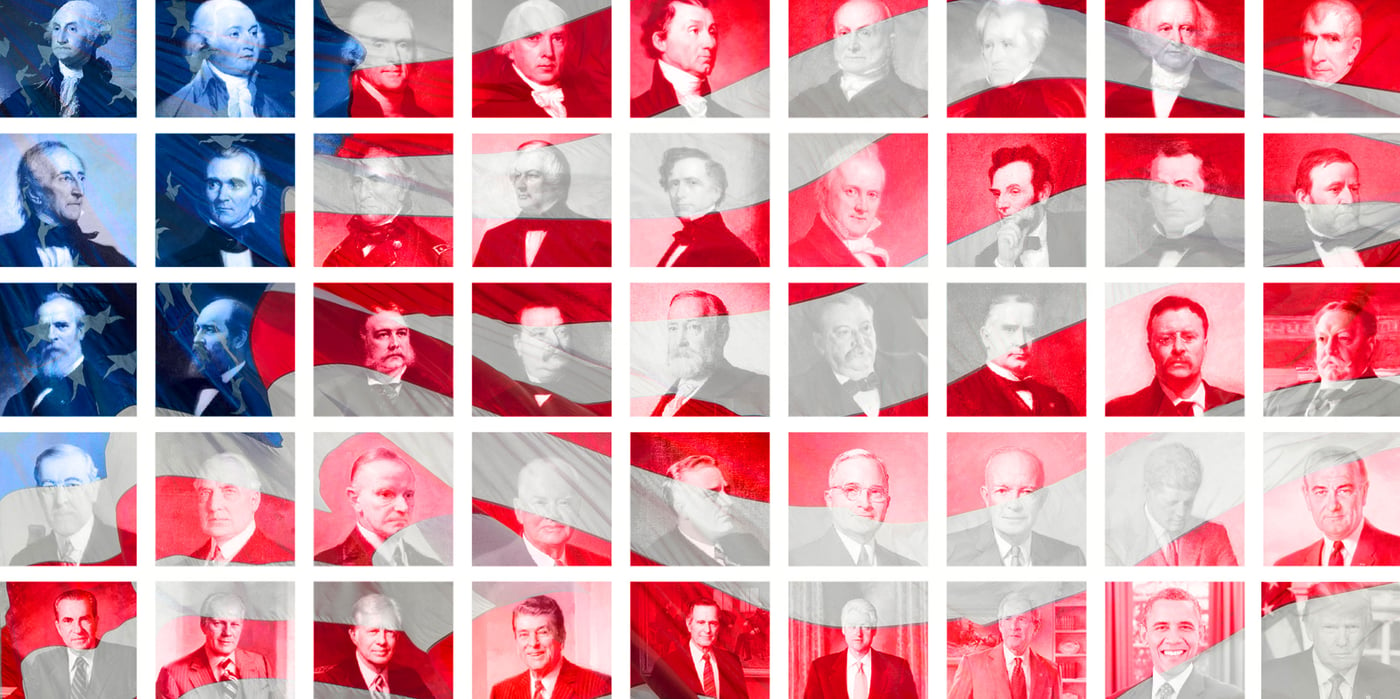

I am writing this column on the 2026 Presidents’ Day three-day weekend. When I was a youngster, both Abraham Lincoln’s birthday (12th of February) and George Washington’s (the 22nd) were school holidays. It was a very big deal to get two days off after the long, cold January.
But in the years since, whoever decides these things has chosen to be more economical with school holidays and more egalitarian about birthday celebrations. Officially, the holiday is still officially Washington’s Birthday. Yet the two presidential birthdays are now often celebrated on a single day, the third Monday of February, and it’s generally turned into a holiday honoring all U.S. presidents — including, by the way, our uber-controversial current president.
(Hmm — given the similarities between the duties of the chief executive in a large nation and those of royalty in old European countries, doesn’t this whole celebration of all presidents seem a bit like a counterpoint to last year’s “No Kings” rallies?)
In any case, let’s talk about presidents. Along with taking advantage of the weekend’s super sales on everything, Presidents’ Day serves as a reminder of the immense responsibilities and unrealistic burdens we heap on our presidents, and that perhaps they deserve a far more fair-handed assessment of their performance.
Along those lines, last August, I wrote a column titled “The Imperfect Leader,” pointing out that all world leaders, including our presidents, inevitably stumble from time to time — they are, after all, human beings. As history looks back on their stumbles, it tends to take a broader view and credit them for their overall achievements without harping on missteps along the way. Wouldn’t it be a good idea to do so in real time for our current leaders?
For example, Ulysses S. Grant, Lincoln’s seventh choice to lead the struggling Union forces, had previously been sidelined in his U.S. Army career for alleged sobriety problems, but later returned to lead the army to Civil War victory and to serve two terms as U.S. president. Harry S. Truman had been the owner and proprietor of a failed haberdashery, and then somehow managed to work his way up the political ladder to the vice presidency under Franklin D. Roosevelt. Truman took over after FDR’s death with WWII still raging, was widely criticized during the turbulent times of his nearly two-term presidency during and after the war, but is now recognized as one of our all-time best presidents.
It’s hard to find any flaws in George Washington’s service in leading the ragamuffin Continental Army to victory over the world superpower England, or in his service as the first president of our fledgling American government. His two terms in office were mired in political controversy, but those are all lost in the shuffle of history — what we can say for certain is that our nation probably would not exist today were it not for Washington’s extraordinary leadership.
Most acknowledge Abraham Lincoln as the leader who guided our nation through the horrendous Civil War, pulled the country together, and set us on our present course. But many historians correctly challenge the efficacy of Lincoln’s leadership.
That brutal war took 600,000 American lives, left the nation in shambles, and led to decades of rancorous, politicized “reconstruction.” Could it have been avoided altogether? Or would it not have been possible to find a Trump-like negotiated settlement (an 1860s “deal”) much earlier in the four-year conflict? We’ll never know. What we do know is that throughout that bloody war, Lincoln’s conviction to ultimately restore and unify our great nation carried the day.
And in the 150-plus years since then, our country has been on a rocky road through two great wars, a great depression, one very unpopular war (Vietnam), and a perilous cold war — under the guidance of both Democrat and Republican presidents, each under constant pressure from their political opponents. Somehow, we’ve landed on our feet and are still leading the way for the free world.
Which brings us to the Donald J. Trump presidency, arguably (and unnecessarily, in my view) the most contentious in American history.
Trump’s first term, although dogged by unfounded accusations of electoral collusion with Russia and two impeachments, was largely successful — until (like every nation on earth) running into the buzz saw of the COVID-19 pandemic.
After the intervening four years of Joe Biden, Trump’s second term has so far been both spectacular and problem-ridden. His administration has closed the supposedly unclosable southern border, thrown off the economic shackles of ill-conceived and ineffective climate change commitments, reinvigorated fossil fuel use for energy production, taken a lead role in restoring peace in the Middle East and other world hotspots, interdicted illicit drug transport, and stabilized economic and political turmoil in the Western Hemisphere.
Donald Trump has immense energy, has a bias for action, and is decisive. His instinctive inclinations are, in my view, very sound. But at the same time, he has injected unnecessary chaos in many arenas, with unforced errors and seemingly ego-driven confrontations. He dislikes dissent and has little patience with contrarian views. His current policy on the mass deportation of illegal immigrants in the U.S. continues to be a flashpoint for present and ongoing controversy.
All in all, the Trump modus operandi is a formula for fast, effective achievement, and he’s delivered exactly that, but with potential for consequential missteps. He is presently facing his next critical decision regarding potential military action against Iran, our longtime adversary. For now, he’s evoking Teddy Roosevelt’s famous diplomatic posture — “walk softly but carry a big stick” — with two U.S. Navy aircraft carrier groups in the region and poised for action. Hopefully, he’ll choose a prudent and effective course.
More broadly, he’s taken on an enormously challenging, demanding, and dangerous job on our behalf. Success is never guaranteed. But going forward in the Presidents’ Day spirit, we might tone down the ceaseless anti-Trump rhetoric, and particularly the Nazi/fascist/Gestapo smears. A better choice: “Thank you, Mr. President.”