
With the U.S.-Israel joint strike against Iran now in its fourth week, what is the status of Operation Epic Fury?
There are a couple of ways to look at the results thus far. As President Donald Trump stated earlier this week, “I don’t like to say this. We’ve won this — this war has been won.” Yesterday, he added that the Iranian regime has “been just beat to s\\t” and is now “begging to make a deal.”
From a U.S. military perspective, Trump is correct: The operation has gone incredibly well. As things currently stand, the U.S. and Israel have essentially obliterated Iran’s military, wiping out both its air force and navy. “Since the commencement of Operation Epic Fury, 92 percent of the large ships in the Iranian Navy have been eliminated,” CENTCOM chief Brad Cooper said in a statement. “As a result, IRGC-N has completely lost their ability to project power in the Middle East or around the world. Now, with the loss of their long-time leader, the IRGC-N is on an irreversible decline.”
What Iran has left in this fight is what Tehran has invested in most heavily: missiles and drones. While the U.S. and Israel have significantly eroded Iran’s offensive capabilities, with missile and drone launches down over 90% from the start of the conflict, Iran is still launching from its massive stockpiles.
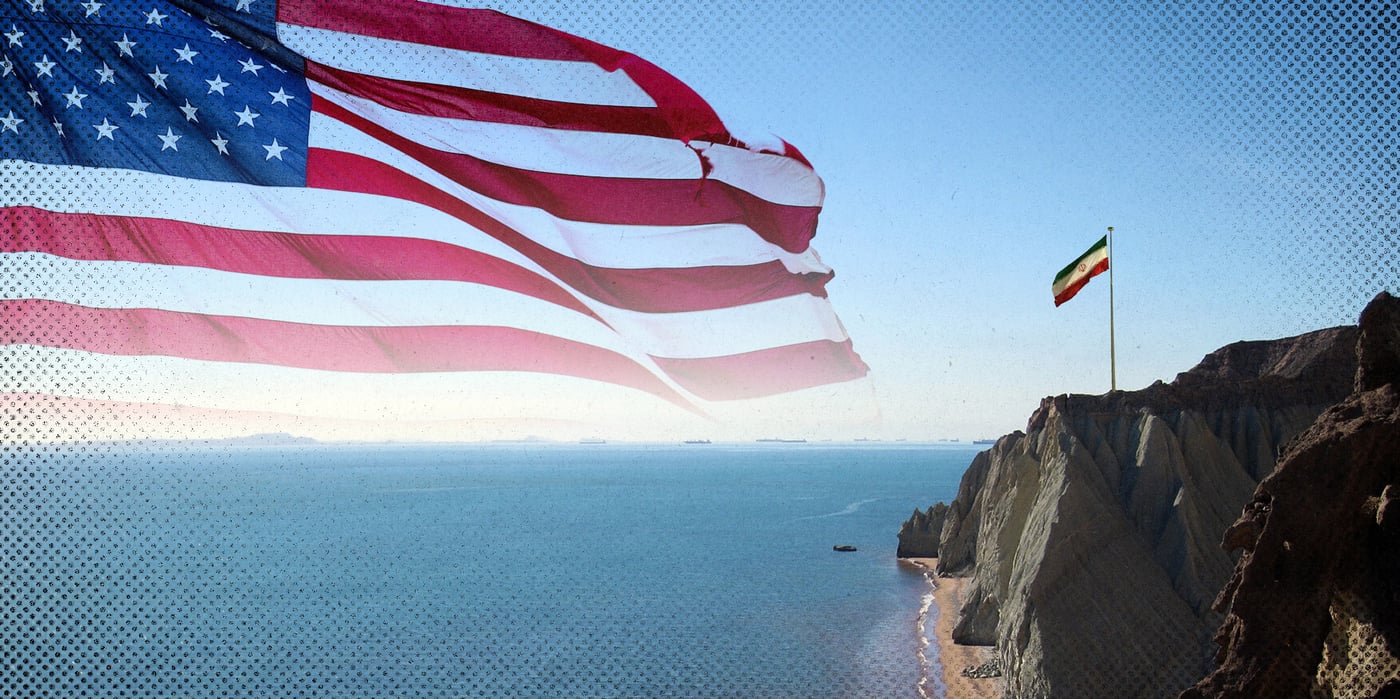
Indeed, Tehran’s main play at this point has been to shut down shipping through the Strait of Hormuz. The goal is to pressure the U.S. to end its operations, as the closure of the Strait has a negative impact on the global economy, and oil prices have surged.
Trump had sought to engage in peace talks with the Iranian regime, even pausing strikes against that nation’s energy infrastructure, to pitch his 15-point proposal. However, Tehran has continued to balk, countering with its own five conditions. Trump thinks he knows why there is reluctance to agree to a peace deal with the U.S., observing that the regime’s current leaders “want to make a deal so badly, but they’re afraid to say it because they will be killed by their own people.” He added, “They’re also afraid they’ll be killed by us.”
Speaking of getting killed, the Israelis took out another regime leader. The head of Iran’s Revolutionary Guard Navy, Alireza Tangsiri, was killed in a targeted attack. This is significant because Tangsiri had directly ordered the closure of the Strait of Hormuz.
An Israeli official explained, “This targeted strike was based on U.S. and Israeli intelligence and continues to demonstrate how deeply it is capable of penetrating.” In other words, the message to the remaining regime leaders is simple: Make a deal, or you might be next.
But who exactly is running Iran now? The man who was named successor to the late Ayatollah Ali Khamenei, his son Mojtaba Khamenei, has not been seen or heard from since taking over. Statements have been made in his name, but there is nothing else to suggest that he’s still alive and kicking (if he still has his legs, that is).
Meanwhile, the U.S. has been mobilizing U.S. ground forces to the region, with the Pentagon announcing that some 2,000 soldiers of the 82nd Airborne Division are being deployed. It’s not clear yet where these soldiers may be sent, but a likely target would be the regions around the Strait of Hormuz, with the obvious goal of ensuring the Strait reopens.
Interestingly, Trump recently said during a Cabinet meeting that he had received a “present” from Iran, after multiple oil tankers safely passed through the Strait of Hormuz. “They said to show you the fact that we’re real and solid and we’re there — we’re going to let you have eight boats of oil,” he said. After noting that a total of 10 vessels went through, Trump opined, “I said, well, I guess we’re dealing with the right people.”
From a domestic political perspective, the president faces a bigger hurdle in trying to sell his Iran operation to a divided American public. Trump knows it’s in his best interest to complete this operation as soon as possible to avoid the perception that the U.S. is getting stuck in another Middle East quagmire. What is of particular concern is the spike in oil prices, which is why Trump is so focused on permanently reopening the Strait.
Success for Trump’s Iran campaign would be the ending of Iran’s nuclear and ballistic missile threat, and secondarily, the elimination of the Islamic Republic as the leadership of Iran. While the first goal is attainable, the second will be much more difficult. However, ending Iran’s ability to shut down shipping through the Strait will go a long way toward helping the global economy and bringing oil prices back down.
So, from a military perspective, Operation Epic Fury has been a stunning success. From a domestic political and economic perspective, the picture is not so clear or rosy. On that front, time will tell. If Trump is able to negotiate a peace deal within a couple of weeks and avoid having to send in U.S. ground forces for any combat maneuvers, the narrative on the operation could become very positive quickly, especially if it inevitably leads to the end of the Islamic Republic’s control of Iran.