
Americans, sadly, have become accustomed to ignoring those who speak out about our federal spending and debt, believing they are crying wolf: after all, we have added to the debt with deficit spending every year since 2001, when the productive bipartisan team effort between a Democrat president and GOP congressional leadership resulted in four years of stopping the financial bleeding. Unfortunately, 9/11 and the resulting Long War ended those days, and while Democrats have long blamed George W. Bush and his “war on a credit card,” the expansion of government from the creation of Dems’ ObamaCare-era entitlements and Great (Budget) Reset in the wake of COVID have also played a part.
As our columnist Cal Thomas explains:
In the mid-1990s, an unlikely partnership was forged between President Bill Clinton and Speaker Newt Gingrich to address the debt, which had increased from $4.8 trillion to $5.6 trillion. Chump change compared to today. From fiscal years 1998 to 2001, thanks to the 1997 Balanced Budget Act, the federal government achieved four consecutive budget surpluses. There was still debt but surpluses were reducing it. What created the surpluses?
Clinton and Gingrich addressed the biggest drivers of the debt — Medicare and Medicaid, the so-called “third rail.” They managed to cut $115 billion in Medicare spending, $14 billion in Medicaid, along with significant reductions in discretionary spending to eliminate the deficit by 2002. Much of this was done by removing fraudsters and the unentitled from the rolls. Sound familiar?
Regardless of blame, we are staring down crossing the $40 trillion national debt mark, not long after we celebrate the 250th anniversary of our founding. At The American Spectator, columnist Douglas Carswell points out that a large majority of that deficit has been created in this century. “In 2001, the United States owed less than $6 trillion,” wrote Carswell. “Today, we owe [more than] $39 trillion. The federal debt has grown by $33 trillion in just 25 years.”
But he continues, “Here is the worrying part. In the entire 212 years from George Washington’s first inauguration through Bill Clinton’s last day in office — through the Civil War, the Great Depression, two World Wars, and the Cold War — the United States accumulated $5.8 trillion in debt. In the 25 years since, we have added $33 trillion more. More than four-fifths of the total debt the country carries today has been borrowed in the past quarter-century.”
Carswell’s overall contention is that great empires have foundered not because of military inferiority but because of the debt they incurred. But when you don’t think of yourself as an empire or believe, as President Donald Trump has, that we can use enhanced economic growth to address and tackle fiscal challenges, we get the attitude that such a failure will never happen to us.
In fact, as Cal Thomas points out in a separate column, “White House Economic Council Director Kevin Hassett predicts economic growth of 6 percent this year, triple what mainstream economic forecasters have forecast. Relying solely on economic growth to reduce the debt and continue prosperity is a recipe for disaster. Remember recessions of the not-too-distant past? If not, ask someone who does.”
Therefore, appeals to tackling the debt often fall on deaf ears.
“A combination of the progressive pull in Democratic politics and the populist transformation of Republican politics has put us in a situation in which neither major party is interested in even discussing containing the debt — let alone doing the heavy policy lifting required to address it,” intone the editors at National Review. “These days, talk about reforming entitlements — by far the biggest driver of our national debt — is likely to be greeted with as little enthusiasm on the right as it is on the left.”
Even the modest congressional goal cheered by William Galston at The Wall Street Journal of restraining the deficit to 3% of GDP, based on recent estimates of a $32 trillion GDP, means deficits approaching $1 trillion annually.
Why does all this matter? Well, as a result of our representatives’ profligacy, we have all endured a decline in our purchasing power.
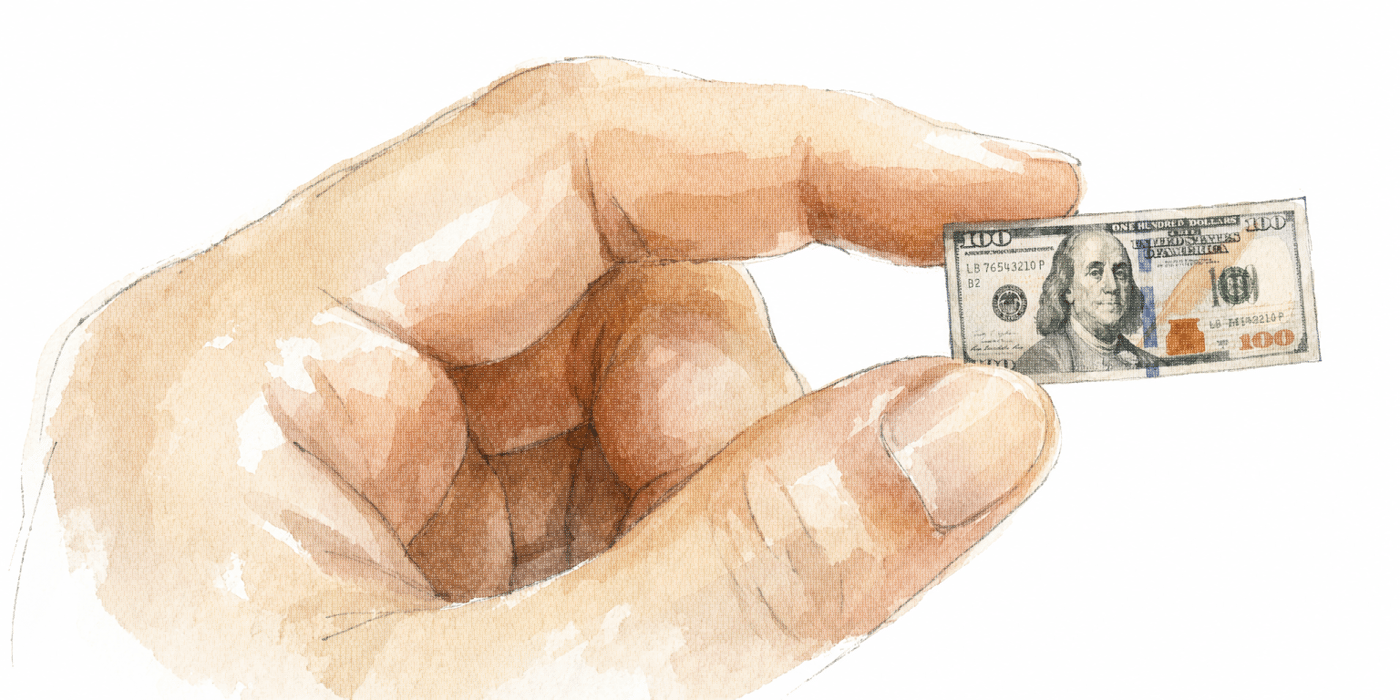
Borrowing from Carswell’s point, I enlisted the aid of the handy-dandy Bureau of Labor Statistics Inflation Calculator to determine the cost of inflation from the month I was born to January 2001 and found that $100 of purchasing power just as Bush 43 took office only required $17.76 in the month I was born, just before LBJ’s budget-busting Great Society kicked in. (That was the amount, I kid you not.) But that same $100 back before 9/11 now takes $190.19 to fulfill, as of the end of April. In my lifetime, the value of a dollar has declined tenfold, although obviously our incomes have also increased to make up most of that difference — but not all. Just ask the man whose father had a good enough Rust Belt job to support his growing family by himself in their two-bedroom suburban tract house how he now needs a working wife just to tread water.
Just since January 2021, inflation is over 27%, and that’s just on the “basket of goods” — many items have risen far more than that. It’s all thanks to federal spending.
Unfortunately, as a society, we have trained ourselves to expect our federal legislators to “bring home the bacon.” Using an example straight from the Congressional Pig Book, which is an annual publication by Citizens Against Government Waste, my adopted home state’s senior senator, Chris Coons, garnered The Singing a Sour Note for Taxpayers Award for his inclusion of two earmarks for opera houses in the First State. Granted, the amount in question ($950,000) is a rounding error compared to government spending, but the two opera houses have combined nearly $20 million in assets, and the state government also assists both entities. Moreover, it’s an amount a thousand families could have used in their pockets for the week’s gas and groceries.
“Lawmakers focused on their reelection in a few months or years care little about whether the United States faces economic stagnation decades from now,” states author and researcher Christopher Jacobs. But they should care, Jacobs continues, noting that rising federal debt will also raise interest rates. And, as he argues, “As federal debt increases, this trend of higher interest rates will only continue. It likely will crimp housing affordability, keep people locked in their homes, and prevent younger generations from getting on the ladder to build wealth via real estate. Higher interest rates will also make it more difficult for businesses, particularly smaller businesses, to attract capital to grow. After all, if investors can receive a high rate of ‘guaranteed’ return by putting their money in the glut of bonds the Treasury will have to sell, then why should they take a risk by funding business loans or buying stock?”
On the other hand, Jacobs warns against monetizing the debt, which would create inflation that, in his words, “may make pandemic-era ‘Bidenflation’ look tame.”
“Even at their mildest,” he adds, “loose interest rate policies to ease Washington’s debt burden would impose a tax on thrift by devaluing the efforts of those who had worked hard over their lives to accumulate savings.” However, the argument about reducing interest rates may carry the day since it’s also politically popular and could lead to the revitalized housing market we desperately need for younger folks to finally get a foothold on the economic ladder. The trick, however, would be keeping housing costs affordable, and that will be difficult with higher inflation.
While the Pig Book provides a good illustration of the issue, even eliminating all earmarks would barely make a dent in the nation’s spending problem, nor would all the DOGE cuts we got excited about a year ago. It’s taken us generations to get to this point of dependence on federal government largess to address our local and state problems, like fixing an opera house; unfortunately, we don’t have generations to wean ourselves from that dependence.
It’s sad to say, but I feel a lot of people will have to be hurt by an economic collapse before we get the gumption to change the situation. Yet we still have a short window to change that history if we can adopt the courage to demand it.