
The responsibility of parenting involves caring for another human being and ensuring the child is ready for the challenges of life in a complex world. It requires years of sacrifice, devotion, and hard work that only a parent can appreciate. In the past, most children not only had a mother and a father, but a strong network of relatives, neighbors, and a community with shared values.
Today, we live in a time when smartphones and computers have more influence on our kids than we do. No matter what parents do or say, there are millions of people online offering ideas that conflict with the values we’ve instilled.
Imagine being at work while strangers come into your home showing your kids violent or pornographic images, tempting them with belief systems that young minds can’t comprehend, and creating a virtual picture of the world that often defies reality. But this happens every day when children spend countless hours on these devices.
“By the age of 11,” the Institute for Family Studies found, “smartphones become the primary medium for internet access among American kids, with over 60% having a smartphone. These phones generally have few parental restrictions placed on them. Meanwhile, nearly 50% of three-year-olds use a Tablet, iPad, or Kindle, and many of these children have few or no restrictions.”
The power and influence of the Internet have entered our lives almost overnight, and we’re only beginning to understand the damage it’s doing to young minds. The laundry list of negative impacts on kids is extensive, as they get caught up in endless validation loops. They fear missing out as social media makes it look like everyone else has a perfect life. Compulsive gaming and doomscrolling become impossible to resist. And they become immersed in the lives of content creators whose worlds are carefully scripted.
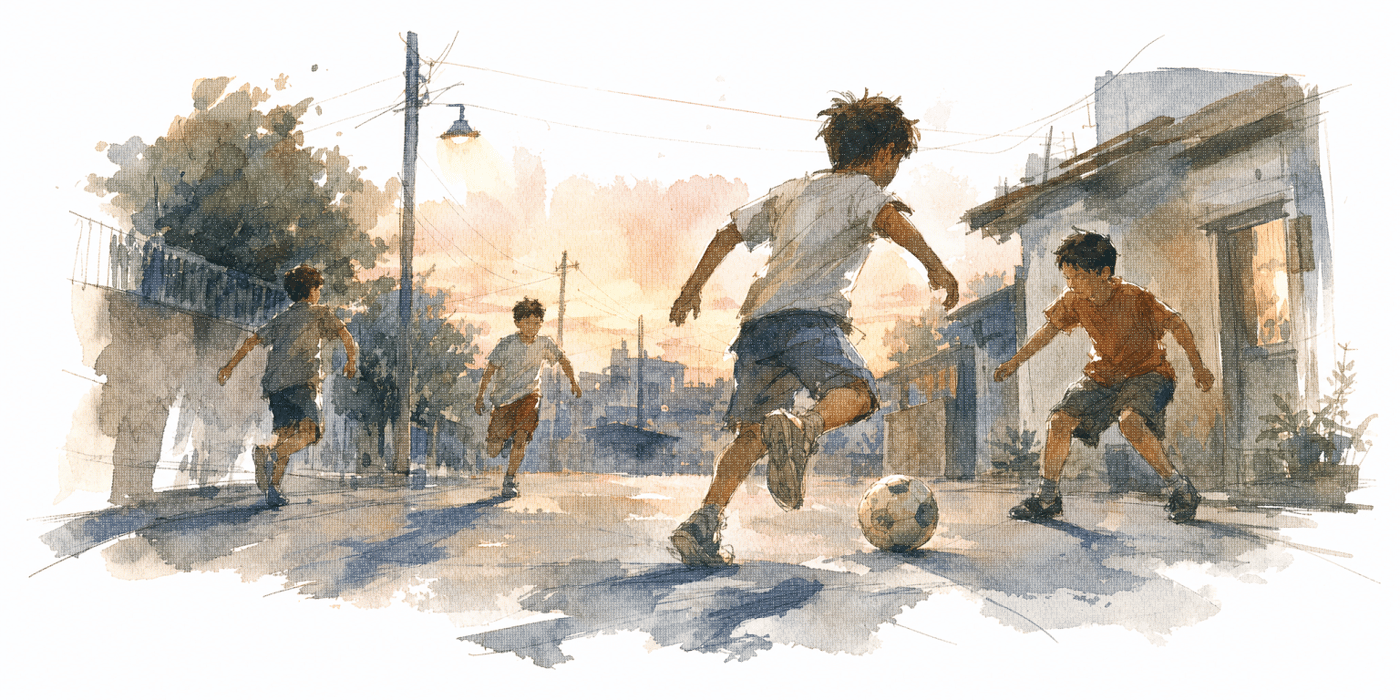
Sure, 25 years ago, we had television, radio, and even video games, but for the most part, kids still played outside where they socialized with others, skinned knees when falling off bikes, and read books. A generation ago, the typical high school or college graduate had a basic knowledge of literature and history. Today, video shorts summarize the American Revolution in 60 seconds or cover The Great Gatsby in 30.
“Over the past ten years, reading scores have declined in 83 percent of school districts,” writes National Review’s Rich Lowry. “What looked like a Covid-19-driven catastrophe is, instead, part of a long-running trend. Reading scores were falling at a similar clip prior to the pandemic, in the years 2017 to 2019, and continued to fall into 2024. In a third of school districts, kids are reading a full grade level below where they were in 2015.”
Lowry adds, “The ability to read is foundational to a child’s development. It enhances verbal fluency, memory, concentration, and executive function. It is associated with academic success and sundry advantages throughout life. That our schools are falling down so badly on such an elemental matter is nothing less than a civilizational failure.”
The problem with the lives many children lead today is that they’re not living in reality. As a result, they can escape the trials and tribulations of a typical young adulthood. These setbacks are critical in the psychological and intellectual development of the mind. By keeping our kids in a bubble, we keep them safe within it, but unable to survive outside it.
Former Senator Ben Sasse captures this well by explaining, “Rather than introducing children to the world in an age-appropriate manner, we’re preventing them from developing imagination, resilience, and grit. Allowed to navigate dark corners of the internet on their own, many kids are bizarrely prohibited from exploring their own neighborhoods. This overprotection, however well-meaning, prevents children from learning valuable lessons like overcoming boredom, conquering fear, and taking risks.”
The essential dilemma for parents is how much we should monitor our kids’ activities.
Amy Edmondson at Scientific American asks, “It’s easy to see why parents are torn: Should you let children make their own mistakes, or stay close by, removing obstacles, limiting risks and preventing failure?”
Answering this question was a lot easier back in the day, but now any decision we make is challenged by powerful cultural forces coming through screens, as the Internet has smashed our kids’ sense of right and wrong.
Leonard Sax, author of The Collapse of Parenting, suggests, “American popular culture — the culture of YouTube and Instagram and TikTok, of the Disney Channel and the Billboard Hot 100 — has become a culture of disrespect, teaching kids that it’s cute and funny to disrespect their parents and one another.”
Of course, parents have been dealing with this since the counterculture movements of the 1960s, but it’s even more pervasive today. Back then, parents, teachers, and the community generally provided more uniform expectations and guardrails. Even schools provided a solid education that complemented the community’s shared values.
Despite all these challenges, there’s a silver lining. There are great parents in this country who’ve raised their kids with a sound foundation. Even some young people are instinctively pushing back against the negative impacts of a technological society. Recently, for example, students at a college graduation ceremony in Florida booed a commencement speaker who praised Artificial Intelligence.
A lot of goodwill will emerge from these challenging times, and the fact that so many people are discussing where we lost our way is an encouraging sign. In the end, we might come out of this with stronger families and communities. It won’t be easy. Then again, being a good parent never is.