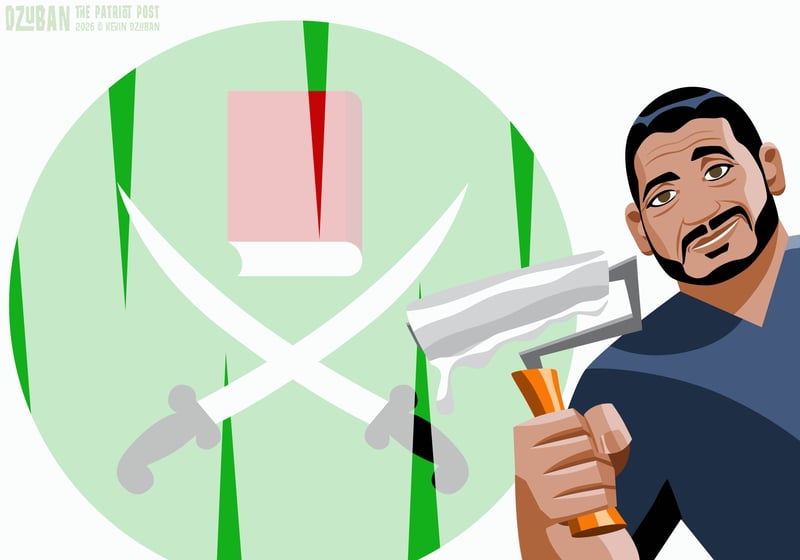

The recent Memorandum of Understanding signed by President Donald Trump and Iran wasn’t the ultimate surrender the president and others wanted, but in the end, peace has been restored (for now), and Iran will remain without nuclear capabilities (for now).
At the G7 summit in France this week, President Trump made sure everyone still knows who is in charge. “I’m the boss,” he asserted as he arrived late to a meeting where leaders were discussing economic policy. It was a lighthearted moment met with laughter, but there was a hidden message, perhaps meant to deflect some of the criticism that America’s global influence has waned.
The fact that the U.S. had to deal with Iran alone is a signal that, indeed, there’s only one sheriff in town, and that’s President Trump. Europe, meanwhile, retains its usual position of sitting on the fence.
Reuters reports, “Although European allies appeared supportive of the preliminary memorandum in public, diplomats cautioned that getting a lasting deal on Iran’s nuclear and ballistic missile program as well as its support for proxy forces in the Middle East is no small challenge.”
Europe’s leading nations know Trump is taking a second look at America’s singular role on the global stage and at whether NATO still has a purpose if its member states simply let the U.S. resolve conflicts on its own. This has led some European countries to think more seriously about their own self-defense.
“The United States remains the indispensable military power in the Western alliance,” notes The Washington Post, “providing the nuclear umbrella, intelligence capabilities and much of NATO’s logistical backbone. But an increasing number of leaders are exploring what a world looks like when America is no longer willing — or no longer expected — to lead every international response.”
Some European nations have taken the initiative to develop their own defense capabilities, such as the Future Combat Air System in France and Germany, but these systems are not living up to expectations.
As Fox News explains, “Europe’s most ambitious effort to build a homegrown sixth-generation fighter jet has collapsed, dealing a major blow to the continent’s push for military independence just as NATO allies pledge historic increases in defense spending. France and Germany have abandoned the fighter jet portion of the Future Combat Air System project (FCAS), according to French and German officials — a roughly $116 billion project launched in 2017 to develop a next-generation combat aircraft intended to replace France’s Rafale fighter and Germany and Spain’s Eurofighter fleets by 2040.”
And that’s not all. The most expensive and advanced submarines in Britain are essentially inoperable.
The Daily Mail informs, “The Royal Navy’s entire available fleet of hunter-killer submarines is stuck in the port, unable to sail — leaving Britain at risk from Vladimir Putin’s Russia. In a fresh humiliation for Britain’s Armed Forces, all five of its Astute-class submarines are currently laid up awaiting maintenance and other repair work. Military experts have also warned that the Navy’s lack of available nuclear-powered attack submarines — which carry up to 38 Spearfish torpedoes and a battery of Tomahawk missiles — leaves the UK’s sub-sea internet and power cables dangerously vulnerable to sabotage by the Kremlin.”
That report may be a bit of hyperbole, as Russia currently has its hands full in dealing with the war in Ukraine and likely isn’t too concerned about conquering Britain. Yet it does raise legitimate concerns about Western Europe’s plans to increase its investment in its own defense.
Then there’s NATO, whose viability or even necessity depends on its members contributing both financially and militarily. For decades, they’ve relied far too much on the U.S.
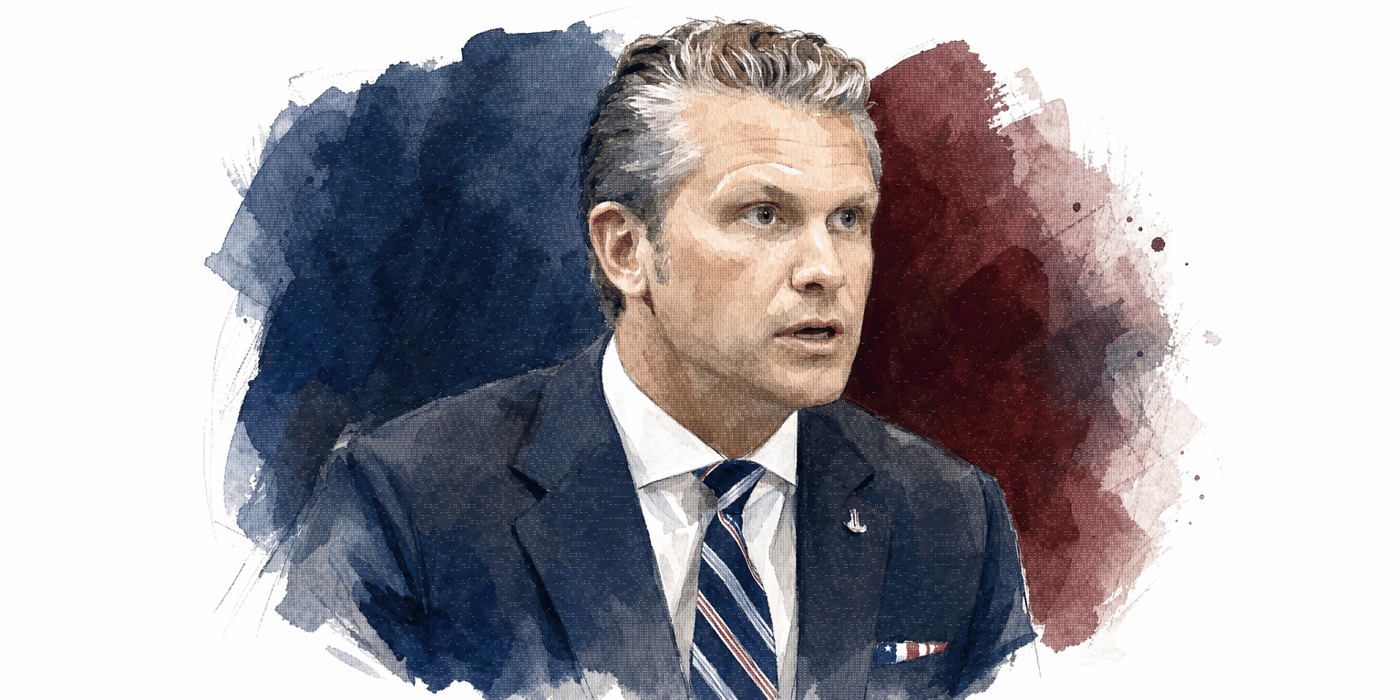
As our own Thomas Gallatin summarized earlier this year, “Even as NATO has expanded over the years since the collapse of the Soviet Union, it has, ironically, also lost respect for and appreciation of the one superpower that has upheld and ensured the alliance’s enduring strength since its founding.” The lack of respect for the investments and sacrifices made by America as part of NATO has been a thorn in the side of the Trump administration, echoed this week by U.S. War Secretary Pete Hegseth, who called NATO a paper tiger.
Hegseth plans to conduct a review into U.S. troop deployments in Europe, saying, “Make no mistake about it, this will be a real review. It will be designed to ensure that NATO is moving fast and irreversibly toward Europe leading, stepping up to take primary responsibility for the defense of Europe.”
He said that NATO lost its way by focusing on climate change and gender equity, adding, “NATO 2.0 was an era of distraction, deindustrialization, and demilitarization. It was an era of free riding, and those were lost years that we’re not going back to. And that’s why, at the Department of War, we’ve been so clear and so candid to restore NATO’s core military role and character.”
Hence, NATO 3.0.
The American military remains the most powerful in the world, but that power alone can’t resolve all wars or regional conflicts. There’s no doubt the U.S. will continue to lead other nations in keeping the world safe and secure. Now, we’re just asking our allies to take more responsibility for their own defense rather than sit on the sidelines.