
Inexpensive, readily available electricity is critical for America’s future if we hope to continue technological development into the age of artificial intelligence now upon us.
The means of meeting this increasing power demand will not be found through renewable energy. Indeed, the heavy investment in developing renewable energy has shown that, while it can help supplement fossil-fuel-based energy production, it won’t be able to replace it, let alone meet the ever-increasing demand for electricity.
The AI boom, which depends on massive energy-gobbling data centers, can, in some ways, be credited with waking up the tech world to the fact that renewables simply won’t cut it.
At the same time, the solution to the supposed green dream of saving the planet would have been to lean into nuclear power, which, for disingenuous reasons, leftists eschewed.
Thankfully, President Donald Trump recognized the foolishness of the Biden administration’s green energy policies, which were exposed as little more than a slush-fund scheme for Democrats and their buddies.
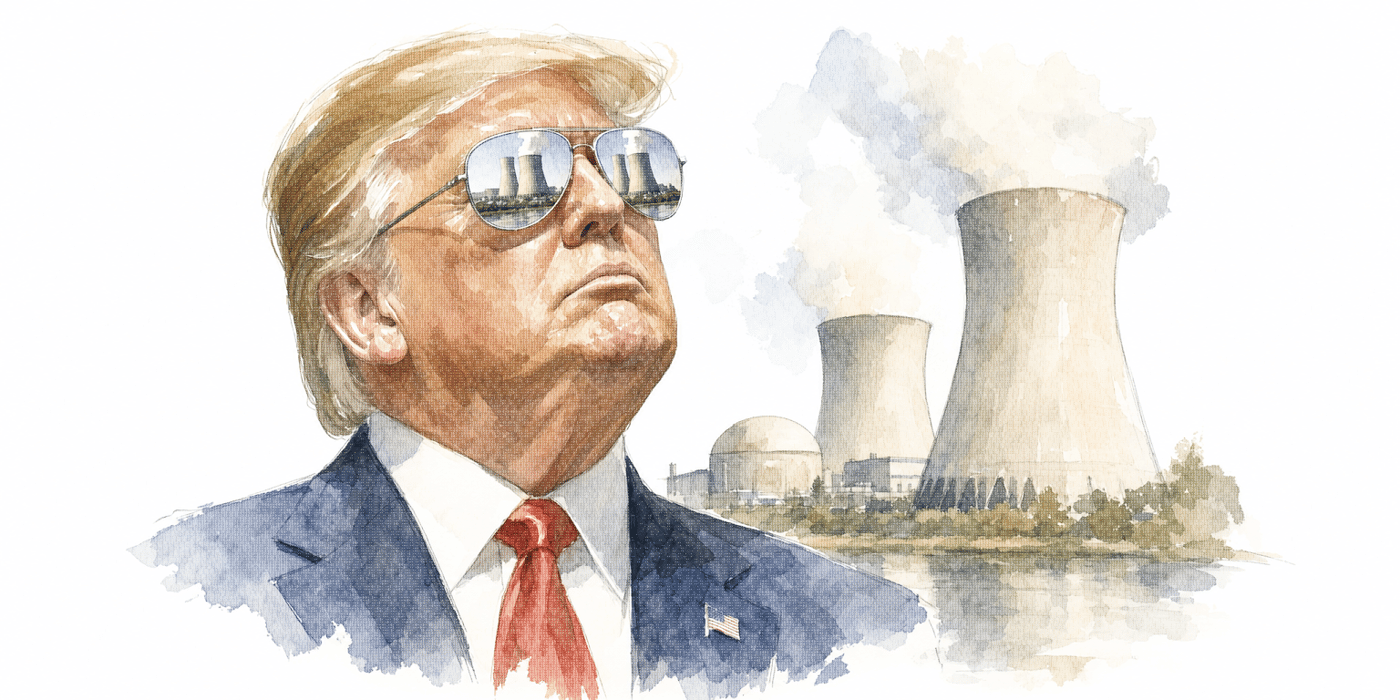
Trump campaigned on making electricity bills cheaper. While “drill, baby, drill” will certainly help meet that goal, greatly expanding the nation’s nuclear power generation will be a key component in exponentially increasing electricity output.
The president’s goal is to see 10 new large nuclear power plants built and operating by 2030, with the aim of quadrupling the nation’s nuclear power production, equating to 400 gigawatts of power by 2050.
Those are ambitious goals, given that only one new nuclear power plant has been built since the 1970s: the Vogtle Plant in Georgia, which was completed in 2023.
High production costs, stringent regulations, and public fear have stymied America’s nuclear power development for decades. However, things appear to be changing. Trump’s favorable push for more nuclear power combined with a number of promising technology developments have created a nuclear power renaissance of sorts in the U.S.
Given that nuclear power plant construction costs are so high, however, the Department of Energy has announced a $17.5 billion low-interest loan program to help companies finance the construction of 10 new plants.
According to U.S. Energy Secretary Chris Wright, these government loans will “help accelerate the timeline of building those large-scale reactors by up to three years, lowering construction costs and ensuring the United States is able to deliver on President Trump’s bold and ambitious energy addition agenda.”
The plan is for Westinghouse Electric, with its newly developed AP1000 nuclear reactor, which is capable of producing 1.1 gigawatts of power (Great Scot!) — more than enough electricity for 800,000 homes — to partner with power companies to construct these nuclear power plants. Thus far, seven utility companies have signed on to the plan.
Westinghouse CEO Dan Sumner believes, “It really kick-starts fleet-scale nuclear development in the United States.” Let’s hope so.
The plan is also attracting other investors, primarily from Big Tech, who recognize the need to increase energy supply to run their AI data centers. Currently, nuclear power provides roughly one-fifth of the nation’s electricity. More nuclear power will mean more stable, reliable, and affordable power, even as electricity demand grows exponentially.
The great irony in all of this is that Donald Trump’s push to increase nuclear power output will do more to cut down on carbon emissions than the climate alarmists’ renewable net-zero agenda. That might make them hate him even more.