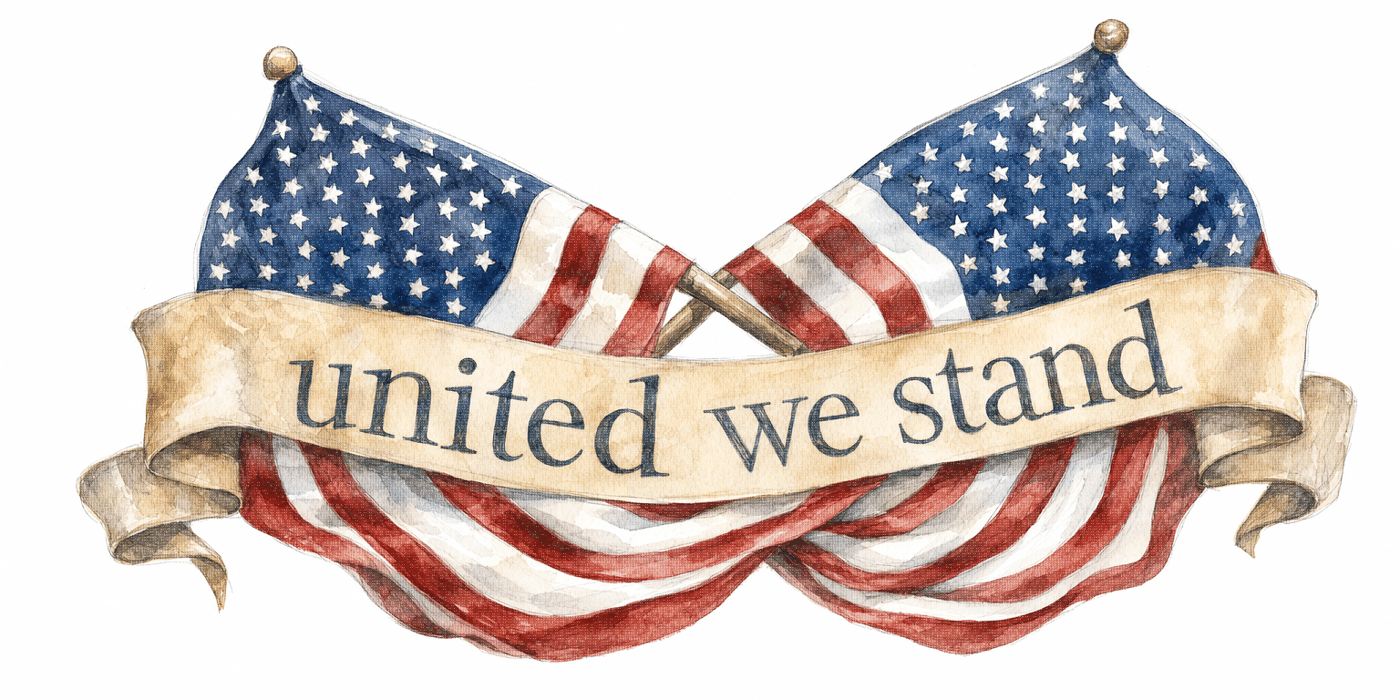

Are we not the UNITED States of America? Is the old cliché “united we stand, divided we fall” still true? We hear the chants “USA! USA! USA!” in sporting events across the country, but do we love our country enough to join forces and pull together on the things that matter?
Those of a certain age today will surely remember the words “one nation, under God, indivisible, with liberty and justice for all” from our Pledge of Allegiance, recited daily in school. Is that just a fanciful piece of our childhood? Or do those words still have meaning?
Over the past few decades, surely one of the most prevalent topics in columns such as this one has been the corrosive effect of the vast separation between the Left and Right. Eight years ago, I wrote a guardedly optimistic book titled Indivisible? wherein I pointed out that even on the most controversial issues facing us, there is common ground on which we can build constructive paths forward. But that rarely happens. In the intervening years, the chasm between the Left and Right has grown ever deeper and wider.
In fact, the divisions pulling Americans apart are spreading in all directions — like a windshield crack that starts small in one corner and then works its way all the way across, branching into smaller cracks that grow on their own. At first, we can look past the cracks, but ultimately they render the whole windscreen unusable.
It’s not just the Left vs. Right split; in the past two years alone, we’ve watched unity erode on both sides of the political aisle. Republicans in the Senate, hanging on to their slim majority and with no certainty at all that they’ll retain their leadership in the midterm elections, continue to let internal differences get in the way of locking down surefire legislative wins.
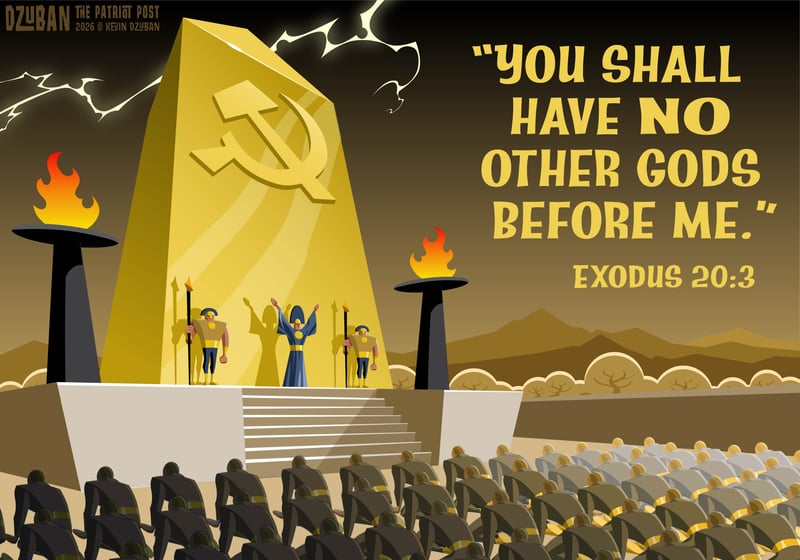
And the Republicans’ difficulty in keeping their act together pales in comparison to the Democrats’ internal revolution. Suddenly, Democratic Socialism is all the rage, a wave seemingly sweeping the country from coast to coast. Actually, there’s nothing very new about Democratic Socialism — it’s more like communism than socialism, and its primary objectives seem to be a hodgepodge of stale dreams of the extreme Left: abolish ICE, become a country with no borders, no prisons, no police, free healthcare, free college, all with no obvious economic engine to make it all possible.
We’ll see how far that goes, but for now, Democrats are on a roll, thrilled with the buzz and evidently willing to ignore the small detail of whether those nutty policies would ever work.
And so, with fault lines deepening both within and between our two political sides, is the hope for a truly unified America lost forever?
Perhaps so, but let’s not give up quite yet. Instead, readers, bear with me, and let’s try to imagine what a truly unified America might actually look like.
First of all, the wheel-spinning on both sides of the political aisle reminds us once again that unity could never be achieved by a single-party system. On the contrary, every time in our history that one political party seems to have secured an ironfisted grip on the U.S. government, its political leadership drives us into a ditch.
Instead, we must find a way to build (or, more accurately, re-engineer) our political system in a way that both retains the power of diverse perspectives and competing ideas and provides sure-handed leadership supported by all.
While such a system is nothing like any that we’ve seen in our country in decades, it’s not very complicated at all. At its core, unity means pulling together — for the good of our country and everyone in it — on matters critical to our nation’s survival and continued success. And when those we’ve elected to lead our country set policies or take actions with which we disagree, unity means challenging those elected leaders firmly but respectfully, in the manner prescribed by our Constitution.
By the same token, if ours were a truly unified nation, it is inconceivable that any of our citizens, regardless of political orientation, would ever openly hope for defeat or failure in our country’s missions, or actively try to convince others that our elected leaders are intrinsically evil.
That kind of unity is actually a fundamentally American characteristic. Call it teamwork, the kind we learned as youngsters in school and in sports. And yes, we’re all on the same team.
Are we meeting that standard today? Not even close. Democrats — steeped in Trump-hatred — violate it every day of the week. And it’s not a stretch to expect Republicans to behave similarly should Democrats turn the tide in 2026 or 2028.
But it doesn’t have to be that way. So let’s continue with the pipe dream and visualize what it might look like to apply the unified-nation concept to the realities of 2026.
First, we could all stop arguing about the things we already agree upon (even if impolitic in today’s climate to admit it openly): As specific examples:
- We love our country, we revel in our traditions, we stand for “The Star-Spangled Banner,” we salute our flag, and we cheer wildly for our American sports teams.
- We revere our military, we thank our veterans for their service, and we give full-throated support for U.S. success in warfare (even when we wish the country were not at war).
- We know that we are a nation of immigrants, so we support generous, legal immigration, but we also recognize the necessity of controlled borders.
- We have no tolerance for fraud and fully support finding and thwarting it, regardless of the political alignment of those involved.
- We believe that our nation is a beacon of freedom and should be both an example and a force for good worldwide.
- We are a constitutional republic, a nation of laws; we rigorously support free and fair elections, and we have no tolerance for election abuse.
- We believe that American citizenship is a priceless gift. We protect it zealously.
With the no-brainers out of the way, we can then zero in on the controversial issues of the day, via respectful (there’s that word again) debate, considering input from all sources. These might include:
- The most practical and proper disposition of the millions of illegal immigrants residing in our country, with consideration of both their humanitarian treatment and the safety and security of American citizens.
- Differing views as to what constitutes an adequate economic safety net for our entire population.
- The most cost-effective approach for a healthcare system that meets the needs of all Americans.
- Life issues including both abortion and end-of-life care.
- And a long list of others, constantly appearing.
My imagination is on a roll, but I’m visualizing that a unified nation could seriously consider:
- Dismissal of over-politicized issues such as systemic racism, white supremacy, LGBTQ discrimination, and Nazi/fascist behavior that are more inflammatory than substantial. Let’s put them to rest, for once and for all.
- Elimination of “sanctuary” status for any U.S. cities and states.
- Dramatic reduction of rhetoric by media or political personnel that endangers the lives of public figures.
And now the reality check: We know only too well that partisanship is driven more by political opportunism than by deeply held principles. But we can leave that squabbling to the politicians seeking power. For the American people, though, unity can make a world of difference.
As I look through the imaginary picture of a unified nation outlined above, it all seems like common sense. And we’ve done it before. Eighty years ago, our nation had been grievously attacked, the world was on fire, and our future was very uncertain. And so emerged our greatest generation. Our situation facing America at the dawn of World War II was not very different than today’s, as we face a turbulent world and the ever-present threat of nuclear war.
Could we do it again? Of course we can.