
It’s not just Israel.
One of the least convincing arguments of opponents of the Iran war is that it is a conflict initiated by the Jewish state for its own benefit — the U.S. is just along for the ride.
This view not only discounts the U.S. interest in defanging Iran but neglects that there are other countries in the region besides Israel and Iran and that they, too, have a stake in the outcome of this war.
If there’s anything that Iran has succeeded in doing over the first month of battle, it is further demonstrating the intolerable threat that it represents to the region.
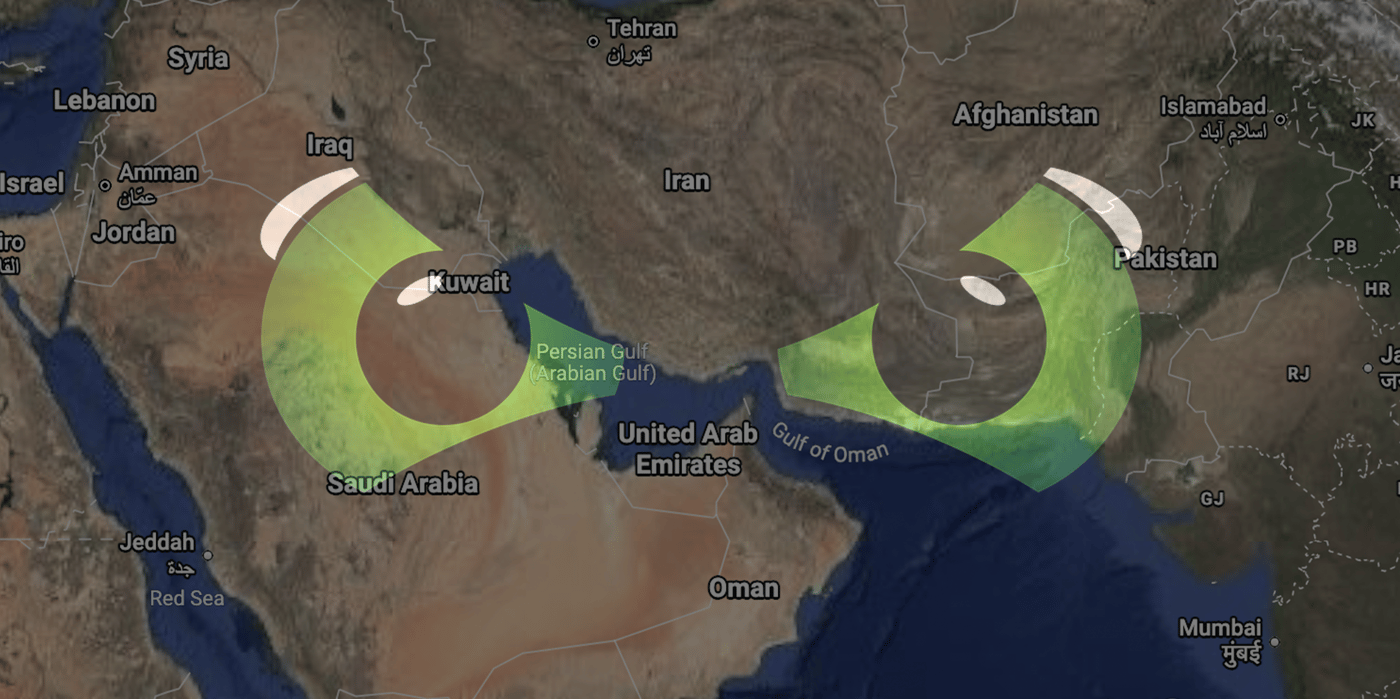
The so-called Gulf Cooperation Council states — Bahrain, Kuwait, Oman, Qatar, Saudi Arabia, and the United Arab Emirates — have the misfortune of being located just across the Persian Gulf from Iran, putting them on the front line of the war.
A key element of Iran’s strategy has been to impose economic pain on these states to force them to press the United States into staying its hand.
For all that the effective closure of the Strait of Hormuz is indirectly harming the United States by driving up the global price of crude and other materials, it is a direct blow to the Gulf states, since the Saudis, Kuwaitis, and Emiratis send the majority of their oil through the waterway.
The Iranians have struck the Gulf states with missiles and drones by the thousands. The ongoing blitz is damaging energy infrastructure and destroying the reputation of the Gulf states as an oasis of calm and economic development in an otherwise turbulent region.
There’s no insurance policy against having a fanatic millenarian state as a neighbor, while nothing quite concentrates the mind like an unprovoked drone attack on one of your luxury hotels — or your airports, oil fields, and data centers.
Iran likes to pretend that it is only striking at military infrastructure, but that’s absurd.
As long as Iran is run on its current basis, it is a grave danger to these countries, which before the war tried to keep their heads down or even get closer to Iran as a way to mitigate the threat.
This is the approach that the Saudis tried after an Iran-backed attack hampered the country’s oil production in 2019.
That experiment is now done. According to published reports, the crown prince of Saudi Arabia, Mohammed bin Salman, privately urged President Trump to launch the war even as the Saudis talked up diplomacy in public, and now MBS has been telling Trump to go all the way and topple the Iranian government.
The New York Times relates that the Saudi leader “is concerned that if Mr. Trump pulls back now, Saudi Arabia and the rest of the Middle East will be left to confront an emboldened and furious Iran on their own.”
The UAE has been a particular Iranian target. Its ambassador to the U.S. wrote in the Wall Street Journal the other day, “We need a conclusive outcome that addresses Iran’s full range of threats: nuclear capabilities, missiles, drones, terror proxies and blockades of international sea lanes.”
One is tempted to conclude that the Gulf states are “all neocons now.” That’d be overstating it, though. Despite getting hit by Iran, Oman is maintaining its traditional posture as a mediator, and Qatar is always a bad actor.
Much depends on how the war ultimately turns out, but it is easy to see the Gulf states looking to the United States for greater security guarantees and warming up further to Israel, which is demonstrating the military might to confront an Iran that has no compunction about lashing out at states that are doing it no harm.
It may be easy for hostile U.S. observers to portray the Iran war as about Israel and only Israel, but the Gulf states unfortunately know better — and have the battle damage to prove it.
© 2026 by King Features Syndicate