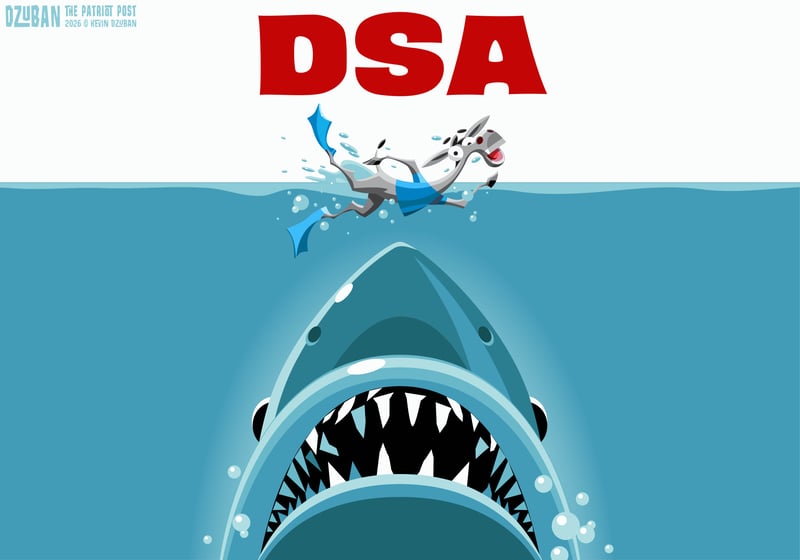
You aren't going to believe the latest lawsuit fad in America: suing companies as monopolistic for cutting prices to consumers. In legal mumbo jumbo, this is called "predatory pricing" — keeping prices lower than charged by competitors. The idea is to keep prices so low that rival firms can't compete. Quick, throw Walmart, Home Depot and McDonald's in jail.
This is no joke. Recent news reports indicate that the so-called Main Street Competition Coalition, helmed by a former small and midsize grocery chain lobbyist, a Biden administration official and trial lawyers, is lobbying to outlaw volume discounts under a 1936 law called the Robinson-Patman Act.
The RPA was intended to shield mom-and-pop stores from competition from chain stores offering bulk discounts. Until recently, history has largely recognized this foolish law as a New Deal mistake. It was left unforgotten until very recently. The Biden Federal Trade Commission under activist Chair Lina Khan dusted it off as a tool to more closely enforce "fairness" over competition, to much fanfare from liberal activists and ambulance-chasing lawyers.
Now, with the Trump FTC having fired aggressive commissioners like Khan and dropped Biden-era cases — and with Congress unlikely to pass new attempts to reinvigorate the RPA — its cheerleaders are now pivoting to the courtroom as a new arena in their fight to destroy these pricing discounts.
The "antitrust bar" confirms that the RPA could bring jackpot settlements against big box stores offering retail chain volume discounts under the guise of "price discrimination" lawsuits.
If the trial lawyers win, customers are forced to pay higher prices.
The RPA's logic barely passed muster when chain stores were new. In 2026 America, the biggest nationwide retailers deliver economies of scale that keep prices low for millions and force competitors to work to do the same.
Far from corporate greed or anticompetitive behavior, competitive discounts driven by volume and supply chain efficiencies fuel free markets, helping families save money on groceries, appliances, TVs, cellphones, computers and cars. Walmart alone has saved American's tens of billion on low-price bulk sales.
Consider the Biden FTC's abandoned PepsiCo case under Khan.
Pepsi faced bogus charges for making volume deals that let families buy soda 12-packs for a few bucks — not at boutique pricing of a dollar per can. Trump's FTC rightfully dropped it, but class-action sharks pounced on the same debunked claims to file their own lawsuits, signaling to every company: Fight to cut costs for shoppers and get sued.
But just who is getting hurt from charging low prices? Certainly not the customers, who line up in parking lots sometimes more than an hour before stores open to grab bargains. Yet the shark lawyers just need a few early wins to punish the big box retailers for offering cut rate prices. If they win, get ready for an avalanche of lawsuits.
Take the case of New York's Oreos meltdown. Mondelez, the maker of Oreos, Ritz and Wheat Thins, quit direct deliveries to 1,000 New York City indie grocers like Foodtown and Key Food — citing parking and delivery woes — while serving ShopRite and Wegmans. Indies now pay wholesalers extra, jumping $5.99 Oreos to $6.99 and sparking RPA violation cries from the National Supermarket Association.
NYC Mayor Zohran Mamdani says the state Senate's proposed Consumer Grocery Pricing Fairness Act would ban favoring chains, ensuring Mondelez retreats entirely or passes indie delivery costs to all outlets — including high-volume, low-cost ones. New Yorkers lose cheaper efficient options; everyone's Oreos will cost more.
A recent study crunches the numbers: A Robinson-Patman type revival could spike grocery prices 5%-10% while gutting affordable options, slamming rural families and low-income communities hardest. That's more than $500 extra annually for the typical family's grocery bill — money that stays in working-class pockets when markets work freely — precisely while large volume retailers often provide the only real relief in this post-Biden inflation hangover.
This madness traces straight back to Khan's war on companies — from soda bottlers to tech giants and even Uber-Lyft driver pay deals. But without the cudgel of a Khan-led FTC, the battle shifts to this lobbying and lawsuit effort evidently backed by more expensive retail outlets, which are planning a May 14 launch event to rally more plaintiffs against "dominant firms."
Republicans and sensible Democrats should unite against this effort if they want to make America affordable again. The legal doctrine behind the RPA is obsolete as the black-and-white TV. Decades of sidelining this relic have unlocked markets to reward efficiency, innovation and scale — delivering genuine consumer wins at the checkout line.
There is something wrong with our legal system if cutting prices is a crime. Laws that prosecute cost-cutting are only going to make America expensive again.
COPYRIGHT 2026 CREATORS.COM