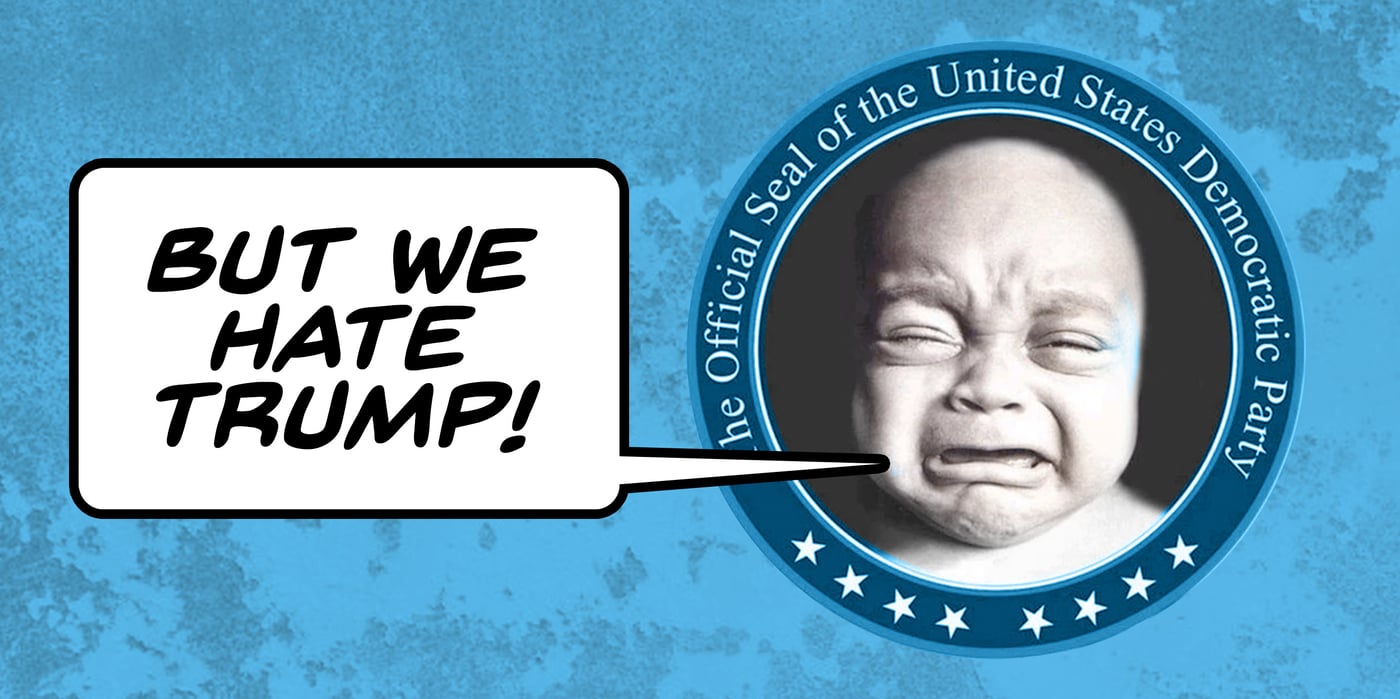

The reference to “Trump Derangement Syndrome” (TDS) has moved far beyond its origins as a snappy insult on social media a decade ago and entered a broader conversation about being a diagnosable psychological condition, with a unique set of triggers and symptoms, requiring formal therapy for recovery. What began as a label aimed at people on the Left who reacted intensely and irrationally to every move Donald Trump made has evolved into something much more serious. More than the commentary related to the divide between conservatives and Democrats, the obsessive focus on Trump has become a serious concern among mental-health professionals, as noted by Mark Alexander this week in “’Tis the Season for TDS Family Fractures.”
The idea of deranged behavior with regard to politics is not new. It was first diagnosed by noted psychiatrist and political analyst Charles Krauthammer in reference to critics of former President George W. Bush. He described “B.D.S.” as “the acute onset of paranoia in otherwise normal people in reaction to the policies — nay, the very existence — of George W. Bush.”
The same diagnosis is now applicable to those who have a deep and irrational fear of Trump. However, it’s clear that the reactions of most on the Left today to pretty much everything the current president does are far more intense than during the Bush years. The phrase has become a kind of shorthand suggesting that opposition to Trump isn’t just political but reflective of underlying mental illness.
National Review has published discussions describing it as a phenomenon in which “otherwise reasonable people” react disproportionately to Trump. Syndicated columnist Larry Elder shared similar points, arguing that some critics struggle to acknowledge anything positive he does. Although the term still most commonly carries a mocking tone, it is increasingly being treated as a legitimate concern about emotional overreaction and the stress of being overloaded with political news every minute of every day.
In a recent interview with Fox News host Harris Faulkner, psychotherapist Jonathan Alpert described his experience working with clients struggling with TDS. Dr. Alpert said that within minutes of starting a session, the client will turn the conversation to Trump, and a clear obsession and hyper-fixation on him will become the focus of their meeting. Alpert described one client who “said she couldn’t enjoy her vacation because anytime she saw Trump in the news or on her device, she felt triggered.”
Other symptoms mentioned include feeling restless, being unable to sleep, feeling depressed, becoming distressed at just Trump’s presence in the news, or being so preoccupied with the idea of him being the president that it interferes with daily life. Dr. Alpert also revealed the shocking statistic that roughly 75% of his patients are presenting with this problem.
While TDS is not an official clinical diagnosis — and mental-health professionals are quick to note that it does not appear in the Diagnostic and Statistical Manual of Mental Disorders — similar themes are emerging in therapist blogs and counseling-center posts. The Therapy Group of DC writes that it uses the term in quotes, acknowledging both the general intent behind it and the intense emotions some clients express.
On the political front, a bill led by Representative Warren Davidson would direct the National Institutes of Health to study the “psychological and social roots” of the phenomenon.
Descriptions of TDS vary, but several themes appear repeatedly: a persistent fixation on Trump that colors daily interactions and activities; sleep disturbances and restlessness triggered by news coverage; and lifestyle decisions influenced primarily by one’s perception of him, such as avoiding workplaces or even declining assistance — sometimes much-needed — based on others’ political views.
One viral video shows a woman who says she is living in her car. She had been offered a job but says she quit as soon as she learned her supervisor was a Trump supporter. She reacted the same way when a friend offered her an affordable place to live, turning down the help for that exact reason.
Videos of liberals overreacting to news about Trump have circulated on social media for years, so it isn’t entirely surprising that that level of emotional strain could contribute to a psychological breaking point. Several trends seem to explain why the concept has gained new traction.
First, the scale and intensity of emotional reaction have increased. What once served as a playful dig is now described by some as an inescapable preoccupation that, in extreme cases, interferes with people’s ability to function normally. Reactions have gone from frustration and disdain for the current president to total isolation from anyone who supports him, and even wishing harm on those who do.
Second, the idea is gradually being discussed in medicalized terms. Professionals are more regularly openly talking about symptoms, triggers, and treatment in an official sense, and legislators are even proposing research studies as a serious measure to both understand and provide relief to those who are crippled by this condition.
Third, political polarization has deepened, and TDS is now used less as a tool to dismiss manic reactions to Trump and more as proof that the nation’s divisions have broken people, mentally and emotionally, to the point of needing actual treatment.
Finally, the conversation has expanded beyond internet culture to media, therapy blogs, and even debate amongst lawmakers on how to address it. Put together, these developments show how a term that started as a joke has become a reference point in discussions about stress, anxiety, political overexposure, and how relentless fearmongering by the media can have lasting and devastating effects.
Whether someone views Trump as a controversial political figure or a destabilizing force in their life, the broader insight remains the same: when politics becomes so overwhelming that it disrupts basic daily functions, well-being, or relationships, it signals a deeper problem with how we process information and how we can limit the impact by setting limits on how much news we take in.
TDS is gaining traction as a recognized mental health diagnosis, as its presence in therapy sessions, commentary, and proposed policy suggests that the emotional toll on society is significant, increasingly difficult to ignore, and perhaps even more challenging to treat.