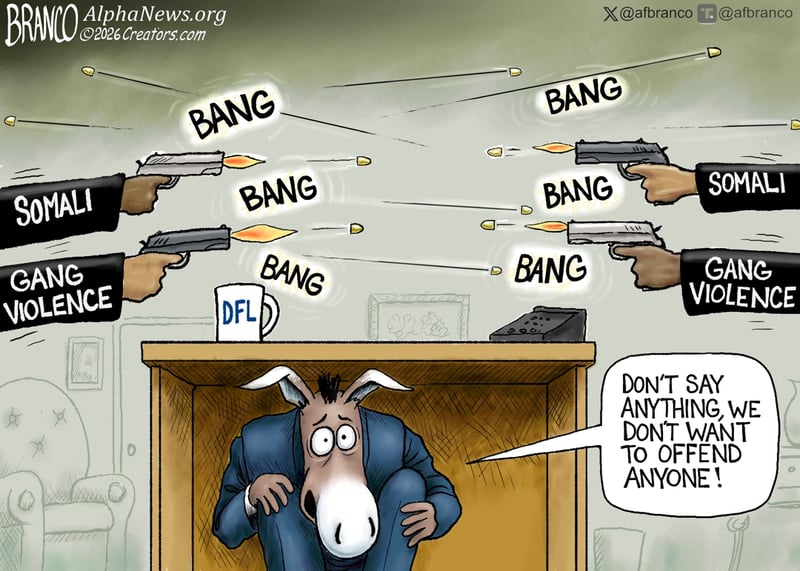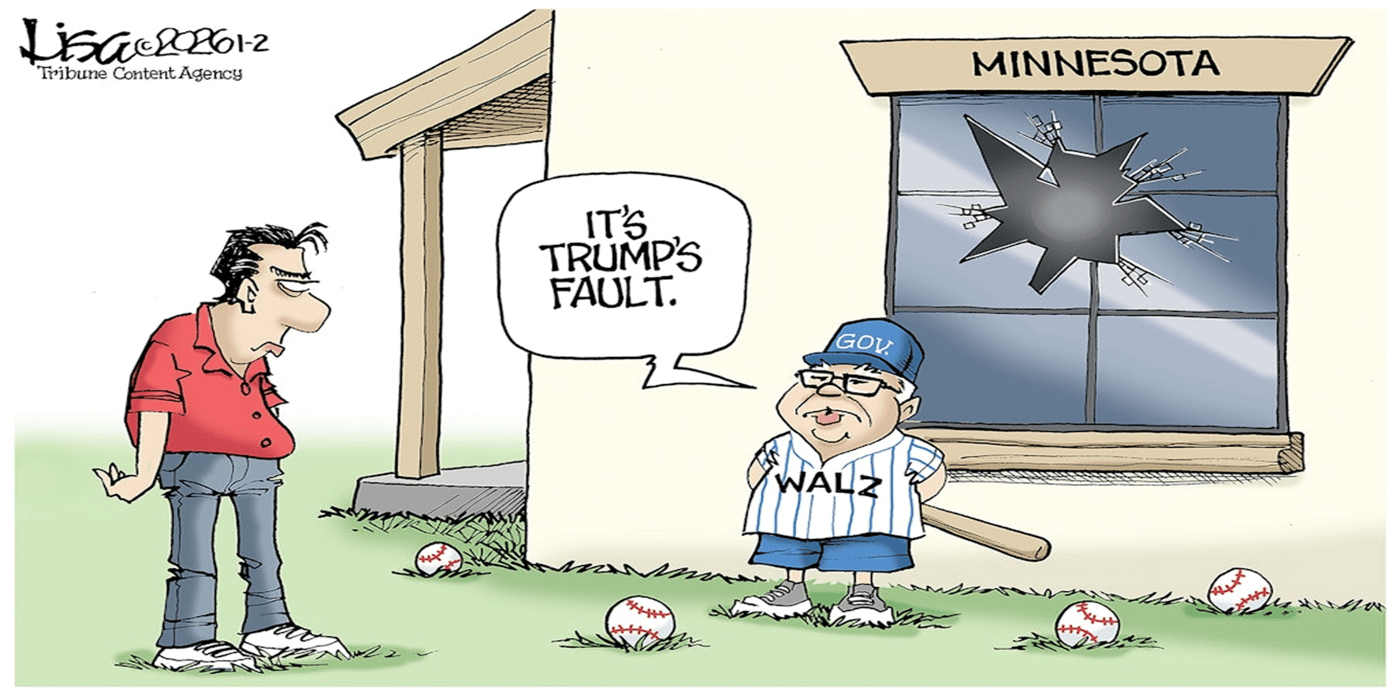

As I contemplated the totality of the information we know today, the Minnesota fraud scandal is much more of a national security problem than we are aware.
The line of thinking that follows isn’t so much a “conspiracy theory” as it is an example of how ideology and opportunism intersect, and that intersection provides certain opportunities over time — if it is noticed and acted upon. What I want folks to know is that our own government has made moves — and, primarily, governments under Democrat control — that have led us to where we are today. That destination is encapsulated and exhibited in several Democrat-run states, Minnesota being one of many, but it just happens to be first in the headlines right now.
The Minnesota fraud scandal does represent far more than a failure of oversight — it is a national security crisis that has been decades in the making. What unfolded on Governor Tim Walz’s watch isn’t random mismanagement but the logical endpoint of policy decisions stretching back 60 years that created vulnerabilities adversaries now exploit.
Federal prosecutors estimate that half or more of the $18 billion Minnesota spent on 14 Medicaid programs since 2018 was fraudulent. Seventy-eight people have been indicted in the Feeding Our Future scheme alone, with 57 convictions for stealing over $250 million from programs meant to feed vulnerable children. Housing assistance programs hemorrhaged $104 million. Autism treatment services lost $14 million. Some funds reportedly reached terrorist organizations, including Al-Shabaab and ISIS. The Small Business Administration now reports an additional $430 million in fraudulent COVID-19 loans from Minnesota criminal networks.
This industrial-scale theft didn’t happen overnight. It required policy foundations laid systematically over decades.
The trajectory begins with three transformative acts under a single Democrat president, Lyndon Johnson. The Civil Rights Act of 1964 — necessary but exploitable — opened doors to intentional misuse. The Economic Opportunity Act launched the “War on Poverty” through Job Corps, VISTA, and Head Start, setting the stage for massive welfare-state expansion. Then came the Immigration and Nationality Act of 1965, which shifted immigration demographics fundamentally from Europe to Latin America and beyond.
The 1965 Act abolished national-origin quotas favoring Northern and Western Europe, introducing instead a preference system prioritizing family reunification, with no numerical cap on immediate relatives. While not directly addressing illegal immigration, it created unintended consequences that fueled its rise — particularly from regions with vastly different governmental experiences.
This matters because post-1965 immigration increasingly brought people from countries where collectivist, corrupt, or criminal governance was the norm. These populations held perspectives and behaviors that were often fundamentally at odds with traditional American conceptions of limited government and individual responsibility. The issue isn’t ethnicity — it’s the importation of cultural attitudes toward government corruption that treat fraud as a survival strategy rather than a crime.
Ronald Reagan’s prosperity cycle and the Soviet Union’s defeat temporarily removed communism from headlines, where it had dominated since Winston Churchill’s 1946 “Iron Curtain” speech. But the 1990s birthed Critical Race Theory and Third Wave Feminism, combining Marxist Critical Theory, Cultural Marxism, and radical misandry to further degrade traditional American social structures.
Then came COVID-19. Democrat governors used amorphous “public health” statutes for a dry run, demonstrating how much power they’d wield and how compliant citizens would be. It proved that intellectual and scientific communities were corrupted by ideology and willing to destroy careers to serve their purpose.
The 2020 election featured anomalous actions before and after voting that installed a deteriorating president and his DEI-selected vice president, one proven incapable of executing even basic governance tasks.
Which brings us to the real meaning of Minnesota and Tim Walz.
Walz — a proven liar about his military service and background with unexplained China connections — represents something darker. Minnesota isn’t alone; it’s simply the headline case. California improperly claimed $52.7 million in federal Medicaid reimbursement for illegal immigrants and overbilled at least $500 million more through insurance tax schemes. Illinois, ranked the second-most corrupt state nationally, saw four of its last 11 governors imprisoned. Across the country, the Government Accountability Office estimates taxpayers lose between $233 billion and $521 billion annually to fraud, with Medicaid alone losing $31 billion in fiscal year 2024.
Democrat-run states dominate this carnage. When 27 states surrendered SNAP recipient data to federal fraud investigators, nearly all Republican-governed states complied. Twenty-two Democrat states — including California, New York, Illinois, and Minnesota — fought disclosure, arguing they were “protecting” recipients, while evidence suggests they were protecting their political ecosystems.
Whistleblowers repeatedly warned Minnesota officials about Feeding Our Future fraud beginning in 2019. They were ignored. When CBS investigated, they found officials allegedly dismissed concerns because scrutiny might appear racist. Federal prosecutors reported “fraud tourism” — criminals from Philadelphia hearing about “easy money” in Minnesota, traveling there to enroll fake businesses, returning home, and filing fraudulent claims remotely. Nobody stopped them.
This is the deeper meaning of Walz and Minnesota: Democrat officials signaled they’re open for business. COVID responses by government, the intelligentsia, and the media were the audition showing Russia and China that these leaders and entities will do whatever their masters demand and get paid handsomely. Walz isn’t alone in sending the message that America was for sale.
The American welfare system — 90 programs costing over $1 trillion annually with majority federal funding — creates perverse incentives. States profit from expanding rolls with minimal financial stake in preventing fraud. When the structure rewards growth over integrity and federal dollars flow regardless of oversight, corruption becomes inevitable.
Minnesota’s $9 billion scandal dwarfs national welfare fraud estimates from previous decades. It represents not anecdotal abuse but systematic, industrial-scale theft. The FBI sat on evidence throughout Biden’s entire term while the media buried the story. Now the scale is undeniable — too big to stop, thoroughly documented, with multiple federal agencies surging into Minnesota.
This pattern — loosened immigration from corrupt regions, expanding welfare programs with weak oversight, degradation of traditional American civic virtue, politicization of knowledge and science, officials who dismiss fraud warnings as racism, and stolen funds potentially reaching terrorist networks — reveals how ideology and opportunism intersect over time. It creates opportunities that adversaries notice and exploit.
The message to the world is clear: American institutions and jurisdictions are open for business and are inviting bids.
The question is whether America will recognize this national security threat before more adversaries accept the invitation.