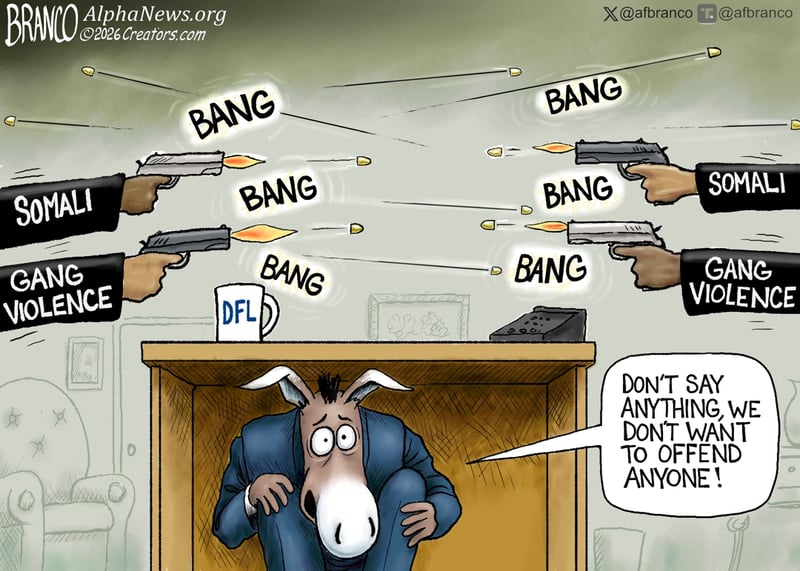

Rodney King’s plaintive call for calm in the midst of the 1992 Los Angeles riots — “People, can we get along?” — often comes to mind these days. It’s not just about race riots. The simplicity and clarity of his words ring true on hotly contested issue after issue.
For example, last week’s New Year holiday produced the perennial flood of print and broadcast media retrospectives of all that happened in 2025 and prognostications about what it means for the year ahead. That’s always a useful exercise, but this year, in my view, it all boils down to two inescapable observations:
1.) The difference between the first year of President Donald Trump and the final year of President Joe Biden is stunning. Trump grabbed the reins the moment he took office and has operated at a breakneck pace ever since. Never have we seen a president work so hard and achieve so much in such a short time.
Whatever happened to the notion that governments grind along painfully slowly, no matter who we elect? This time, it’s different. Watching Trump in action keeps calling to mind the obvious question: “Would Joe Biden do that? COULD Joe Biden do that?” Usually, the answer is “No.”
Not all has been pretty — there’s plenty of room for disagreement — but on balance, the net effect on our nation and on the world of Trump’s first year has been undeniably positive.
2.) Despite Trump’s obvious accomplishments — to our collective benefit — many hate him more than ever. Their revulsion for our (and their) president is openly displayed. Evidently, Trump’s political opponents continue to believe that Trump-hatred is a winning political strategy, but they just haven’t tried hard enough.
I’ll confess to a few weeks of naive hope that Trump’s jackrabbit start might prompt some of his Democrat opponents to grudgingly acknowledge that he’s not as bad as they’d feared, or perhaps even entertain the thought that we might be able to work together. Evidently, not a chance.
That’s a really grim picture, and it leads inescapably to the conclusion that we are incapable of digging ourselves out of our debilitating polarization. If we are so rigidly locked into our biases that neither side can bring itself to celebrate — or even to acknowledge — the successes of our political opposites, there is no path to unity.
I don’t believe that Trump causes polarization, but he certainly contributes to it. He is often his own worst enemy — doing things or saying things that antagonize (probably with intent) his opponents. In my column on these pages two weeks ago, I wrote of the unforced errors that continue to take a toll, giving fuel to his opponents and peeling off some of his supporters. That instinct could have early and dire consequences, leading to the loss of the GOP House majority this November and, with it, an early sunset for his high-flying administration.
But deeply embedded below the surface is the dynamic that seeds polarization and causes it to prosper and grow: the toxic truism that on any issue, fierce political disagreement always rallies far more electoral support than collaborative resolution. And so, we keep our problems alive and live with the consequences.
In case we need another example of instantly combustible polarization, this past Saturday’s normally sleepy news cycle was rudely interrupted with reports of the U.S. military’s arrest and apprehension of Venezuelan strongman Nicolás Maduro, for return to the U.S. to face pre-established charges of drug trafficking and terrorism.
It was obvious from the start that this action would be controversial — but as all too usual, the level of instantaneous disagreement was off the charts. In effect, one side maintained that our country’s actions were measured, appropriate, legal, and fully warranted; the other side views what we did on Saturday as a clear violation of international law, more proof that Trump, not Maduro, is the rogue president in this story.
Are we Americans incapable of even feeble attempts to understand our political opponents’ views? As of this writing, it’s too early to know how our Venezuela initiative will ultimately play out — but the opportunities for constructive agreement seem obvious:
- Maduro was indicted years ago in New York, Moreover, due to flagrant irregularities in his election, Maduro’s presidency of Venezuela had not been recognized by this or previous U.S. administrations or by numerous other nations. In effect, Maduro was not a head of state; he was a criminal on the lam, an appropriate target for U.S. arrest.
- There are numerous precedents for limited military actions in foreign nations without prior congressional approval. In this case, seeking congressional approval almost certainly would have compromised the mission.
- By early accounts, the complex military operation had been carefully planned and was flawlessly executed. For all the criticisms of War Secretary Pete Hegseth, it is only fair to acknowledge that military operations under his direction during the past year (Operation Midnight Hammer, neutralizing the Iranian nuclear threat, for example) have been uniformly well done.
- Is there not some room for public endorsement of the significant derailment of the international drug trade emanating in South America? Highly vocal critics of the administration complain that Venezuela is a supplier of cocaine, not fentanyl, and that much of their illegal drug product goes to Europe, not the U.S. Regardless, our actions will prevent human consumption of those poisons. That’s a good thing.
- Trump’s announcement that America will be “running” Venezuela for a time until a credible, responsible Venezuelan leadership emerges has been the subject of fierce criticism by Democrats, with echoes of Trump’s supposed dictator inclinations. “Running” a foreign nation will be a heavy lift, but it is clearly a more responsible option than leaving a vacuum. Let’s see how the situation unfolds and give our team a chance to handle it well.
- Shouldn’t the American public be pleased that a U.S. president is finally paying attention to threats in our own hemisphere?
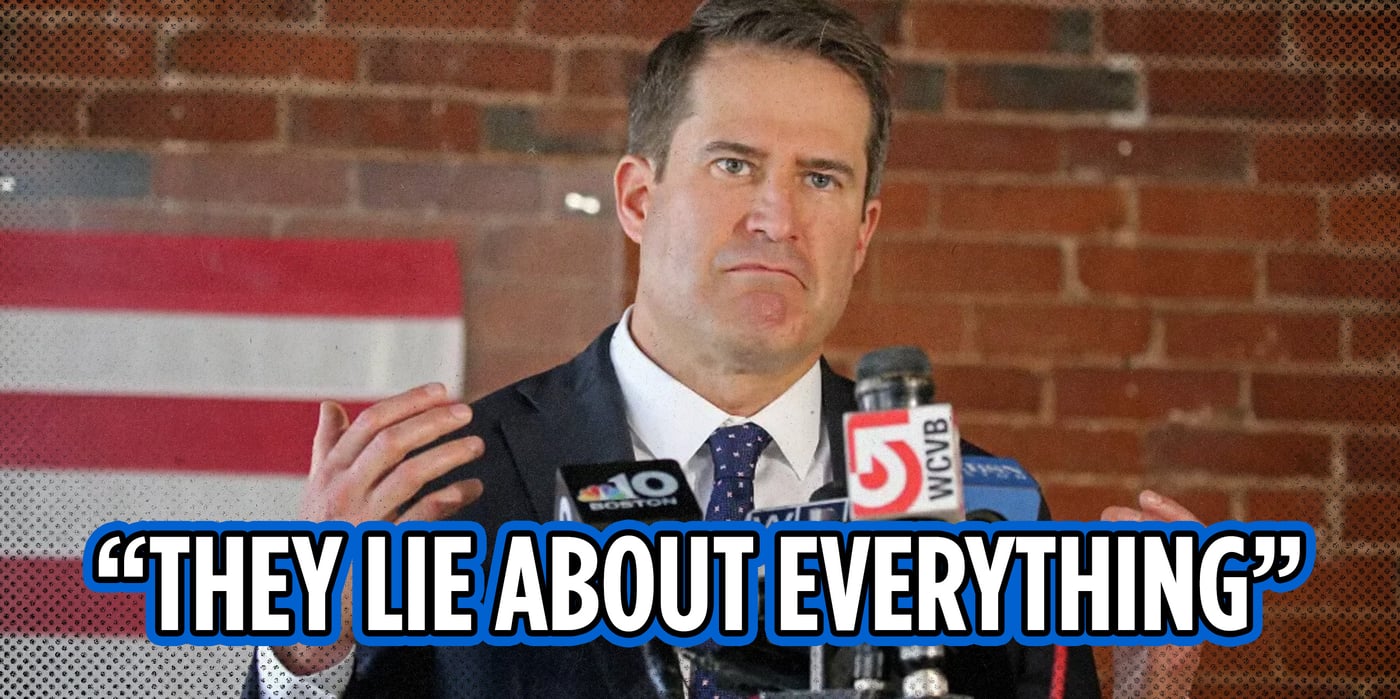
Shortly after the conclusion of the president’s remarks on Saturday, I spent a few moments on TV channel surfing and landed on CNN, where Representative Seth Moulton (D-MA) was explaining to his interviewer that we cannot accept President Trump’s or Secretary of State Marco Rubio’s explanations about the situation because they both “lie about everything” and the day’s action was “insane.” Moulton is a Marine Corps veteran, a member of the House Armed Services Committee, and a reputed advocate of bipartisanship; we could be forgiven for expecting a more even-handed assessment.
Perhaps the most distressing part of this sequence is that it is so common. The angry arguments about the capture of Maduro are nearly identical to those over the past few months regarding military actions to interdict the transport of South American cocaine.
It should not be surprising in this complex world that there are legitimate arguments, pro and con, on such issues — and more importantly, that there is also common ground where all Americans — voters and elected leaders — can interact constructively for the good of our country. If only we’d take the time to find it.