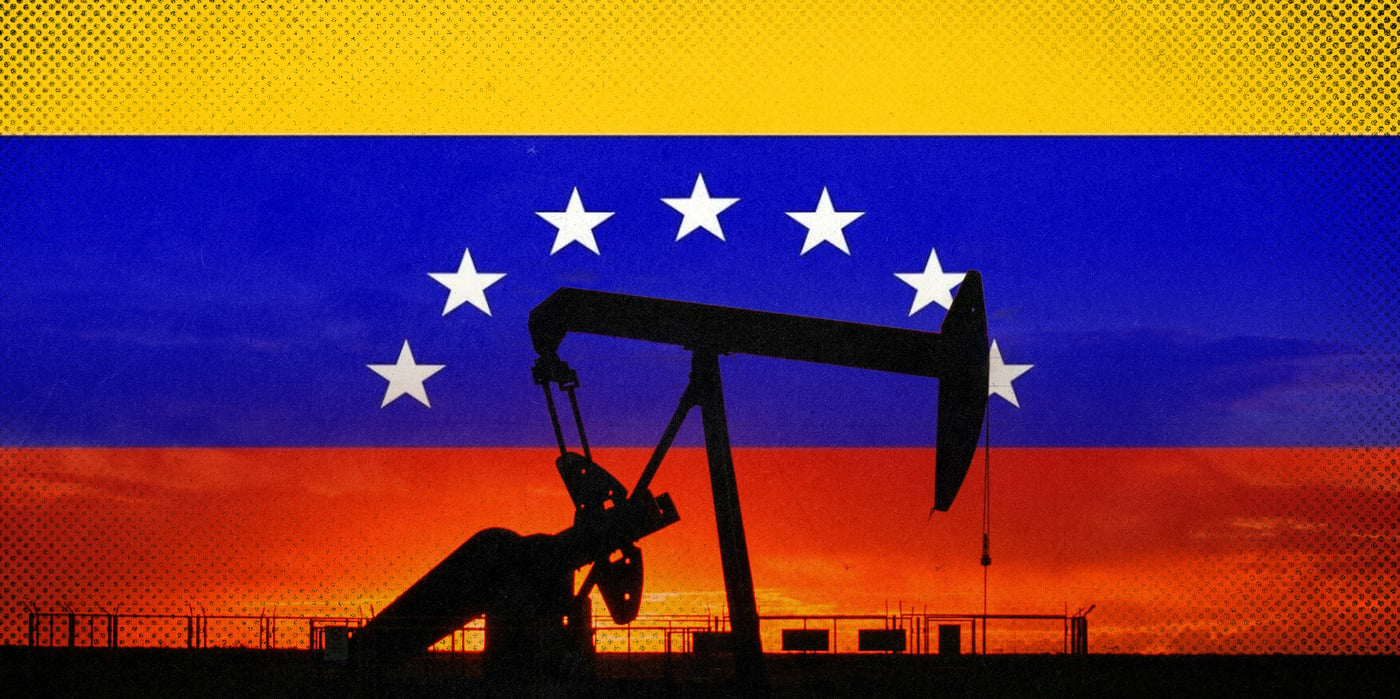

The sword of Damocles — i.e., American might — is hanging over the heads of Venezuelan Acting President Delcy Rodríguez and her administration as they attempt to play ball with President Donald Trump after our capture of dictator Nicolás Maduro. Rodríguez was Maduro’s vice president and a major player in his inner circle. She was sworn in to the top post on Monday and had originally threatened President Trump, but has since changed her tune.
Trump is allowing Rodríguez to retain power unless she decides, like her predecessor, to fool around and find out. To her credit, part of Rodríguez’s show of goodwill was a concession regarding her nation’s oil. Some 30 to 50 million barrels of high-quality oil are to be transported to the U.S. Trump will then sell the oil at market price and use the funds to “benefit the people of Venezuela and the United States!”
Even 50 million barrels isn’t a lot in the grand scheme of things. As a country, we consume around 20 million barrels per day, so the Venezuelan shipment could last our country anywhere from a day and a half to two and a half days. However, Venezuela sits on vast oil reserves, and under Maduro’s predecessor, Hugo Chávez, extraction slowed to a sluggish pace. Venezuela used to produce 3.5 million barrels a day, but under the mismanagement of socialism, that production has slowed to under a million barrels.
The oil operations in Venezuela were established by U.S. and UK companies, which ran the operations until Chávez nationalized the industry. That nationalization is what has led to its collapse. “The causes of PDVSA’s [Venezuela’s state-owned oil company] failure derive from its status as a state-owned enterprise,” observes National Review’s John R. Puri. “Nationalized corporations, such as Venezuela’s oil giant, are protected against financial losses by their government backers. Consequently, they are prone to making risky or otherwise imprudent investments. Alternatively, absent any incentive to stay competitive thanks to a state-granted monopoly, they may allow their valuable assets to fall into disrepair. Such habitual neglect is what turned Venezuela’s oil infrastructure into very expensive ruins.”
Trump plans to have American oil companies like ExxonMobil or ConocoPhillips operate in Venezuela. However, Trump also intends to subsidize their operation by paying the companies for their trouble after the fact. According to Trump, “A tremendous amount of money will have to be spent, and the oil companies will spend it, and then they’ll get reimbursed by us or through revenue.” The problem with this is that everything the government subsidizes turns to manure.
Is it realistic for American companies to come in and bring the Venezuelan oil industry up to par? A lot of that depends on Rodríguez and the Venezuelan people.
Opposition leader and Nobel Prize winner María Corina Machado has warned that Rodríguez is “one of the main architects of torture, persecution, corruption, narco trafficking.” Machado continued, “She’s the main ally and liaison with Russia, China, Iran, certainly not an individual that could be trusted by international investors. And she’s really rejected, repudiated by the Venezuelan people.”
In other words, Delcy Rodríguez will be as dangerous and dictatorial as Nicolás Maduro if given the chance. For now, the sword of Damocles is keeping her in check. However, gangs of Maduro supporters are armed and hunting around the capital city of Caracas for supporters of President Donald Trump. We’ve won a battle, but a victory is still a good ways away.