

For more than 10 years, American energy policy has been driven by a carefully constructed narrative: wind power represents progress, responsibility, and moral leadership. It was framed not merely as one energy option among many, but as a necessity. Supporting wind energy became a test of whether a policymaker “believed in science,” while skepticism was dismissed as ignorance or bad faith.
That framing mattered because once an idea is treated as a moral obligation, it stops being questioned. Wind energy was promoted as a climate solution, a manufacturing revival, and even a national security strategy. What went largely unexamined was who would actually profit from this transition and who would absorb the costs. The answer, over time, became obvious: China.
America’s wind push grew out of international pressure, corporate lobbying, and climate politics that rewarded ambition over practicality. China recognized early that Western governments were more interested in meeting emissions targets than maintaining industrial capacity. While U.S. and European leaders debated messaging, China built the factories.
Today, Chinese firms dominate the wind-turbine supply chain. They control the majority of turbine manufacturing and an even larger share of the rare-earth materials required to produce generators, magnets, and other critical components. This dominance was achieved through heavy state subsidies, centralized planning, and government-backed financing that allowed Chinese producers to sell below cost until competitors collapsed.
The result is a strategic contradiction that American policymakers rarely confront. The United States now depends on a geopolitical rival for the physical infrastructure of its so-called clean-energy future. Energy independence, once a bipartisan goal, has been redefined to exclude the source of the equipment itself. An energy system that relies on foreign manufacturing for its core components is not independent in any meaningful sense.
The contradiction becomes even clearer when China’s domestic energy choices are considered. While the United States shut down hundreds of coal plants over the past decade, China aggressively expanded coal generation, approving and constructing new plants at a rapid pace. Those plants supply the electricity needed to operate factories that produce wind turbines for export.
On paper, American emissions declined. In reality, global emissions continued to rise, shifting geographically rather than being reduced.
This is the difference between environmental symbolism and actual environmental impact. One focuses on domestic accounting. The other looks at total output. For years, U.S. policy prioritized the former.
The narrative has been sustained in part by how climate science reaches the public. Many assume international climate reports are released directly by scientists. In practice, government representatives review and negotiate the language of summary documents before publication. The technical sections are lengthy and complex. The summaries — often the only portions read by lawmakers and journalists — are shaped to align with policy goals.
That process does not invalidate climate science, but it does blur the line between research and advocacy. Science advances through testing, replication, and evidence. When conclusions are filtered through political negotiation, public understanding suffers.
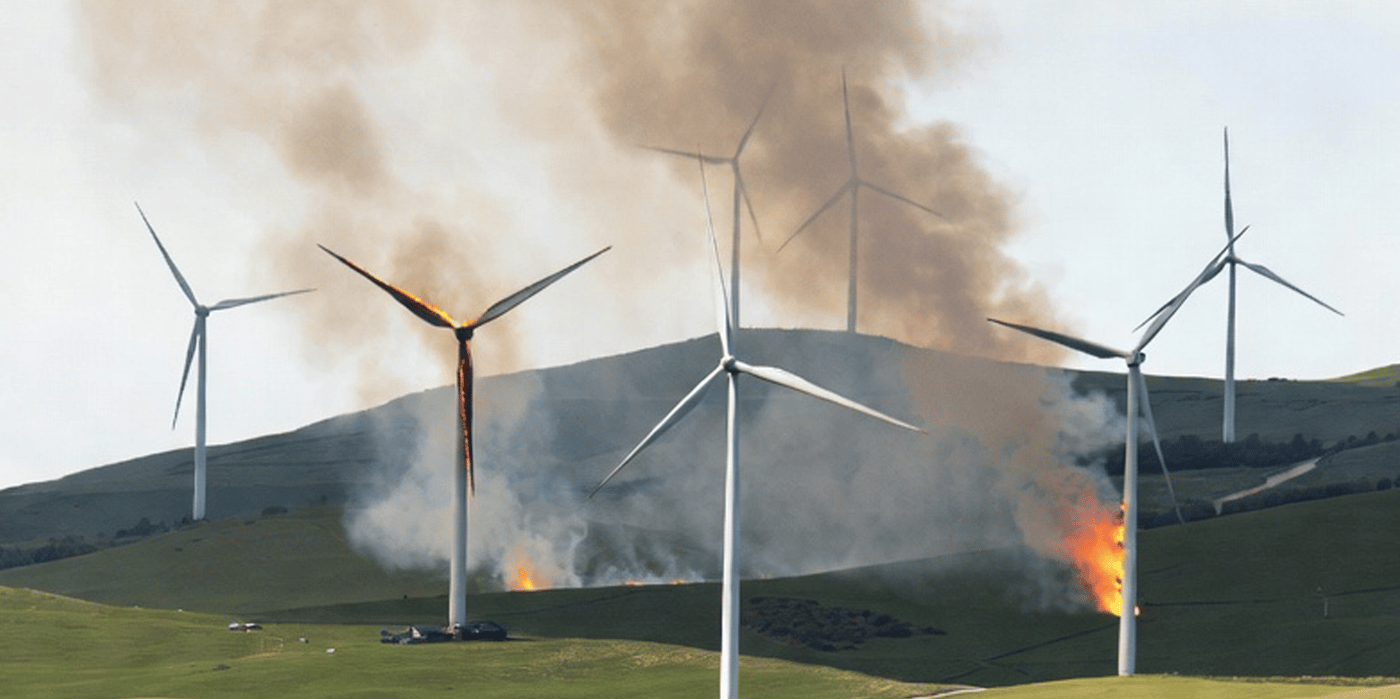
The practical limits of wind power illustrate the consequences. Wind turbines in the United States typically operate at roughly one-third of their maximum capacity. Because wind is intermittent, conventional energy sources must remain online to stabilize the grid.
That redundancy raises costs. States that expanded wind capacity the fastest experienced some of the steepest increases in electricity prices in the country. Taxpayers also shoulder the expense of new transmission lines, grid upgrades, and eventual turbine decommissioning.
Environmental tradeoffs are rarely acknowledged. Large turbine installations are frequently located along bird-migration corridors, resulting in substantial bird mortality, including protected species. These impacts are treated as acceptable collateral damage in the service of a narrative that allows little dissent.
China, meanwhile, benefits at every stage. It sells the equipment, strengthens its industrial base, and tightens its grip on global supply chains. The United States absorbs higher energy prices, increased dependence, and grid instability — while congratulating itself for leadership that exists largely in rhetoric.
For extended commentary, listen to Brief America With Gregory Lyakhov [here](https://open.spotify.com/show/5o7hBzngvryQqLnIcondQ7).