
Gallup has just released a new poll showing a dramatic increase in people identifying as independents.
A record-high 45% of U.S. adults identified as political independents in 2025, surpassing the 43% measured in 2014, 2023 and 2024. pic.twitter.com/1vKF7J2RnE
— Gallup (@Gallup) January 12, 2026
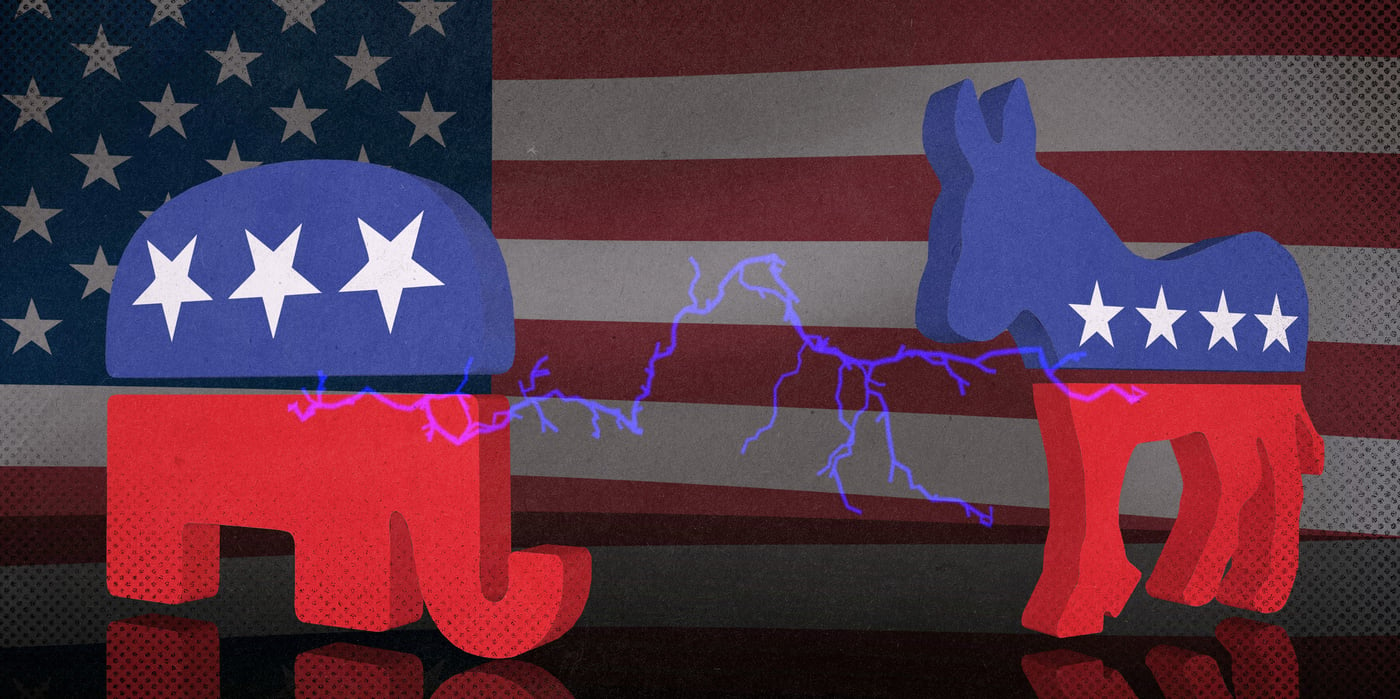
Republicans and Democrats are the real losers in this because they are both flagging at a mere 27%. While at first glance this might look like the two-party system is failing, when digging deeper into the numbers, one sees that those who identify as “independent” still lean one way or the other — and according to Gallup, there are more independents who lean Democrat.
Why the abandonment of party labels? Well, there’s the typical answer: that Gen Z was always going to identify mostly as independent. Our younger people aren’t necessarily choosing a party allegiance as they grow older.
That leads me to the second reason. Frankly, Gen Z’s lack of allegiance may have more to do with political parties’ blind spots — neither is doing much to attract young people, and neither is representing what this major voting bloc seeks.
One might conclude that this is a call for moderation. I’m not so sure that it is, though perhaps that’s the case for the Democrats. So-called progressives have been pushing and pushing so hard that their agenda has become radically leftist and divorced from reality.
Take, as a case in point, Elizabeth Warren — the Democrat senator from Massachusetts who gave a speech at the National Press Club on January 12. In that speech, she stated:
Yes, Democrats need a big tent. But there are two visions for what a big tent means. One vision says that we should shape our agenda and temper our rhetoric to flatter any fabulously rich person looking for a political party that will entrench their own economic interests. The other vision says we must acknowledge the economic failures of the current rigged system, aggressively challenge the status quo, and chart a clear path for big, structural change.
Warren advocates a leftist populist movement in the same vein as the rise of Zohran Mamdani in New York City. In her own words:
To win, every Democrat should be proposing concrete plans for lowering costs. Zohran Mamdani came from nowhere and took down a political dynasty. How? He ran a campaign tightly focused on the cost of living with an easy-to-understand platform — free buses, freeze the rent, and deliver no-cost childcare. Mikie Sherrill also focused on cost of living with an easy-to-understand platform, including affordable childcare and a bold promise to freeze utility rates on day one. And she won by 14 points. Ideas are great, but voters also need to believe that we will fight — and that we have the guts to enact an affordability agenda, even over the objections of other Democrats.
Senator Warren is, of course, advocating for a system that brings everyone down. After all, this is the same woman who has helped foist Modern Monetary Theory upon the U.S. It’s therefore par for the course that she’d advocate for socialist Muslim Zohran Mamdani. But to independents who lean Democrat, she’s more than likely pushing them away.
For Republicans, that’s not necessarily the case. President Donald Trump is actually pretty moderate. Frankly, I wish he were stronger on cultural issues. Republicans also tend to be too accepting of certain people, particularly celebrities who show glimmers of common sense every once in a while but who are still left-wingers on most issues. Right now, under President Trump, the Right’s biggest albatross is that it’s too quick to claim victory over things like the economy. Trump has done marvelous work to get our economy back on track, but are we out of the woods or feeling less financially strapped? No.
While Gallup has some interesting new insight into America’s current political affiliations, we will have to wait and see what that means in the long run.
Do independent voters think that the parties are too far gone, or not going far enough?
Is this another sign of a national political shift?
The midterm elections are 10 months away, and they will help answer these questions.