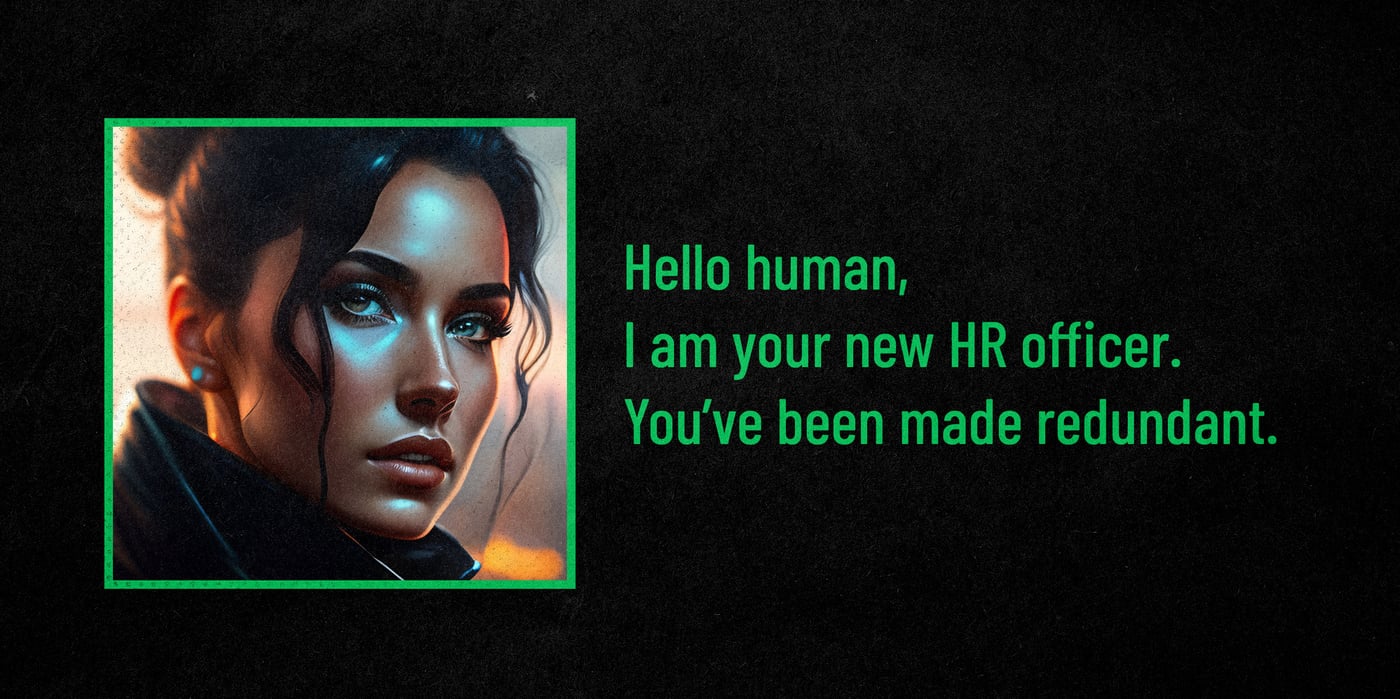

Imagine a mid-sized marketing firm that quietly lets go of three copywriters. The work doesn’t disappear. An AI tool takes it on, at a fraction of the cost. This scenario is no longer hypothetical. Artificial intelligence is already showing up in workplaces, changing what people do, which skills matter, and who gets hired. Understanding how AI affects employment is not just an academic exercise. It is something workers, students, and employers all need to think about now.
To understand why this moment feels different from earlier waves of automation, consider how quickly AI has advanced. It has moved from answering simple questions to working through complex problems and, in some cases, to taking action on its own. Today’s systems do more than respond to instructions. They can plan, carry out multistep tasks, and adjust as they go without constant supervision. That shift from passive tool to autonomous actor is what makes this moment a real turning point.
This shift has real consequences for work. A traditional tool waits for instructions. An AI system can take initiative. Consider a system managing a professional inbox. Instead of just flagging messages, it can read emails, draft replies, schedule meetings, and follow up with little human input. That shortens the time needed for many kinds of office work. It can also reduce the number of people needed. A single software developer using AI tools may now do work that once took a team weeks. The economic incentive for businesses to adopt such systems is substantial: AI tools can cost a fraction of the cost of a single salaried employee. For most businesses, that calculation is hard to argue with.
Research from institutions such as MIT and the Federal Reserve suggests that younger workers are already seeing fewer opportunities in jobs with high AI exposure. Many white-collar roles are under pressure, and the range is wider than expected. These are not factory jobs but positions that a college degree was supposed to secure. A data scientist analyzing trends, a financial advisor building portfolios, a web developer writing code: AI can now handle significant parts of each of these jobs, and the pace of improvement shows no signs of slowing.
Not every layoff blamed on AI is actually caused by it. Some analysts use the term “AI-washing” to describe companies that overstate how much AI they are actually using, whether to impress investors or to justify cost-cutting decisions that have little to do with technology. Harvard Business Review has noted that while some job loss due to AI is likely, it is important to distinguish real technological change from convenient explanations. Workers and policymakers should look closely at these claims and ask what is actually driving them.
Yet the picture is not uniformly bleak. IBM recently announced plans to triple its hiring of entry-level workers, having found that AI adoption hits real limits in roles requiring judgment, physical presence, and the kind of relationship-building that no algorithm reliably replicates. Researchers have also cautioned that disruption may unfold more gradually than headlines suggest, giving workers and industries more time to adapt than the most alarming forecasts imply. Some technology leaders argue that AI could eventually create more opportunities than it displaces. The CEO of Google DeepMind has suggested it could trigger a surge in scientific discovery, even if a difficult transition period comes first. The outcome is genuinely uncertain but not predetermined.
What AI struggles with, it turns out, is the physical and the personal. Work that depends on physical skill, operates in unpredictable environments, or requires direct human care is harder to automate. Skilled trades such as plumbing, electrical work, HVAC, and carpentry fall into this category, as do construction workers, emergency responders, healthcare aides, and mechanics. Roles built on trust and human connection, including therapists, social workers, and chaplains, also resist automation well. These depend on human presence and judgment in ways machines cannot replicate. These are not marginal jobs. They are essential to how communities function, and they tend to remain in demand for exactly that reason.
None of this is easy to sit with, particularly for those in mid-career or just starting out. Preparation, then, is the practical response. Workers in every field should focus on skills that complement rather than compete with AI: critical thinking, ethical judgment, interpersonal communication, and a working understanding of how these tools function, where they excel, and where they fail. That understanding is increasingly a vocational skill in its own right. Those who can direct and evaluate AI tools will be far better positioned than those who wait and watch.
For students and younger workers, the choices made now about education and training matter more than they may realize. Salary alone is a poor guide. Fields that require physical skill, relational trust, or the kind of judgment that cannot be scripted tend to be both more resilient and more distinctly human.
The workers best equipped for the coming decade will be those who have cultivated not only technical fluency but also the qualities of character, care, and judgment that no AI system, at any level, can replace.