
Men and women are different.
There, I said it — the thing that makes so many leftists break out in hives because they want to believe men and women are interchangeable, or even just plain changeable. But it’s simply not true that a man can put on a dress and be a woman.
Men and women have basic gender roles because we respond differently to life’s challenges. Women are more compassionate, empathetic, and nurturing. Men are stronger, braver, and more focused on providing. We were made to work together and complement each other.
Those are sweeping generalizations, of course, but I use them to make the point that males and females are different.
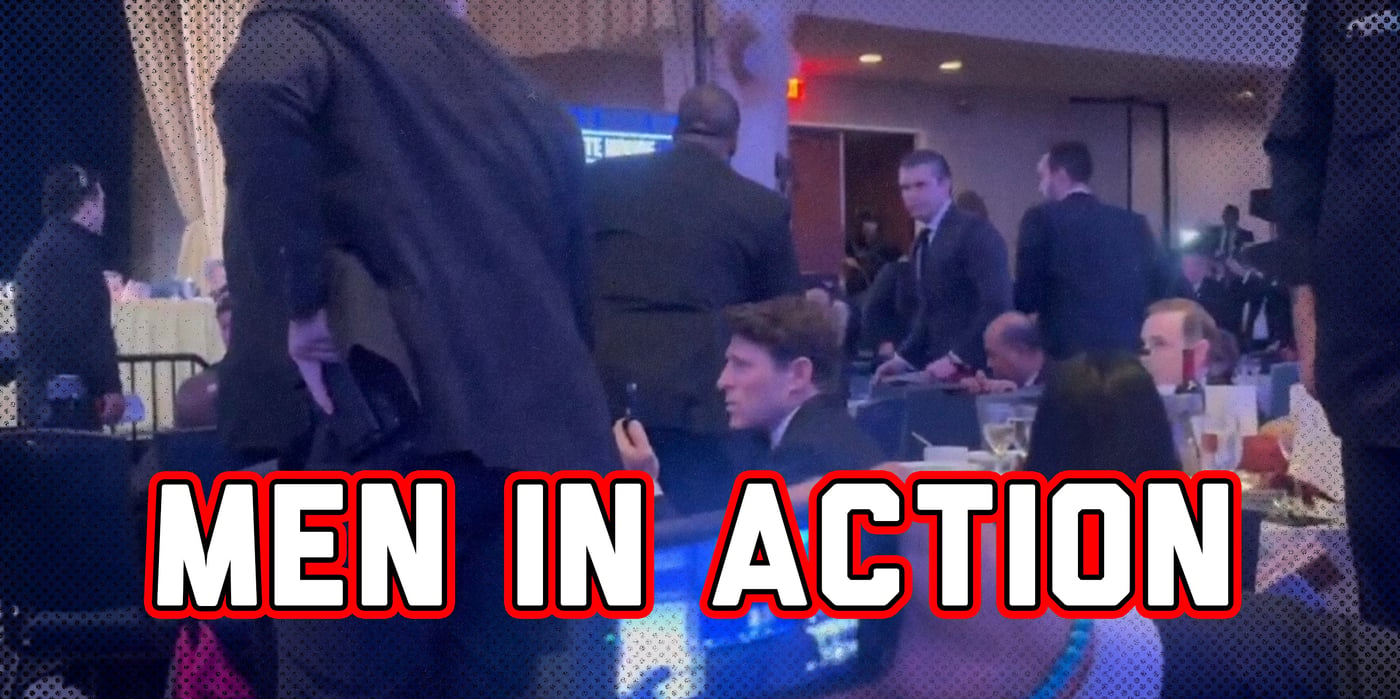
That setup brings me to a fascinating article in The Free Press by cofounder Suzy Weiss, sister of the primary founder, Bari Weiss. The younger Weiss writes about her main takeaway from being present for the White House Correspondents’ Dinner shooting: “Dudes Rock.”
Her thesis is simple: “In moments of crisis, something deep in our biology kicks in.” For men, that’s protective instincts.
“Minutes before he was shielding me under the table at the White House Correspondents’ Dinner,” she begins, “Elliot Ackerman, coiffed and dressed impeccably in his velvet tuxedo jacket, was telling me about the Roman Empire.” She wryly notes that the Roman Empire and World War II are quite fashionable things for men to talk about these days. It’s true.
When the shots were fired, Ackerman protected Weiss, while her sister, Bari, was shielded by lobbyist David Urban. Suzy said he “was nearly glowing, telling us how he went to West Point, served in the 101st, and that he simply wasn’t about to let anything bad happen to us. I believed him.”
Looking around the room, she observed that numerous other men were likewise “activated” by the situation:
Everyone was reeling, but the men were also another thing: They were activated. And I’m not talking here about the obvious heroes of the evening: the law enforcement professionals, and the Secret Service, one of whom was shot by the would-be assassin as he leaped toward the gunshots. Others, with guns at the ready, hustled officials out of the room. They acted nobly. But they weren’t the only ones.
After a couple of specific examples, she relayed an intriguing series of responses:
RFK Jr. sat upright in his chair nearly the whole time; ditto Senator John Fetterman. CBS correspondent Matt Gutman was torquing around tables, iPhone in hand, trying to capture the action as it happened. Andrew Harnik, a Getty Images photographer, didn’t bother to put down his bourbon as he snapped pictures of the scene. Dan Scavino, deputy chief of staff in the White House, was bounding over chairs in his dress shoes, then leading a chant of “USA.” Dana White, the head of the UFC, looked like he was at one of his fights, hands clasped as the men in the bulletproof vests got the administration officials to safety before locking down the room. “They were screaming ‘get down.’ I didn’t get down,” White said in a video captured after the fact. “It was f\\\*ing awesome.” Many actual veterans, not to mention veteran journalists who’d covered wars, sprung into action, whether pushing tushes under seats, recording what was happening, or simply creating a sense, with their mien, that things were totally under control. I lost count of the number of times I heard about “vehicles” coming and going, the security-minded man’s term of endearment for cars.
She concluded, “There was an assemblage of good men who embodied the best of the masculine traits: calm, humor, dependability, protection, chivalry, and knowing, offhand, an oddly specific level of detail regarding Secret Service procedures for an active shooter.”
In other words, men rose to the occasion, and Suzy Weiss appreciated it. I found this notable for a couple of reasons: First, frankly, is that her sister was formerly married to a man but is now “married” to Nellie Bowles, another cofounder of The Free Press. Bari has apparently been gender-confused for many years. I don’t know about 30-year-old Suzy’s romantic life, but her writing about men in this case caught my attention.
Second is the much more obvious “toxic masculinity” debate. Left-wingers first came up with the term — it was probably a jaded woman who’d been on a few bad dates — to describe men they found distasteful. I’ll grant that there absolutely is toxic masculinity. That includes needless violence, sexual abuse, and, well, just about anything related to Andrew Tate.
However, with the usual broad-brush strokes, genuinely manly men have been tarnished along with the jerks. It’s refreshing to see a young woman write with admiration and gratitude about how the men around her responded to a truly distressing situation.
I know I don’t speak only for myself here, but when I enter a crowded venue, I think through what I would do in a mass shooting situation.
Weiss’s story also reminded me of Corey Comperatore, the firefighter who died from a gunshot wound to the head while literally shielding his wife and two daughters with his body as a deranged Thomas Crooks took shots at Donald Trump in Butler, Pennsylvania. Every man in the room with Weiss knew that was the risk he was taking.
If I could save my wife and two daughters — or my three sons, son-in-law, or other loved ones, for that matter — I hope I wouldn’t hesitate.
On a final note, consider that Erika Kirk, Charlie’s widow, was present at the dinner, too. She took a lot of heat from keyboard warriors on social media for leaving in tears while saying, “I just want to go home.”
That is not an example of what I meant by roles, though some self-righteous online critics argue it means she shouldn’t be leading TPUSA. To the contrary, after a coward murdered her protector, she has been poised and capable in his place. It’s hard to imagine the trauma this shooting forced her to relive, and to judge her on her response is cruel and foolish.
The debate about gender roles probably won’t ever be settled. In fact, Abigail Shrier wrote about it in her most recent Free Press advice column just the other day. Countless others debate it regularly.
In my mind, however, one thing is certain: The world needs manly men who serve as protectors. We shouldn’t take it for granted when they do.
[Follow Nate Jackson on X](https://x.com/NatriotJackson).