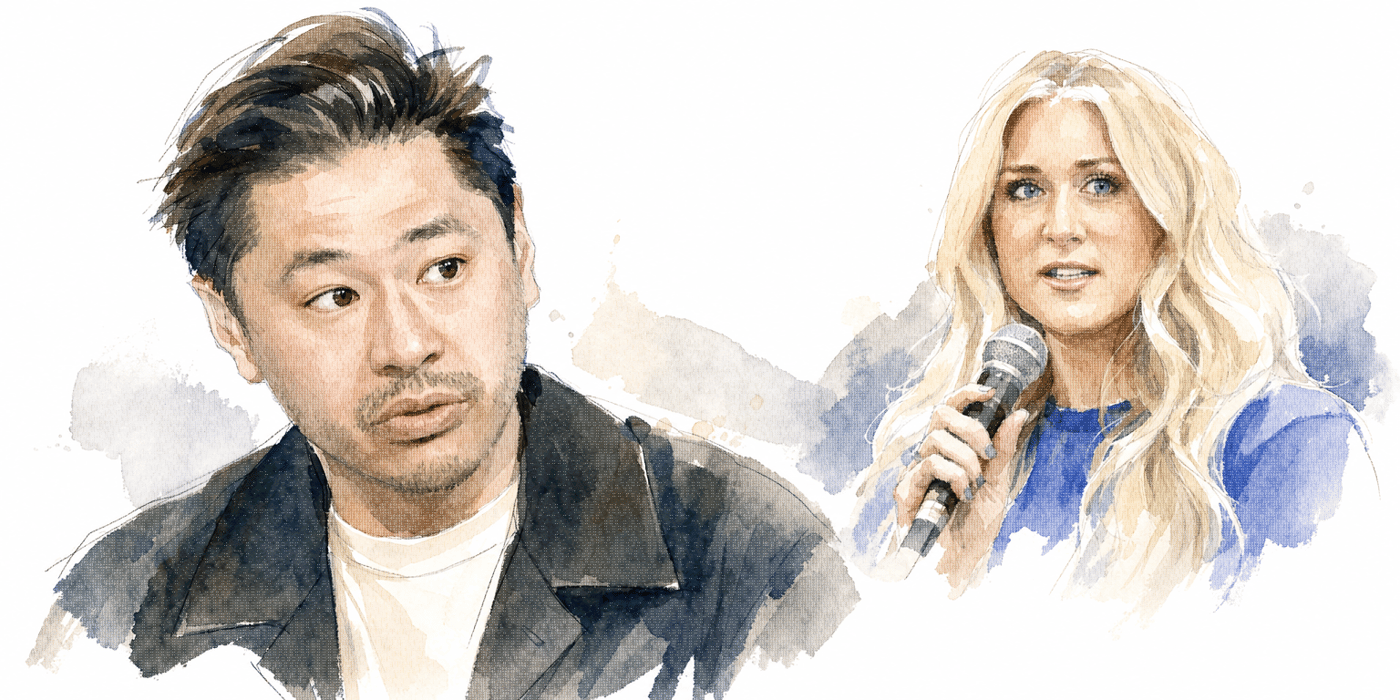

Riley Gaines built a national platform by advocating for something that was once considered uncontroversial: women should compete against women, and female athletes should have access to private, single-sex spaces. For that position, she has spent years being criticized, mocked, protested, accused of bigotry, threatened, and even physically attacked.
Now, the effort to discredit Gaines has gone from name-calling and death threats by her critics to an award-worthy achievement in sports media. Sports journalist Pablo Torre was recently nominated for a Sports Emmy for his [podcast episode] (https://www.youtube.com/watch?uv=iKUl8lkuGOc) examining Gaines and her advocacy work, while creating the odd spectacle of a man being celebrated by the sports media establishment for targeting a woman whose cause is protecting women’s opportunities in sports.
According to reporting from The Washington Times, the nomination immediately sparked backlash from Gaines herself, who argued that the episode unfairly portrayed her activism and attempted to discredit her work by focusing on the financial opportunities that followed her rise to national prominence.
For those unfamiliar with Gaines, she first gained national attention after competing against Will (Lia) Thomas, a biological male who competed in NCAA women’s swimming. After tying Thomas in the 200-yard freestyle at the 2022 NCAA Championships and being told that the trophy would go to Thomas for the sake of optics, Gaines became one of the most recognizable voices advocating for women-only sports, locker rooms, and other sex-segregated spaces. Since then, she has testified before Congress, spoken before state legislatures across the country, and become a leading advocate for protecting Title IX’s original intent.
That visibility naturally brought media attention and professional opportunities, which became the primary subject of Torre’s podcast. The episode reportedly focused heavily on the business side of Gaines’s activism, examining speaking fees, media appearances, and other opportunities that emerged after she entered the public spotlight.
The underlying suggestion seems clear: Gaines has been motivated primarily by financial gain rather than genuine concern about fairness and privacy for female athletes.
According to the Times, Gaines responded by pointing out the obvious reality that many public advocates, journalists, commentators, and, in her words, the podcaster “found that I have a job that I am paid for.”
As former NPR radio journalist Mike Pesca put it: “Torre’s real discovery is this: Riley Gaines is a conservative who believes conservative things and enjoys the support of other conservatives. Scandalous stuff. He documents no actual lies, just messaging decisions he doesn’t like.”
The idea that earning money somehow invalidates her message seems like a somewhat strange standard to apply. After all, journalists are paid for journalism. Activists are paid for advocacy. Speakers are paid to speak. Apparently, according to Torre, only women defending women’s sports are expected to do it entirely for free.
The nomination itself has raised questions about what exactly is being rewarded. Traditionally, Sports Emmy nominations recognize stories that illuminate the sports world in meaningful ways. In this case, many observers see a journalist receiving industry recognition for scrutinizing a female athlete who objected to competing against a male athlete in a women’s division. That is certainly a different category of storytelling than chronicling an Olympic champion or documenting an inspiring athletic journey.
What’s particularly notable is that Torre’s subject was not about a powerful sports executive, a corrupt governing body, or a major corporate scandal. His focus was on a former college swimmer who spent the last several years speaking out about an issue that many Americans now agree with. Polling consistently shows broad public support for keeping women’s sports separated by biological sex, making Gaines’s position far less controversial than media outlets often suggest.
And regardless of where someone stands politically, it’s difficult to deny the influence Gaines has had on young women. Pro-woman publication and athletic wear brand [XX-XY Athletics] (https://www.xx-xyathletics.com/blogs/newsroom/riley-gaines-championing-women-s-sports-and-rights) has put Gaines at the front and center of its mission — to send a message that saving women’s sports and spaces is a worthwhile fight. Through its partnership with Gaines, XX-XY Athletics has encouraged female athletes to use their voices, arguing that silence is how women lost ground on issues involving sports and private spaces in the first place.
Gaines has also become a symbol for many young women who felt uncomfortable speaking up. Whether testifying before lawmakers, appearing on college campuses, or addressing state legislatures, she has consistently encouraged female athletes to defend opportunities that previous generations fought to create under Title IX. Her message has remained remarkably simple and focused: women deserve fair competition, privacy, and equal opportunity.
That’s what makes this Emmy nomination feel so oddly revealing.
For years, Gaines has been portrayed as the controversial figure. Yet here we are watching a man receive industry praise for producing a project where the entire goal is to discredit a woman whose central argument is that women should compete against women.
Maybe that’s where the irony lives.
One person spent years swimming competitively, speaking before legislatures, enduring protests, receiving threats, and encouraging young women to stand up for themselves. The other produced a podcast questioning whether she benefited from doing so.
And now the sports media establishment wants to hand out an award.
If that’s the direction the Sports Emmys want to go, they’re certainly free to do so. But from where many women are sitting, this feels less like honoring journalism and more like rewarding a man for questioning the motives of a woman who has spent years fighting to protect opportunities that female athletes are increasingly being asked to surrender.
After all, while women continue losing scholarships, records, opportunities, and privacy in their own competitions, the truly compelling story apparently wasn’t what was happening to female athletes — it was questioning the motives of the woman trying to stop the madness.
Not exactly the inspiring underdog story sports fans are used to cheering for.