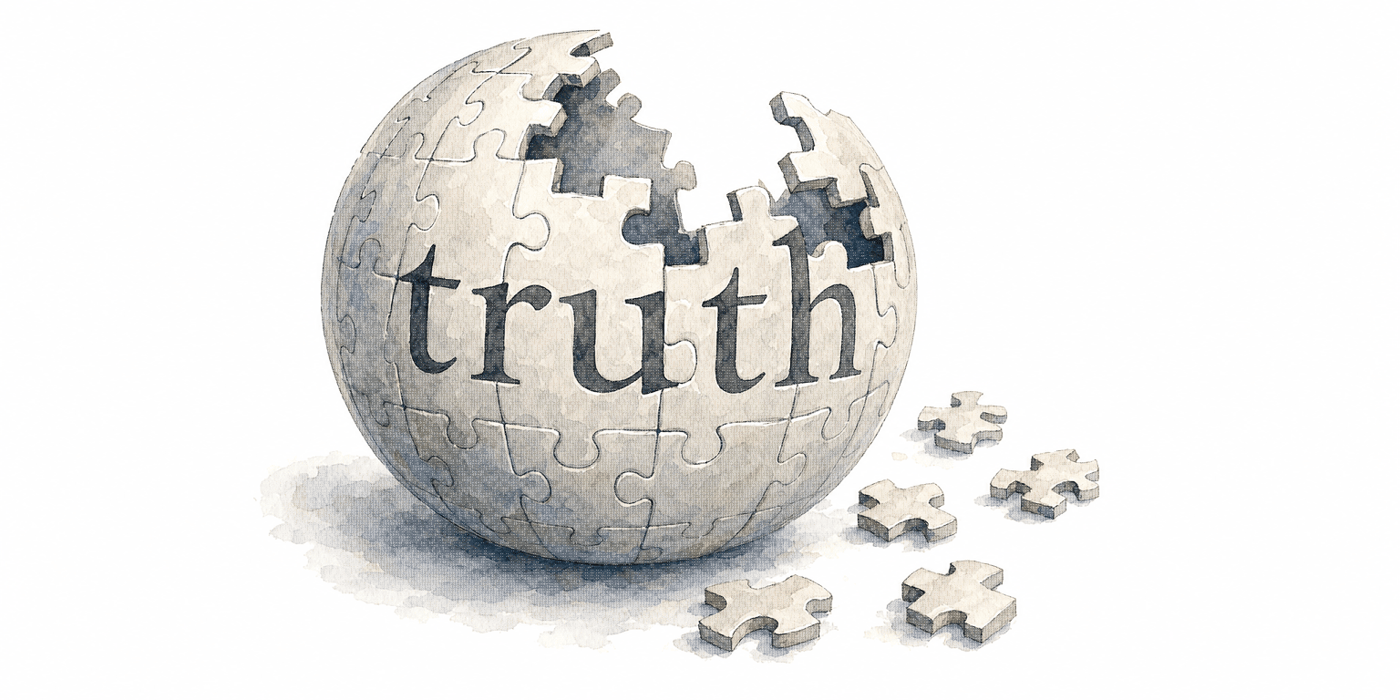

When Wikipedia launched in 2001, the concept was almost unbelievable: an encyclopedia that anyone in the world could contribute to. It was created by Jimmy Wales and Larry Sanger with a simple but ambitious goal — to gather human knowledge in one place and make it freely available to everyone. Rather than relying on a handful of editors behind closed doors, Wikipedia would allow ordinary people, experts, and enthusiasts alike to submit information, debate, and improve articles together. It was an experiment built on the idea that truth could emerge through open collaboration.
For years, that model seemed to work remarkably well. Wikipedia grew into one of the most-visited websites on Earth and became the first stop for millions of people seeking information on everything from history and science to politics and current events. Even though anyone could edit it, the community developed policies meant to encourage neutrality, verify sources, and resolve disagreements through discussion.
Much of that work has been organized through WikiProjects, groups of volunteers dedicated to improving articles on particular subjects. Some focus on broad topics like medicine or history, while others are devoted to specific interests. Their stated purpose is to coordinate editors, improve article quality, and encourage collaboration across related pages. In theory, that kind of organization has helped keep Wikipedia on track.
However, while this organizational structure was intended to create a system of checks and balances for the information powerhouse, it also opened the door for editors with similar worldviews to use their personal influence to shape public perception on controversial topics. Unfortunately, that is exactly the direction the platform has gone.
Over the years, certain viewpoints have been elevated when deciding how articles are shaped while others have been minimized or left out entirely, causing a slow drift away from objective fact and moving toward opinion, narrative, or even propaganda — all while the page continues to promote itself as a neutral and trustworthy source of information.
As such, Larry Sanger, who helped create Wikipedia and coined its name, has become one of the site’s most outspoken critics. Over the past several years, he has called attention to its drift away from the founding commitment to neutrality, while increasingly reflecting the preferred narrative of a relatively small group of influential editors. His criticism reached a whole new level and only seemed to find further confirmation after he was indefinitely banned from editing Wikipedia following his efforts to encourage greater ideological diversity among contributors.
What has happened to the site, Sanger argues, reflects a broader culture of gatekeeping rather than open debate — a disheartening development that he believes strikes at the core of why Wikipedia was created.
“Information is the most valuable currency in any society,” he wrote in a Free Press op-ed, “and the ability of citizens to access, evaluate, and learn from a diversity of viewpoints is essential to a free civilization. Yet Wikipedia’s yearslong shift away from that principle — toward ideological gatekeeping and narrative control — undermines the very purpose for which it was created.”
Wikipedia’s move away from neutrality seems even more apparent when you examine the standards used to determine what qualifies as a “reliable” source.
According to journalist Ashley Rindsberg, publications generally viewed as left-leaning are far more likely to safely fall into the “reliable” category, while many right-leaning outlets are labeled “generally unreliable” or otherwise discouraged.
These standards are outlined in Wikipedia’s verifiability guidelines, which, ironically, are meant to reassure the reader that the articles are accurate, well-sourced, and balanced. Instead, it only furthers the idea that “reliability” has become increasingly tied to political alignment rather than factual accuracy, adding to concerns about whether Wikipedia still welcomes a genuine diversity of viewpoints.
Sanger is far from the only major voice who recognizes the problem. The Media Research Center provided more evidence to suggest that Wikipedia left objectivity behind long ago, as the site disproportionately “cites leftist outlets nearly 20X more often than right.”
National Review highlighted a Manhattan Institute study that found measurable ideological bias in politically sensitive Wikipedia articles — and the pattern was not limited to a few isolated examples.
“In general,” said the study’s lead researcher, David Rozado, “we find that Wikipedia articles tend to associate right-of-center public figures with somewhat more negative sentiment than left-of-center public figures; this trend can be seen in mentions of U.S. presidents, Supreme Court justices, congressmembers, state governors, leaders of Western countries, and prominent U.S.-based journalists and media organizations.”
Of course, these criticisms remain contested. Wikipedia maintains that its editorial policies prioritize reliable sourcing over political ideology, and many editors reject accusations of systemic partisan bias. At the same time, academic research has identified patterns suggesting a significant leftward tilt in Wikipedia’s selection of news sources.
Regardless of where someone falls politically, the broader question extends well beyond Wikipedia itself. The issue is what happens whenever a small group gains significant influence over the information that billions of people consume every day. In the digital age, controlling information often means shaping public opinion. Most people simply don’t have the time to independently research every topic they encounter. A platform that becomes widely accepted as the go-to for a reliable description of events, with the editors deciding what stays, what goes, and determining which sources are considered acceptable, holds extraordinary influence — and it’s a scary path to go down.
History has repeatedly shown what can happen when a small group controls the flow of information. Open societies depend on the free exchange of ideas, not on limiting what people are allowed to read or consider. Restricting information discourages critical thinking and replaces it with dependence on whoever decides what counts as acceptable knowledge.
Those who have sought to control information throughout history have rarely been remembered as the good guys. The question isn’t simply whether Wikipedia has changed. It’s whether any institution should become so influential that it effectively determines which viewpoints are legitimate and which are dismissed. After all, what possible good comes from restricting what people have access to instead of trusting them to examine competing ideas and form their own conclusions?