
“Does the 14th Amendment mean what its framers intended and the states ratified, or does it mean whatever the courts and Congress have construed it to mean today?”
Mark Alexander has asked that seminal question for years, and, in Trump v. Barbara, the Supreme Court justices got the answer woefully wrong.
The justices seemed skeptical of President Donald Trump’s executive order on the matter in April and, sure enough, they lived down to expectations.
Chief Justice John Roberts wrote the 5-4 majority opinion, joined by Sonia Sotomayor, Elena Kagan, Ketanji Brown Jackson, and Amy Coney Barrett.
Section 1 of the 14th Amendment, which pertains to immigration and naturalization, reads, “All persons born or naturalized in the United States and subject to the jurisdiction thereof, are citizens of the United States and of the State wherein they reside.”
Much of the debate about birthright citizenship for the children of illegal aliens centers on the phrase “subject to the jurisdiction thereof,” and for good reason. But another critical phrase is “wherein they reside.” If you do not legally reside somewhere, you are not fully subject to the jurisdiction of that place. Yes, you are subject to its laws, such as not raping or murdering citizens, but you are not truly subject to the jurisdiction because your citizenship lies elsewhere. In fact, the law illegals are subject to is immediate deportation.
The Court just ruled the opposite.
“Children born in the United States to parents unlawfully or temporarily present are ‘subject to the jurisdiction’ of the United States and are citizens at birth under the Fourteenth Amendment’s Citizenship Clause,” Roberts wrote.
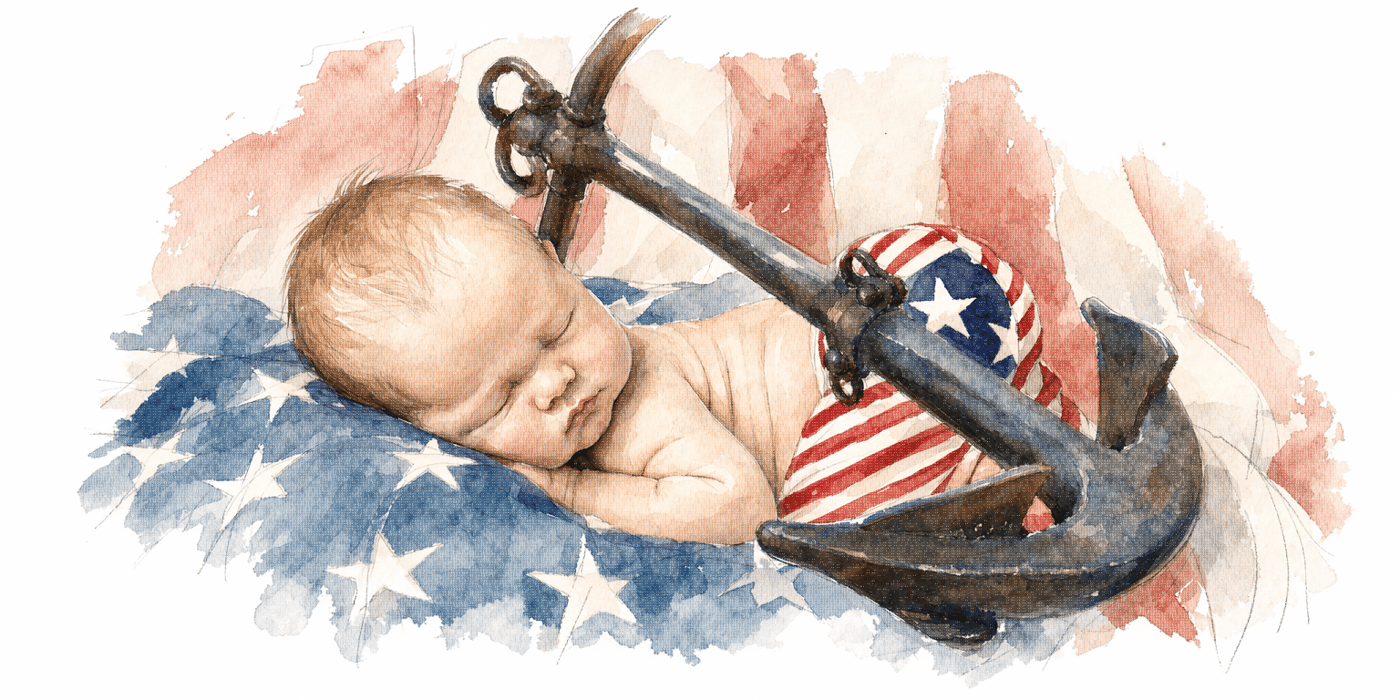
How in the world does it make any sense to construe the 14th Amendment to confer the lifetime reward and blessing of American citizenship on an anchor baby?
Through no fault of its own, that baby was born to a woman who blatantly broke the law to be here, often specifically in order to create the circumstances of that birth. This isn’t just women who cross the southern border when they’re eight months pregnant. This is Chinese birth tourists exploiting our horribly misguided system.
Because deporting citizens is frowned upon, the mother and other family members then get to stay in America. Again, it’s a reward for lawlessness, and it’s no wonder we have endured a decades-long illegal immigration crisis in this country.
In his blistering dissent, Justice Clarence Thomas wrote, “The Court has repurposed the Fourteenth Amendment to protect its own set of preferred rights that the Reconstruction Congress never contemplated and that cannot find support in its text. Today, the Court does so again by recognizing a constitutional right to citizenship for the children of all foreign birth tourists and illegal aliens. I am not sure that today’s opinion will stand the test of time.” He quoted Justice John Harlan’s dissent in Plessy v. Ferguson, saying, “The Citizenship Clause ‘added greatly to the dignity and glory of American citizenship.’ Today’s opinion devalues that citizenship.”
Indeed, it does.
So, let’s look back at the drafting and ratification of the 14th Amendment for a moment. Mark Alexander wrote:
[The Civil Rights Act of 1866] defined “persons within the jurisdiction of the United States” as all persons at the time of its passage, born in the United States, including all slaves and their offspring. However, concern that the Act might be overturned by a future Congress motivated its sponsors to make it more resistant to the arbitrary rule of men, so they proposed the 14th Amendment to our Constitution, which upon ratification, would protect the provision of the 1866 Act from legislatures and the courts.
Michigan Sen. Jacob Howard, who sponsored Section 1 of the 14th Amendment (the Citizenship Clause), noted that “subject to the jurisdiction thereof” was “simply declaratory of what I regard as the law of the land already.” He stated further, “This will not, of course, include persons born in the United States who are foreigners, aliens, [or] who belong to the families of ambassadors or foreign ministers…”
Asked for his understanding of “subject to the jurisdiction thereof,” Illinois Sen. Lyman Trumbull, Chairman of the Judiciary Committee who was key to the Amendment’s passage, responded, “That means ‘subject to the complete jurisdiction thereof.’ What do we mean by ‘complete jurisdiction thereof’? Not owing allegiance to anyone else. That is what it means.”
Sen. Howard followed, “I concur entirely with the honorable Senator from Illinois [Trumbull], in holding that the word ‘jurisdiction,’ as here employed, ought to be construed so as to imply a full and complete jurisdiction on the part of the United States ... that is to say, the same jurisdiction in extent and quality as applies to every citizen of the United States now.”
The Court’s oft-cited United States v. Wong Kim Ark decision from 1898 is the only previous ruling on the subject, and despite today’s majority opinion, it bolsters my argument: Wong’s parents were legal residents of the U.S. Ironically, perhaps for fear of overturning a precedent, the justices have now thoroughly undermined that precedent.
Notably, even the late Democrat Senator Harry Reid introduced legislation in 1993 to correct the error of granting birthright citizenship to the children of illegals:
TITLE X—CITIZENSHIP 4 SEC. 1001. BASIS OF CITIZENSHIP CLARIFIED. In the exercise of its powers under section of the Fourteenth Article of Amendment to the Constitution of the United States, the Congress has determined and hereby declares that any person born after the date of enactment of this title to a mother who is neither a citizen of the United States nor admitted to the United States as a lawful permanent resident, and which person is a national or citizen of another country of which either of his or her natural parents is a national or citizen, or is entitled upon application to become a national or citizen of such country, shall be considered as born subject to the jurisdiction of that foreign country and not subject to the jurisdiction of the United States within the meaning of section 1 of such Article and shall therefore not be a citizen of the United States or of any State solely by reason of physical presence within the United States at the moment of birth.
Of course, today, Reid would be run out of town by one of those border-erasing Democratic Socialists. So would a host of other Democrats who once opposed illegal immigration.
What’s the practical effect of today’s Supreme Court travesty?
“In 2023,” reported Pew Research Center earlier this year, “mothers who were unauthorized immigrants or had legal temporary status in the U.S. had 320,000 babies, representing about 9% of all 3.6 million babies born in the U.S. that year. About 260,000 of those babies would not have qualified for birthright citizenship if Trump’s executive order had already been in effect.”
In short, we are foolishly granting citizenship to hundreds of thousands of illegals every year, and five justices just put the “constitutional” seal of approval on it.
If such birthing insanity continues, the nation we love may not live to see 300 years. Stopping this flow will require a persistent record of the kind of border control President Trump has exercised thus far, which is not going to happen under any Democrat. Outrageously, it will now take a constitutional amendment to fix the misinterpretation of a constitutional amendment.
Addendum: Trump being Trump, he had a perfect response: “I would like to congratulate President Xi, and the Great Country of China, on their massive Birthright Citizenship WIN!”