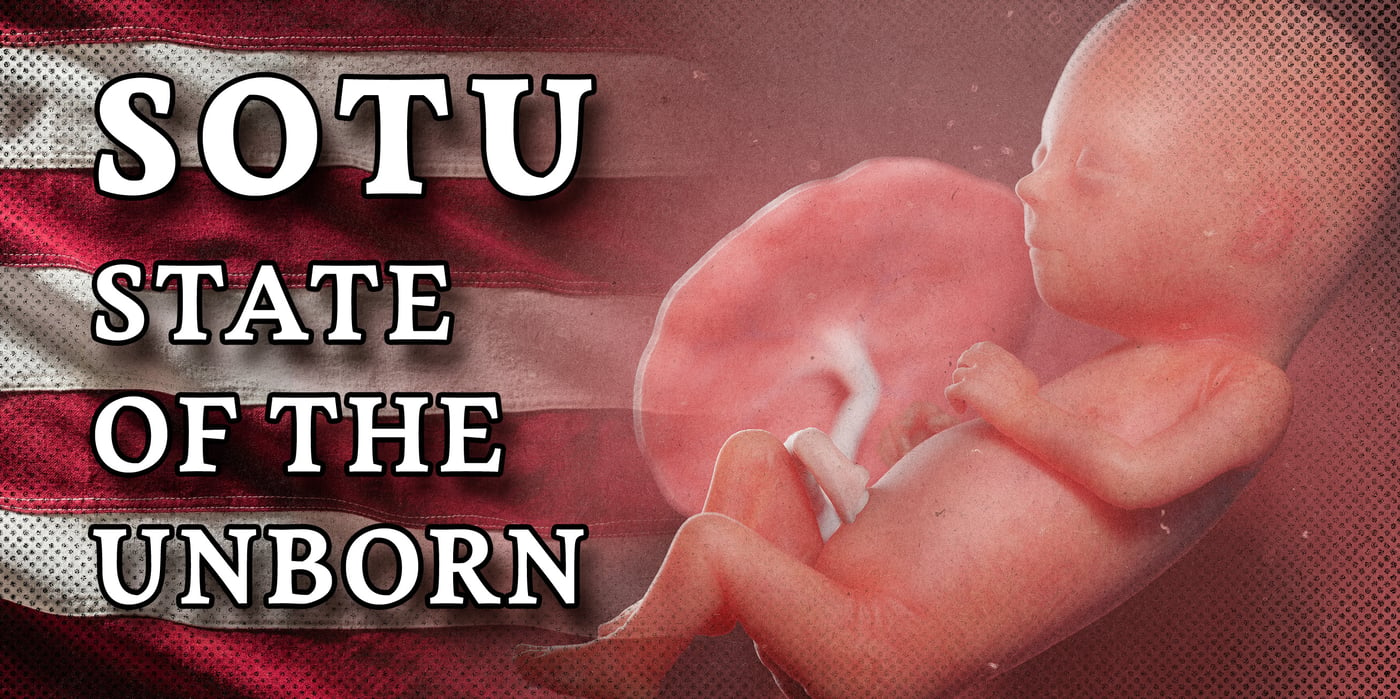

Let me start with some wonderful news first: The maternal mortality rate has dropped. JAMA Network Open published a study that analyzed statistics from both states with pro-life laws and states with pro-abortion laws, and the results were very pleasing. In pro-life states, maternal mortality dropped. For most, in fact, it lowered by 3.3%.
This finding flies in the face of the popular pro-abortion narrative that pro-life laws kill vulnerable mothers. As National Review’s Michael J. New observed, “This analytically rigorous JAMA Network Open study which analyzed data from all 50 states and the District of Columbia provides strong evidence that pro-life laws do not increase the maternal mortality rate. Indeed, this study and data from countries like Poland show that pro-life laws are consistent with good public health.”
Unfortunately, this does not mean people are any less willing to kill a preborn baby, which indicates that “health of the mother” is another shallow justification for killing babies out of convenience or circumstances.
Planned Parenthood is still butchering away. In 2025, it enabled the murder of some 434,450 preborn babies — a record number and an 8% increase from 2024. Combine that with the burgeoning number of chemical abortions, and more preborn babies are being murdered. So, naturally, the fertility rate is dropping.
The U.S. fertility rate has dropped to a record low of only 1.57 births per woman. This means there are only eight other countries that have lower birth rates than we do. Those countries are Russia, China, the UK, Germany, South Korea, the Netherlands, Canada, and Spain. South Korea has the lowest, with just 0.80 births per woman.
Not all the reasons for the low birth rate are bad. We have seen a significant decline in teen births in the U.S., with a drop of 72% since 2007. This means that, yes, teens have access to birth control and other contraceptives, but it also indicates that, culturally, youth are having less premarital sex.
However, that does not fully account for the overall drop in fertility rates among older, married, and more settled women. According to the data, the women having the lion’s share of babies are in their 30s and 40s. It is also important to note that women’s fertility drops sharply after the age of 35, so women having children in their mid- to late-40s is a rarity, if not a unicorn.
We, as a culture, have abandoned the notion of starting a family before we are “ready.” The adage Get married, start a family, and have more kids than you can afford seems like a laughable prospect in 2026. After all, the economy we are currently operating under is a hard one, especially for younger families. But starting a family is a lot like planting a garden. You do it not only because you are guaranteed carrots in the fall but because you are investing in a beautiful future.
That is really at the heart of all these disparate threads. Children are our investment in the future, our duty to the next generation. Abstaining from starting a family or electing to end a preborn life out of a desire to live responsibility-free is the cause of our fertility crisis.
This is devastating to women who are ingesting the lie that families are a burden, that one more child is not worth it, or that the timing is not right. These women are missing out on so many blessings by waiting for the perfect timing or circumstances.
I cannot express how much joy I get when my little one comes around the corner in my giant shoes, making a silly sound to make me laugh. Or those quiet moments after a really hard day, when the littlest sister who is feeling under the weather curls into your hug and stays there. I have yet to even reach the richness and struggle that comes with older children, but I am excited for that season.
Yet so many women have been convinced that this beautiful, imperfect, wild, and mysterious adventure of marriage, family, and parenting is a liability or a black mark in life, and that the lonesome road is better because you depend on no one and no one depends on you.
That is not a way to live. It is a way to die internally while still breathing. At an individual level, it is devastating. At the cultural level, it is suicide.