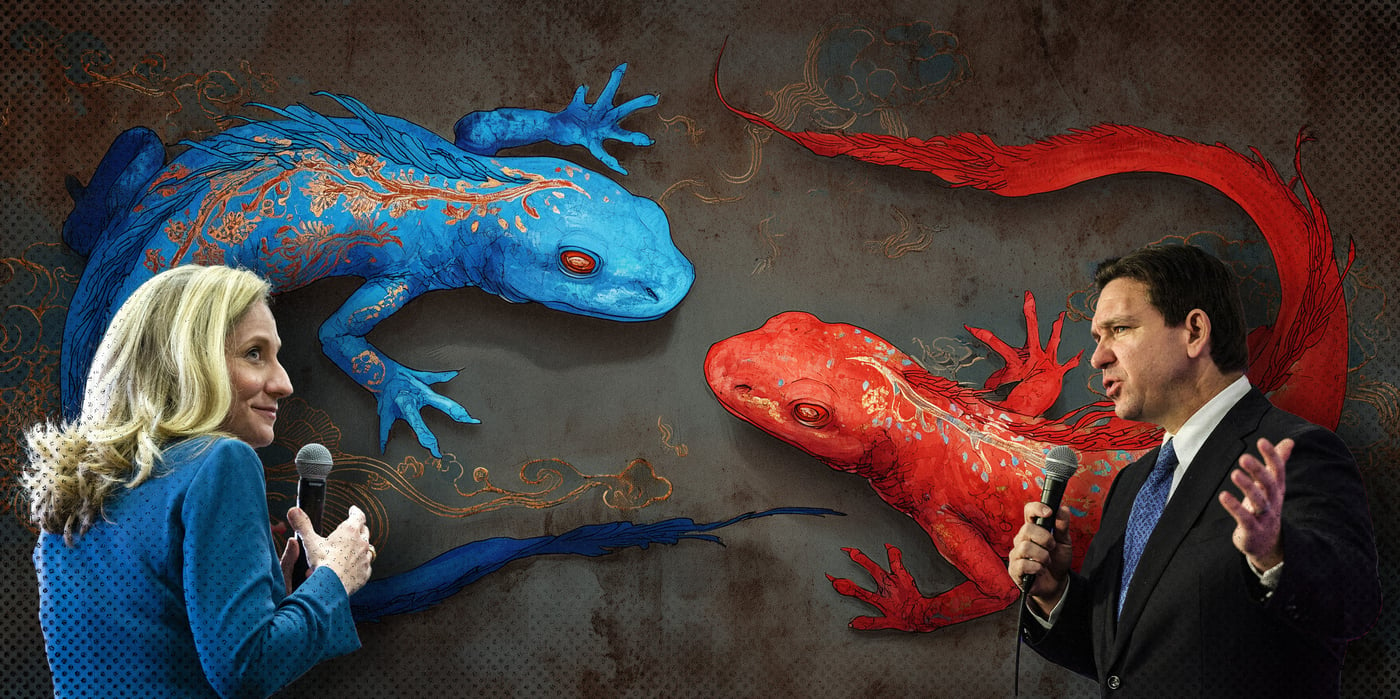

Gerrymandering congressional district maps has been a practice since the nation’s early days. While it is rightly frowned upon, there is no constitutional prohibition on the practice.
The U.S. Supreme Court upheld the practice in 2019 in Rucho v. Common Cause, concluding that partisan gerrymandered maps are a non-justiciable political question. In other words, the Court has left it to Congress to enact legislation on the issue, and Congress has thus far chosen not to do so, except for the 1965 Voting Rights Act, which forbids race-based gerrymandering.
Traditionally, states redistrict once a decade, following the census. However, there is no law limiting or directing when states can engage in redistricting. In 2025, at the behest of President Donald Trump, Texas launched a mid-decade redistricting initiative that would likely swing up to five seats to Republicans in the upcoming midterms. Democrat leaders howled with outrage and began retaliating.
California Governor Gavin Newsom promised to make Texas Republicans pay by gerrymandering the already heavily gerrymandered Golden State, making it even more Democrat. Of California’s current 52 congressional districts, 43 are held by Democrats, with just nine held by Republicans. Newsom’s proposed map would give Democrats a 48-4 advantage over Republicans in the House of Representatives.
Democrats continue to claim they’re only responding to GOP efforts, but the truth of the matter is that Democrats have been shamelessly playing this game for much longer than Republicans have.
For example, Illinois’s 17 seats favor Democrats over Republicans 14-3. New York’s 26 seats similarly fall to Democrats, 19-7. In Maryland, which notoriously has a single congressional district that snakes through nearly the entire state, Democrats hold seven of the state’s eight seats.
When compared to red states, it’s clear that Democrats in blue states have long engaged in gerrymandering with nary a hint of concern for “fairness.”
Major Republican-controlled states like Texas don’t reveal nearly the same gerrymandering practices as the Democrat-controlled states. Texas’s 38 congressional districts favor Republicans 24-13. In truth, all Texas decided to do was finally play the gerrymandering game the Democrats have long been playing.
On a side note, one of the reasons Democrats loathe Trump so much is the fact that he’s willing to play their games. He plays politics like a Democrat, and he often beats them at their own game.
What really turned up the heat on this gerrymandering battle was the Virginia Democrats’ decision to put forward a drastically gerrymandered redistricting map, which likely swings four Republican seats to Democrats, giving them 10 of Virginia’s 11 seats. It was blatant, and their likely unconstitutional means of pulling off this gerrymandered mess prompted Florida Governor Ron DeSantis to propose a redistricting action in the Sunshine State to counter Virginia with possibly four additional seats for the GOP.
Almost hilariously, Newsom warned, “It’d be a bad mistake if they move forward” in Florida.
It’s become gerrymandering one-upmanship, which House Minority Leader Hakeem Jeffries calls “an era of maximum warfare.” He promised to “keep the pressure on Republicans at every single state in the union, to ensure at the end of the day that there is a fair national map.”
It would be nice to see an end to the kind of ugly gerrymandering that has dominated political maps for decades, but the manner and means to deliver on such a reality seem nearly impossible. That’s because the whole thing is directly political. The only thing that’s different now is that Republican-led states are willing to fight back against the Democrats at their own game.