
If there’s one thing Democrats can’t stand, it’s being made fun of. If there’s another thing Democrats can’t stand, it’s when their own schemes backfire spectacularly.
Yesterday, we made this latter point regarding The Redistricting War, in which the Republicans have routed the Democrats courtesy of two titanic judicial events: the U.S. Supreme Court’s ruling in Louisiana v. Callais and the Virginia Supreme Court’s ruling in Despicable Disenfranchising Democrats v. Decent Humans.
In the span of just 10 days, the Republicans curb-stomped the Democrats in a struggle that the latter had been winning steadily for decades via a series of small skirmishes that gave the Republicans zero congressional representation in New England and hideous Chicago-Way gerrymanders all across the nation.
Thus, by way of a couple of correct court decisions and through no special ingenuity or tenacity of their own — check that: through the unheralded ingenuity and tenacity of one James Blair — the Republicans beat the Democrats at their own redistricting game. And the Democrats have come unhinged.
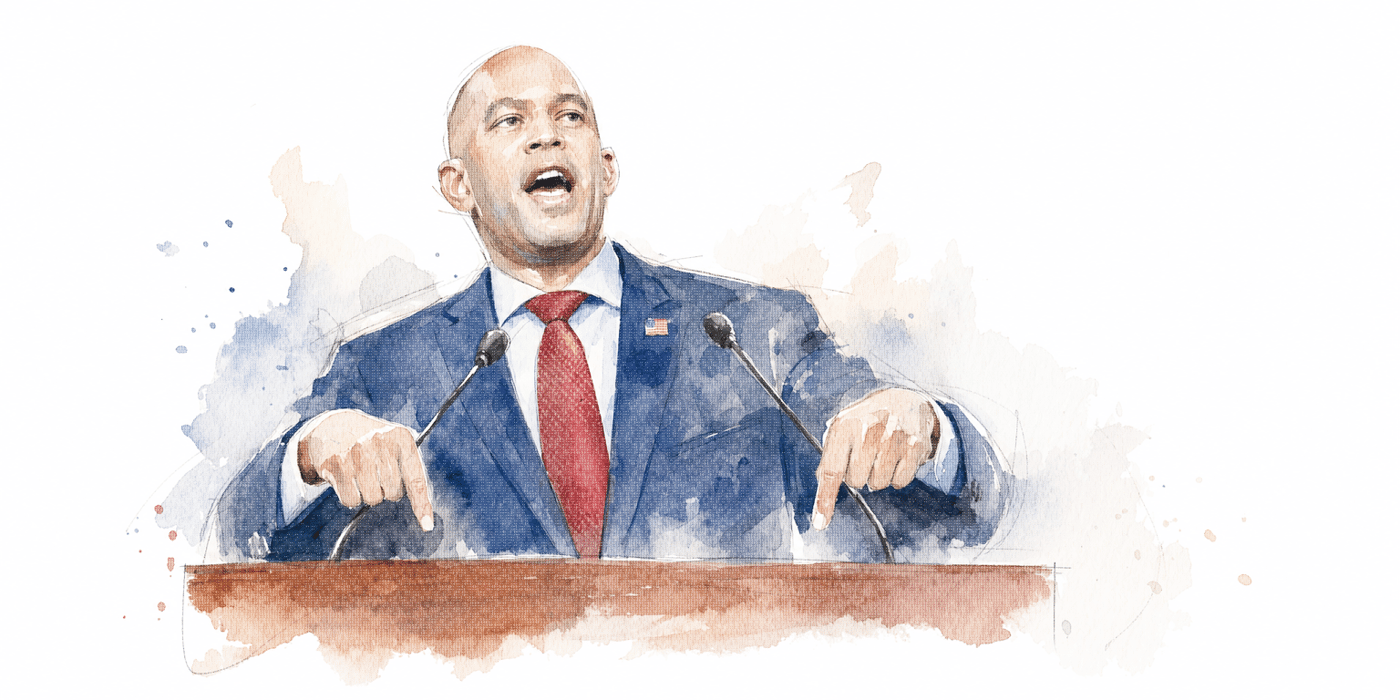
How unhinged? This unhinged: During a weekend conference call with would-be Speaker Hakeem Jeffries, furious state lawmakers from Virginia actually floated an idea to replace the entire state supreme court. How? By pressuring them into retirement.
Apparently, the idea came from — where else? — academia. Constitutional law professor Jonathan Turley writes that the nutty professor in question is Michigan State’s Quinn Yeargain. The Virginia high court’s current retirement age is 73, but Yeargain says the Virginia legislature, both chambers of which are controlled by Democrats, could lawfully set the mandatory retirement age of the justices “regardless of the term to which elected or appointed.”
What a desperate and despicable scheme. So not only are the Democrats unhinged, but they’re also Cuckoo for Cocoa Puffs. It’s unlikely that the idea will go anywhere — and certainly not in time to affect the Democrats’ prospects in the November 3 midterms — but still. These power-mad pols are nuts about retaking the House.
If you think Donald Trump’s victory over Kamala Harris made them apoplectic, just imagine their reaction upon learning that they won’t be able to snatch the gavels and begin impeachment proceedings on January 3, 2027.
“We remain undeterred,” wrote Jeffries yesterday in a letter to his hang-dog Democrat caucus. “Our effort to forcefully push back against the Republican redistricting scheme will not slow down. We are just getting started.”
I’m not sure what he means by “just getting started,” but the Democrats have pretty much run out of options on the gerrymandering front. And what part of “the Supreme Court has spoken” does he not understand? Again, it was the Democrats who started The Redistricting War. Jeffries is just mad because the Republicans finished it.
He continued, prattling on about “the largest voter protection effort in modern American history” (read: the largest illegal voting scheme in modern American history), adding, “We will ensure the people decide who controls the Congress, not MAGA extremists desperate to rig the midterm elections.”
This is the Democrats’ classic projection play: They accuse their political opponents of precisely that which they’re guilty of doing.
As for the Democrats’ prospects come November, it’s not as if the people are clamoring to be rescued by them and their awful policies. As the latest (left-leaning) Economist/YouGov poll indicates:
Both Democrats and Republicans in Congress are unpopular, with far more Americans having unfavorable views of each party than have favorable views. 31% of Americans have a very or somewhat favorable view of Republicans in Congress, while 59% have an unfavorable view — a net favorability of -28. 34% have a favorable view of Democrats in Congress and 55% have an unfavorable view, a net favorability of -21.
Think about it: A party with a net favorability rating of -21 isn’t likely to create a lot of enthusiasm. Currently, the generic ballot has the Democrats somewhere between +3 and +6, which, given legacy media bias, is near their historical average. So if the Democrats are looking for a wave election, they’re likely going to be disappointed, especially if, as I mentioned yesterday, some of the big looming dominoes — gas prices, the economy, the Iran war — start to fall in the Republicans’ favor.
What we’re more likely to see leading up to November 3 is a brutal rock fight, followed by an election that hinges on a relative handful of congressional districts. And it’s this uncertainty that has the Democrats so rattled right now.