
It is common knowledge that the United Kingdom would not allow the United States to use any of its bases or resources to strike Iran. Against that backdrop, UK Prime Minister Keir Starmer’s statement about the U.S. and Israel’s actions may be the most honest encapsulation of how Western policymakers operate today.
“The United Kingdom played no role in these strikes,” he said. “But we have long been clear — the regime in Iran is utterly abhorrent.”
How should people interpret that? Does it betray fear of Britain’s restive Muslim migrant population? Is it a preemptive disclaimer — an advance excuse so that if Islamists riot in Britain’s streets, the government can wash its hands of responsibility? Or is it simply an admission that Western officials and policymakers are feckless cowards whose sole aim is to avoid difficult decisions for as long as humanly possible?
Sir Keir’s statement might as well have read: Don’t blame us. We say a lot of things, but none of them really mean anything.
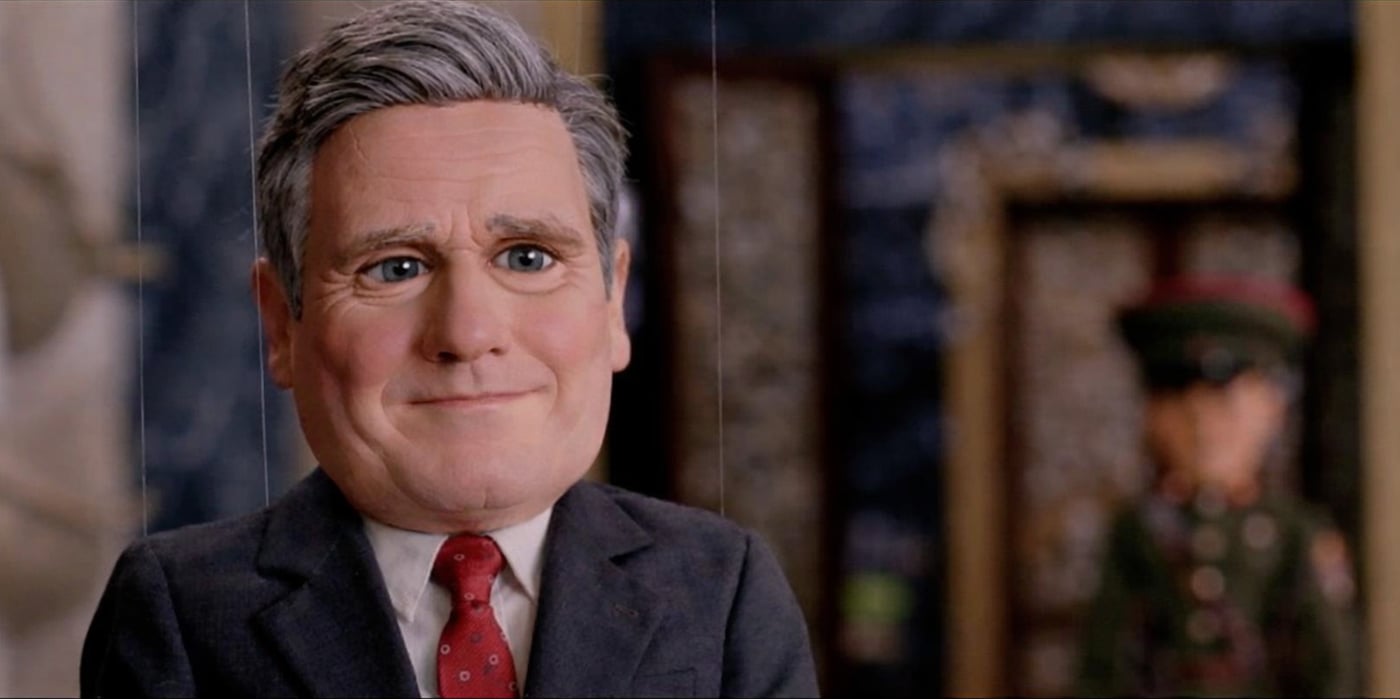
My first thought when I heard Starmer’s speech was, “He’s doing the meme!” It reminded me that Matt Stone and Trey Parker captured this governmental and diplomatic ethos in 2004’s “Team America: World Police,” when Hans Blix (the cartoon version of the head of the International Atomic Energy Administration) threatened Kim Jong Il (the cartoon version) with a series of “strongly worded letters” telling Kim how angry the IAEA was with him if he keeps breaking the rules.
Video: https://www.youtube.com/watch?v=Fc22CFhDBEM
This attitude is not uniquely British; it is the posture of much of the Western political class to talk endlessly, condemn loudly, issue strongly worded letters, and, when none of that works, convene conferences, draft more communiqués, and finally impose toothless sanctions and ignore the breaches. Above all, avoid decisions that impose real cost — especially on hostile regimes that have spent decades testing the limits of Western patience.
Yet these same officials somehow discover remarkable resolve when dealing with their own citizens. They regulate, tax, surveil, and restrict. They experiment socially and economically at home with policies that would never be tolerated if imposed from abroad. It is a curious inversion: timidity outward, assertiveness inward.
For nearly half a century, Western nations have talked about Iran. They have threatened, sanctioned, and negotiated with Iran. They have released frozen assets and, under previous administrations, even transferred literal pallets of cash to a regime widely acknowledged as a state sponsor of terrorism. Through it all, Iran’s behavior has not moderated. If anything, it has intensified.
When rhetoric is unaccompanied by consequence, the target learns quickly. The lesson is simple: endure the press conference, wait out the outrage, continue as before.
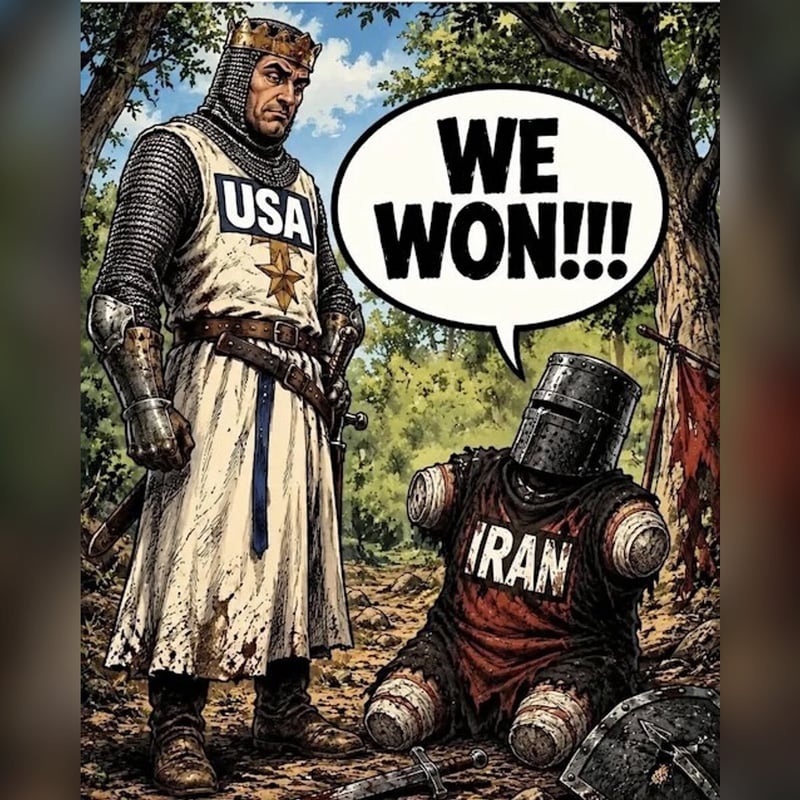
That is why the return of consequential policy feels so jarring to the global establishment. President Donald Trump’s approach — whether one agrees with every tactic or not — signals something different: that words may again be paired with action. I have said before that violence is not always the answer. It should never be the first answer, but history demonstrates that there are moments when credible force, or the demonstrated willingness to use it, is the only language an adversary understands.
What is almost comical is watching long-time critics of Iran’s regime now cloak themselves in procedural piety. “He didn’t get our permission,” they protest. “Impeach him.” Yet no president has sought advance congressional permission for limited military strikes in the modern era, and Congress has not formally declared war since World War II. The sudden reverence for “process” seems less about constitutional principle and more about discomfort with decisive action.
The deeper issue is this: for decades, Western foreign policy has been built on the illusion that perpetual negotiation, symbolic sanctions, and moral condemnation would eventually bend hostile regimes toward compliance. It has not. The status quo persisted precisely because it carried no real cost — and when America engaged in seemingly perpetual wars in Afghanistan and Iraq, costing American lives and billions of dollars, we still accomplished nothing. If anything, these wars communicated to the world that we really didn’t mean it.
Leadership is not measured by how eloquently one denounces evil or by how many resources we can deploy to not achieve our goals. It is measured by whether one is willing to align means with ends. If a regime is “utterly abhorrent,” then policy must reflect that judgment; otherwise, the words are hollow, empty, and worthless. The world has grown accustomed to Western leaders who speak loudly and act cautiously, but peace secured by fear of one’s own electorate or by avoidance of hard choices is not peace at all — it is an illusion that, over time, invites greater danger.
At some point, the talking has to stop.
President Trump says a lot of things, but he has proven he is willing to act when the talking is going nowhere.
Consequences must follow declarations, or diplomacy becomes theater, governance becomes performance, and adversaries fairly deduce that “Team America: World Police” wasn’t a satirical comedy but a documentary of Western policy.